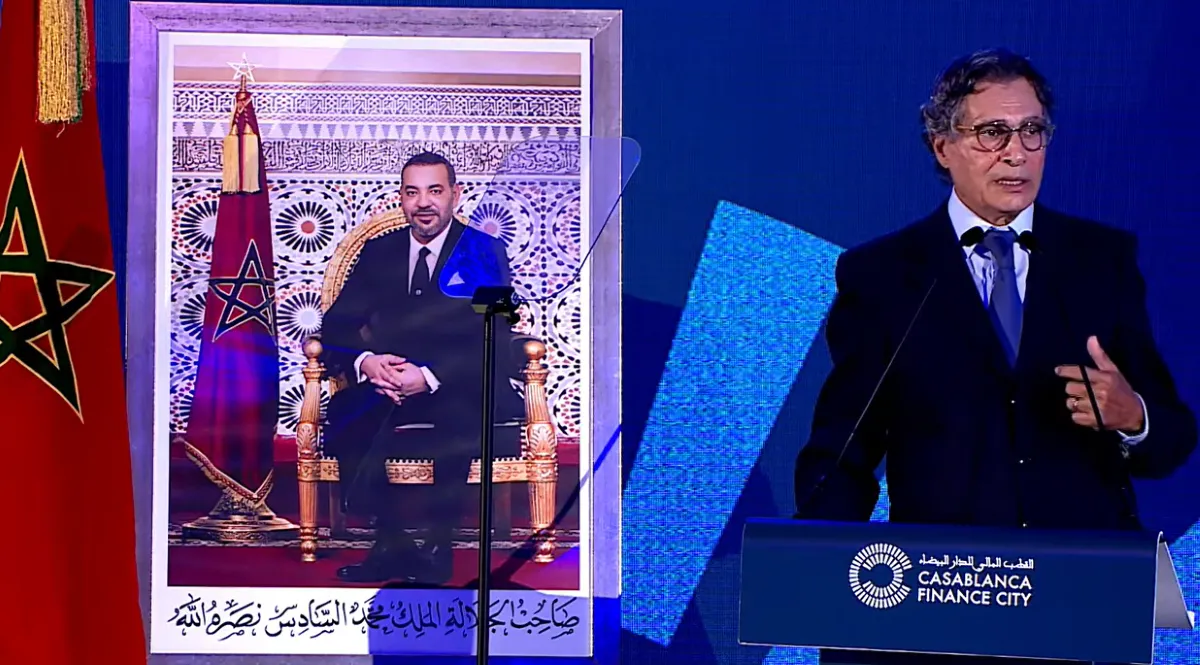

On the last Friday in Casablanca, the second edition of the Casablanca Business Forum brought together influential figures like Said Ibrahimi, the General Director of Casablanca Finance City (CFC), and Chakib Benmoussa, the High Commissioner for Planning. Their discussions centered around a crucial imperative for Africa: the need to transform its demographic, economic, and human potential into productive, inclusive, and sustainable growth.
This year's forum focused on presenting Africa in the present rather than merely projecting its future, a significant shift in narrative emphasized by both Ibrahimi and Benmoussa. Ibrahimi argued that the continent must not only adapt to global transformations but also play a role in shaping them. In his opening address, he highlighted the need for restructuring value chains, reallocating capital, diversifying partnerships, and accelerating technological advancements. He asserted that these changes necessitate a fresh assessment of Africa's position in the global economy. "Africa is no longer just at a crossroads; it is actively contributing to redefining the global economy," he declared, urging that the continent should be viewed as a strategic partner, one with whom to invest, build, and innovate.
From Potential to Execution
Ibrahimi further emphasized the importance of shifting perspectives regarding Africa's capabilities. As companies internationalize, cities emerge as centers of innovation, entrepreneurs introduce new solutions, and investors seek growth opportunities, there is a pressing need to 'change the tense.' He urged stakeholders to engage with Africa in the present, stating, "It is time to move from potential to execution, from investment to transformation," which is vital for achieving more productive, inclusive, and sustainable growth.
This sentiment was echoed by Benmoussa, who reiterated the need for African nations to carve out their development trajectories. He highlighted the continent's significant advantages, including a population of 1.5 billion, with 60% under the age of 25, abundant natural resources, and substantial domestic savings potential. However, he stressed that this potential can only become a genuine driver of development if the necessary ecosystems for innovation, entrepreneurship, research, and business financing—especially for SMEs, which constitute over 90% of the economic fabric—are created.
Resilience, Human Capital, and Integration
Benmoussa identified three key priorities based on Morocco's experiences. The first priority involves rethinking public policy in terms of resilience and adaptability amidst geopolitical, climatic, and technological shocks. The second priority is to broaden the development narrative beyond mere economic indicators to include social progress, inequality, living conditions, and the well-being of populations, which should also inform public action.
Lastly, he advocated for unleashing energy through investment in human capital. He identified education, digital skills, higher education, and adapting to future job markets as essential levers for enhancing competitiveness. Additionally, Benmoussa emphasized the importance of aligning these transformations with greater African integration to ensure sustainability. This imperative positions the African Continental Free Trade Area (AfCFTA) as a crucial mechanism for not only increasing intra-continental trade but also for "producing more together" and strengthening regional value chains.
Within this framework, Benmoussa cited several Moroccan initiatives, including the Morocco-Nigeria gas pipeline, the Royal Initiative for the Afro-Atlantic space, and the Atlantic Initiative supporting Sahel countries, as examples that illustrate the need to enhance interdependencies and capacities across the continent.
Ultimately, both speakers converged on a singular imperative: Africa no longer lacks potential, but rather the capacity to translate that potential into tangible results. Mobilizing capital, developing human resources, fostering innovation, ensuring data quality, enhancing resilience, and promoting regional integration are now essential conditions for action. This challenge transcends national strategies and speaks to the continent's ability to collectively forge its own development model.
It is precisely this theme of a "next chapter" that lies at the heart of this second edition of the Casablanca Business Forum: no longer waiting for Africa to be shaped by global economic transformations, but empowering it to become a key player in that narrative.
As reported by h24info.ma.