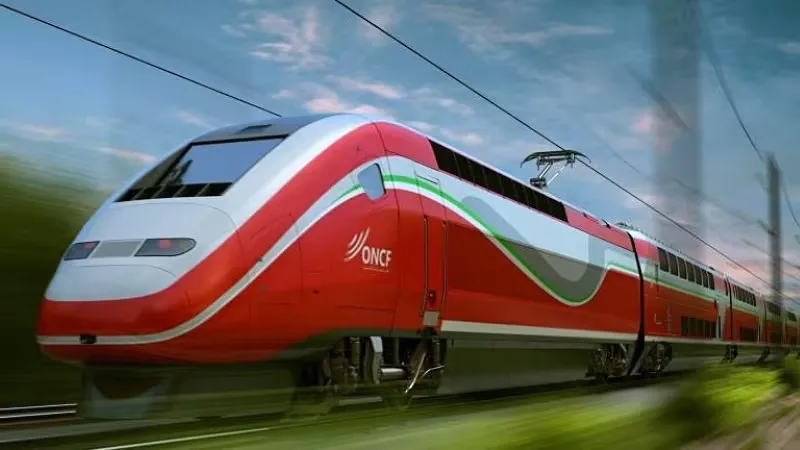

High-Speed Rail: A Game Changer for Moroccan Tourism
The advent of high-speed rail in Morocco is set to revolutionize the country's tourism landscape, establishing a robust and efficient framework that not only shortens travel times but also redefines the entire experience for visitors. By connecting major urban centers with a modern high-speed axis, Morocco aims to not merely reduce distances but to completely reshape its tourism map. The extension of the Kénitra-Marrakech line is positioned as a key component in this transformative initiative, promising to enhance the travel experience into one that is seamless and environmentally friendly, as highlighted in the latest coverage by Finances News Hebdo.
This ambitious project is part of a broader national railway development program with a staggering budget of 96 billion dirhams. Spanning 430 kilometers, the Kénitra-Marrakech segment builds upon the initial Tanger-Kénitra line, ensuring a continuous and efficient connection between Rabat, Casablanca, Mohammed V International Airport, and Marrakech. With construction making significant progress—30% completion reported in the first half of 2026—the target for operational status ahead of 2030 aligns strategically with Morocco's upcoming global sporting and cultural events.
Enhancing Accessibility and Tourism Experience
The enhancement of interconnectivity through high-speed rail is expected to yield immediate benefits for the tourism ecosystem. It fundamentally alters how visitors perceive the Moroccan landscape, transforming cities that were once seen as separate destinations into a cohesive and fluid corridor. For both international tourists and local travelers, the psychological distance diminishes in the face of the rail's speed and regularity. This revitalization of domestic tourism facilitates weekend getaways, family reunions, and spontaneous travel among the nation's major urban hubs, as noted by Finances News.
The strategic significance of Mohammed V Airport in Casablanca is further amplified by this development. A direct and efficient rail link to both the administrative and tourist capital positions Casablanca as a premier multimodal gateway. Travelers arriving in Casablanca can view their stay as an integrated journey across the country rather than a static visit confined to one locale.
However, it is essential to recognize that high-speed rail is not a panacea for all territorial accessibility challenges. Numerous iconic regions, such as Agadir and Essaouira on the southern Atlantic coast, as well as Ouarzazate, Merzouga, Guelmim, and Dakhla near the desert, remain outside the high-speed network. To prevent exacerbating the disparities between major hubs and emerging regions, the development of regional air links, modernization of road networks, improvements in bus services, and optimization of the conventional rail system are equally critical tasks that must be prioritized.
As reported by fr.le360.ma.