Revolutionizing Morocco's Logistics Landscape
The development of Morocco's Atlantic coastline presents a unique opportunity to reorganize trade exchanges with West Africa. Significant investments in the ports of Agadir and Dakhla Atlantique, along with improved infrastructure connecting these hubs to the interior of the country, are poised to foster the emergence of integrated corridors that combine road transport, port logistics, and regional maritime routes. According to Amer Zghinou, the president of the Moroccan Association of Intercontinental Road Transport (AMTRI), this evolution marks a major transformation in Morocco's logistical geography. It has the potential to enhance the Kingdom's role as a key interface between Europe and African markets, provided that national carriers can ensure seamless connectivity between ports, industrial zones, logistic platforms, and final destinations.
Challenges and Opportunities for Road Transport
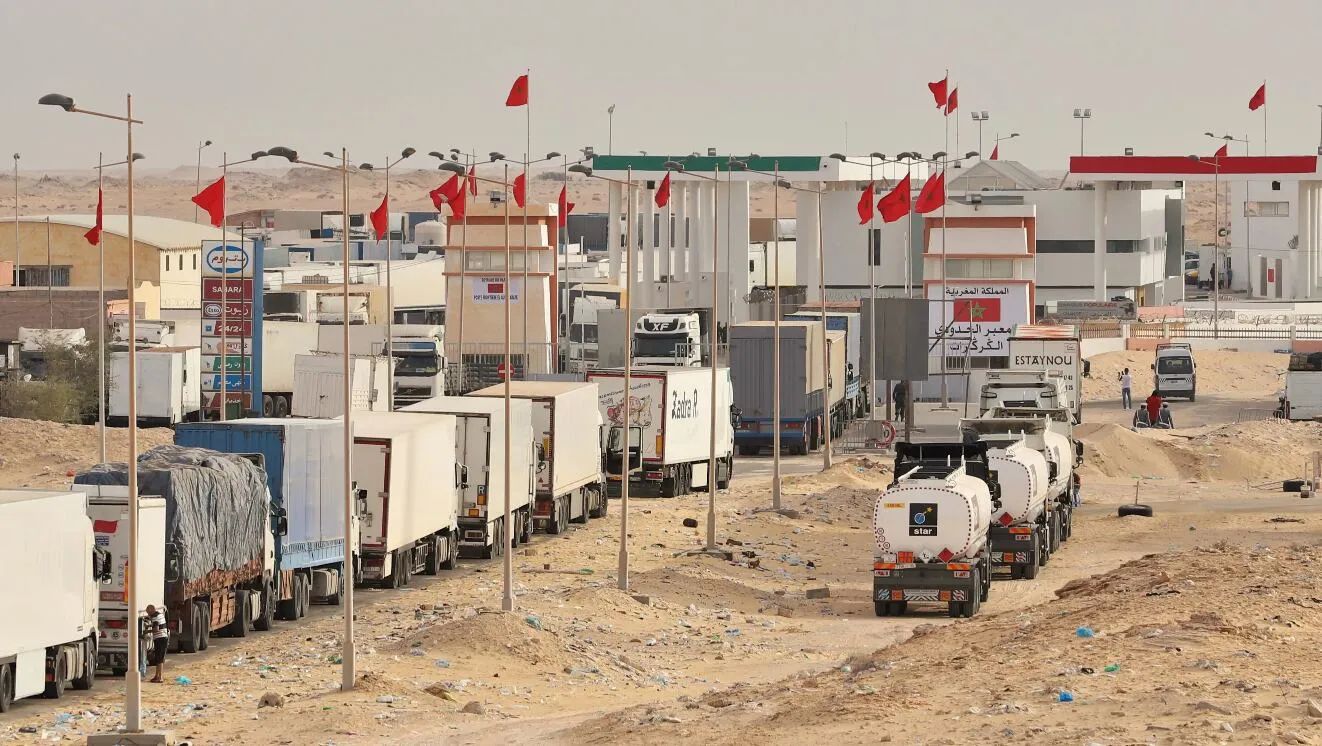
The challenge extends beyond merely constructing port facilities; it encompasses Morocco's ability to convert its infrastructure into commercial volumes, job creation, and national added value. Amer Zghinou warns that infrastructure alone is insufficient, emphasizing the need for modernization in road transport to enhance the economic viability of investments made along the Atlantic coast. An increased utilization of Agadir port and eventually Dakhla Atlantique could diversify the routes taken by Moroccan goods destined for West Africa. The establishment of regular maritime lines would provide a complementary solution to land transport passing through the El Guergarate border post and Mauritania.
Zghinou asserts that direct maritime transportation for certain goods could significantly reduce travel distances on specific routes, shorten delivery times, and contain logistics costs. This shift would alleviate the pressure on a single border crossing while maintaining the essential role of road transport in pre-transporting goods to ports and ensuring final distribution in destination countries. A harmonious balance between road and sea transport is crucial, as maritime routes can handle longer distances while road carriers connect Morocco's production basins, port infrastructures, and African markets. Zghinou believes that road transport professionals should no longer be seen simply as transport providers but as integral partners in the logistics chain.
However, for this plan to succeed, ports must be effectively connected to logistic platforms, industrial zones, and the road network. Any disconnection among these elements could lead to increased handling times, vehicle immobilization, and diminished competitiveness for exporters. Zghinou emphasizes that a well-functioning port must be linked to a seamless transport network that allows for the rapid delivery of goods to their final destinations.
Additionally, the AMTRI is advocating for reforms in access to the transport profession, seeking a more stringent framework to protect compliant businesses from informal practices and unfair competition. A more organized market would empower financially and managerially robust operators to invest in their fleets, information systems, and staff training. Another critical area of focus is the renewal of vehicles, as rising costs related to fuel, tolls, insurance, financing, and equipment diminish the margins available for fleet modernization. Investing in newer vehicles would enhance delivery reliability, reduce technical interruptions, and facilitate a transition to less energy-intensive operations.
Finally, the disparity in operational costs compared to European companies presents a structural weakness. European competitors benefit from professional fuel subsidies, VAT recovery options on certain overseas expenditures, and mechanisms that lower their operational costs. Zghinou insists that Moroccan companies must have access to similar mechanisms to ensure fair competition. Competitiveness is not solely about per-kilometer pricing; it also relies on punctuality, digital tracking of goods, and the ability to offer integrated services. Transport operators involved in Atlantic corridors must combine cargo movement, real-time tracking, documentation management, and coordination with ports and storage platforms.
Logistical continuity between Morocco and Europe faces another significant barrier: the mobility of drivers. Obtaining visas can disrupt rotations, immobilize vehicles, and complicate delivery planning, creating a disconnect between infrastructure performance and companies' ability to utilize international corridors. Zghinou points out the irony of investing billions in world-class infrastructure while restricting the mobility of professionals ensuring logistical continuity. The AMTRI advocates for standardized bilateral agreements with European countries and envisions an eventual community framework tailored to the professional movement of international drivers.
Establishing a specific status for these drivers would delineate the mobility associated with the transport of goods from other forms of travel, simplifying formalities to reduce uncertainties impacting operations and providing businesses with clearer visibility to organize rotations between Morocco and European markets.
Moreover, challenges similar to those faced in Europe arise when expanding towards West Africa. Moroccan transporters encounter heterogeneous customs procedures, lengthy border crossing times, movement restrictions, and insufficient bilateral or multilateral agreements. Each additional formality extends delivery times and inflates the final cost of goods. In this context, Moroccan infrastructure alone cannot deliver the anticipated results. Harmonizing regulations, recognizing transport authorizations, and securing routes necessitate cooperation among administrations, states, and enterprises. Zghinou summarizes that the success of the Atlantic corridor will depend as much on economic diplomacy as on infrastructure.
Improved coordination with African countries could prevent new corridors from becoming mere sequences of national projects lacking regulatory continuity. The desired fluidity requires compatible customs procedures, recognized transport documents, and sufficiently predictable movement conditions to guarantee timely delivery to shippers. The potential of the ports of Tanger Med, Agadir, and Dakhla Atlantique finally places the sector at a pivotal scaling challenge. Moroccan companies must enhance their financial capabilities, professionalize management, and develop higher value-added services to maintain a significant share of flows generated by the new corridors. For Zghinou, the goal should be to cultivate large Moroccan operators capable of competing with international leaders. Achieving this upgrade necessitates better access to financing and land, continuous training for drivers and managers, increased digitalization of procedures, and a coherent fleet renewal policy.
As reported by fr.le360.ma.