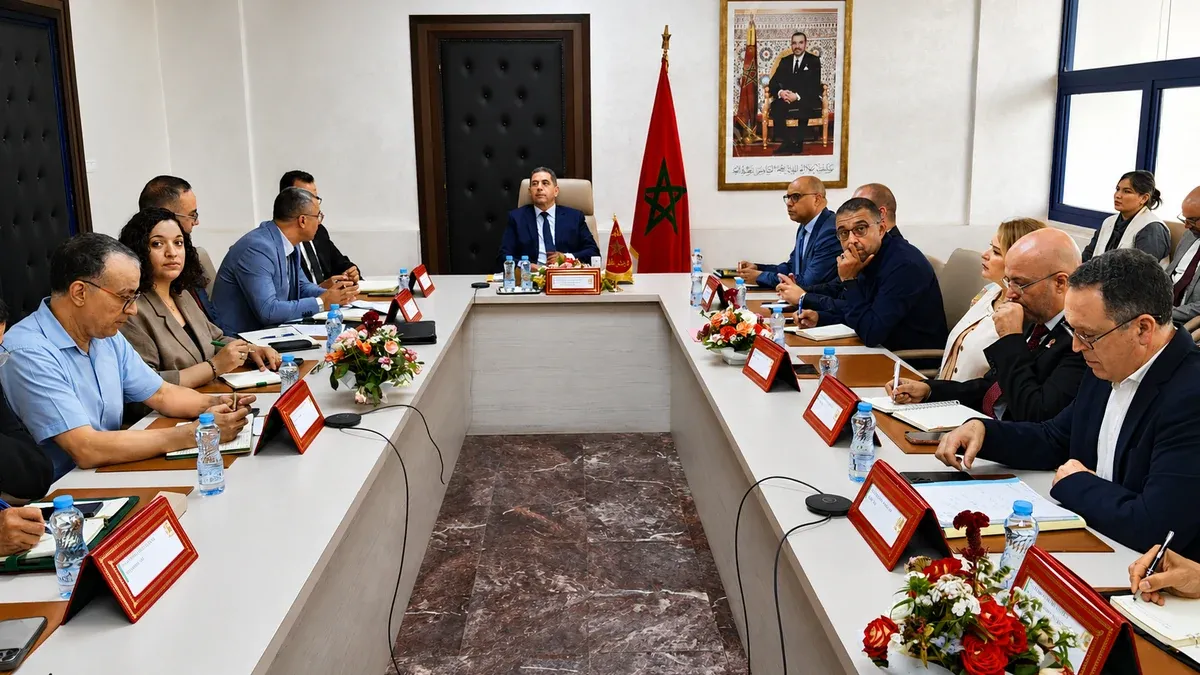
The Souss-Massa National Park development project has entered a significant new phase following the approval of preliminary diagnostic findings and strategic directions that aim to position the park as a premier destination for ecotourism. This decision was made during a meeting chaired by Saïd Amzazi, the Wali of the Souss-Massa region and the Governor of Agadir-Ida Ou Tanane, on Wednesday, July 15, 2026. The meeting was attended by decentralized services, partners, and stakeholders involved in the project.
Prioritizing Six Key Sites within the Park
The first phase included an integrated territorial diagnosis assessing the park's environmental and socio-economic conditions, along with an analysis of national and international experiences in enhancing parks and natural areas. The study provided preliminary outlines for a strategic vision aimed at creating a new dynamic for ecotourism, identifying six priority sites for the development of integrated tourism and environmental projects. However, specific details regarding the names, areas, and nature of proposed projects within these sites have not yet been disclosed, with further clarity expected in the next phases of the study.
Established in 1991, the Souss-Massa National Park spans approximately 33,800 hectares along the Atlantic coast between Agadir to the north and Tiznit to the south. The park plays a crucial role in protecting desert wildlife and the estuaries of the Souss and Massa rivers, while also preserving various plant and animal species and ecologically significant wetlands. It features natural visit paths and birdwatching trails, with guided tours conducted by ecological guides, starting from well-prepared entrances such as the Rakin Reserve and the Sidi Benzerne area at the mouth of the Massa River.
Balancing Investment with Environmental Protection
The diagnostic outcomes revealed that the park possesses the potential to become a national and international hub for ecotourism, provided that a developmental model is adopted which preserves ecosystems and biodiversity. This implies that upcoming projects will be evaluated not only by the volume of investments or the number of visitors but also by their ability to respect the carrying capacity of natural sites and avoid harming sensitive habitats. Moreover, the planning processes are expected to consider the migration routes of animals and birds, and the wetland areas, ensuring that accommodation, recreational activities, transportation, and dining services comply with stringent environmental criteria.
There is a strong emphasis on the involvement of the local population in the economic dynamics created by the project. Depending on the nature of the adopted projects, this engagement could include services such as environmental guidance, rural accommodation, transportation, local products, handicrafts, and regional restaurants. Currently, the park offers guided tours and trails, providing a solid foundation to develop economic opportunities closely tied to the natural environment rather than exploiting it.
The first phase of the study has been summarized in a table detailing various study aspects, from diagnosis to the identification of priority sites, which will be elaborated in the second phase. Participants agreed to transition into this next stage, moving from a general diagnosis to the preparation of detailed proposals for the targeted sites. This will include the design of tourism infrastructure, specifying possible facilities and services within each location, and establishing access and usage conditions that protect natural resources.
Furthermore, the second phase will involve the creation of a regulatory framework for an Expression of Interest (EOI) aimed at attracting investors and project stakeholders. It is crucial to note that this phase does not involve assigning final projects or announcing specific investors; rather, it focuses on preparing the legal, technical, and environmental conditions that will govern the opening of investment initiatives. The success of this process will depend on clear specifications and transparency in the project selection, ensuring that each proposal aligns with the environmental characteristics of the targeted sites.
Shifting to investment within a protected natural area poses a delicate challenge, as poorly planned developments could exert pressure on wildlife, plants, and wetlands. Therefore, priority should be given to light projects that integrate with nature, such as walking paths, birdwatching initiatives, environmental interpretation centers, organized rest areas, and guiding services. This process will also require clear mechanisms to monitor projects post-approval, ensuring ongoing compliance with environmental commitments beyond just the application phase.
The approval of the first phase represents a critical step, although it does not imply an immediate commencement of the six proposed projects. The upcoming phase will define the design specifications, allowable activities, environmental standards, investment models, and management frameworks before launching the EOI and selecting suitable projects. The primary goal remains to transform the park's natural potentials into tourism and economic value while safeguarding its essential function of protecting biodiversity and natural resources.
As reported by agadir24.info.