
Returning to Morocco: A Mission to Address Water Challenges
In exploring the complexities of water management, the decision to return to Morocco was deeply personal and driven by a sense of belonging. After spending time abroad and working on various impactful projects, the desire to contribute meaningfully to my homeland became paramount. The feeling of undertaking a project in Morocco resonates on a different level, as it addresses a critical need in a region where effective water management is essential. Agadir stands out as a notable area where water reuse practices have already begun to take root, particularly in sectors like hospitality and landscaping. However, there remains a significant gap in industrial applications, which necessitates innovative solutions.
During a conversation in Silicon Valley, I was informed of the immense potential within the water management market, estimated at a staggering $1 trillion. While the market size is indeed impressive, my focus transcends mere numbers; my primary objective is to make a substantial impact in this region and to reshape the narrative surrounding water usage and sustainability.
The Role of Technopark Agadir in Entrepreneurial Development
My entrepreneurial journey gained momentum in May 2025, thanks to a friend who was being incubated at the Cité de l’Innovation. He recognized the potential of my idea and introduced me to the dedicated team at Technopark Agadir. Their belief in my project was a turning point, and they assisted me in refining my presentation for regional officials. This collaborative effort illuminated the gap in my understanding of the business side of entrepreneurship, despite my strong technical background. Technopark's guidance was instrumental, pushing me to develop a comprehensive understanding of financial and commercial aspects while continuing to advance the technological dimensions of my venture.
The invaluable coaching and extensive regional network provided by Technopark and the Cité de l’Innovation Souss-Massa opened doors to numerous stakeholders and investors. The team's solution-oriented mindset stood out, as they consistently sought ways to help me progress with my proposals, further solidifying my conviction that my venture could thrive in Morocco.
The realization of the business opportunity within wastewater treatment and reuse dawned on me around 2023 or 2024, catalyzed by a royal speech that directly addressed Morocco's pressing water issues. This pivotal moment ignited my determination to leverage my expertise to contribute meaningfully, rather than merely discussing the water crisis. Armed with the necessary technical knowledge, professional experience, and potential supplier relationships, I set out to assemble a team aligned with my vision to transform this idea into a viable business.
SITELI CW aims to revolutionize wastewater into a valuable resource, tackling the inadequacies of existing infrastructure. Our approach centers on the concept of maximizing water utility by promoting reuse. While discussions around recycling materials like plastic have gained traction, water reuse is only recently emerging as a front-runner in sustainability conversations. We are currently preparing a pilot project with one of Morocco's leading agricultural firms, focusing on ensuring year-round access to high-quality irrigation water. Our proposition involves treating stored water to maintain its quality, thereby enhancing the company's resilience and revenue streams.
Similar principles can be applied across various industrial sectors, where water used in processes or cleaning can be treated and reused, thereby reducing freshwater consumption and operational costs. In today’s eco-conscious market, adopting sustainable practices is not merely about enhancing corporate image; it also offers tangible cost savings, which lies at the core of our value proposition.
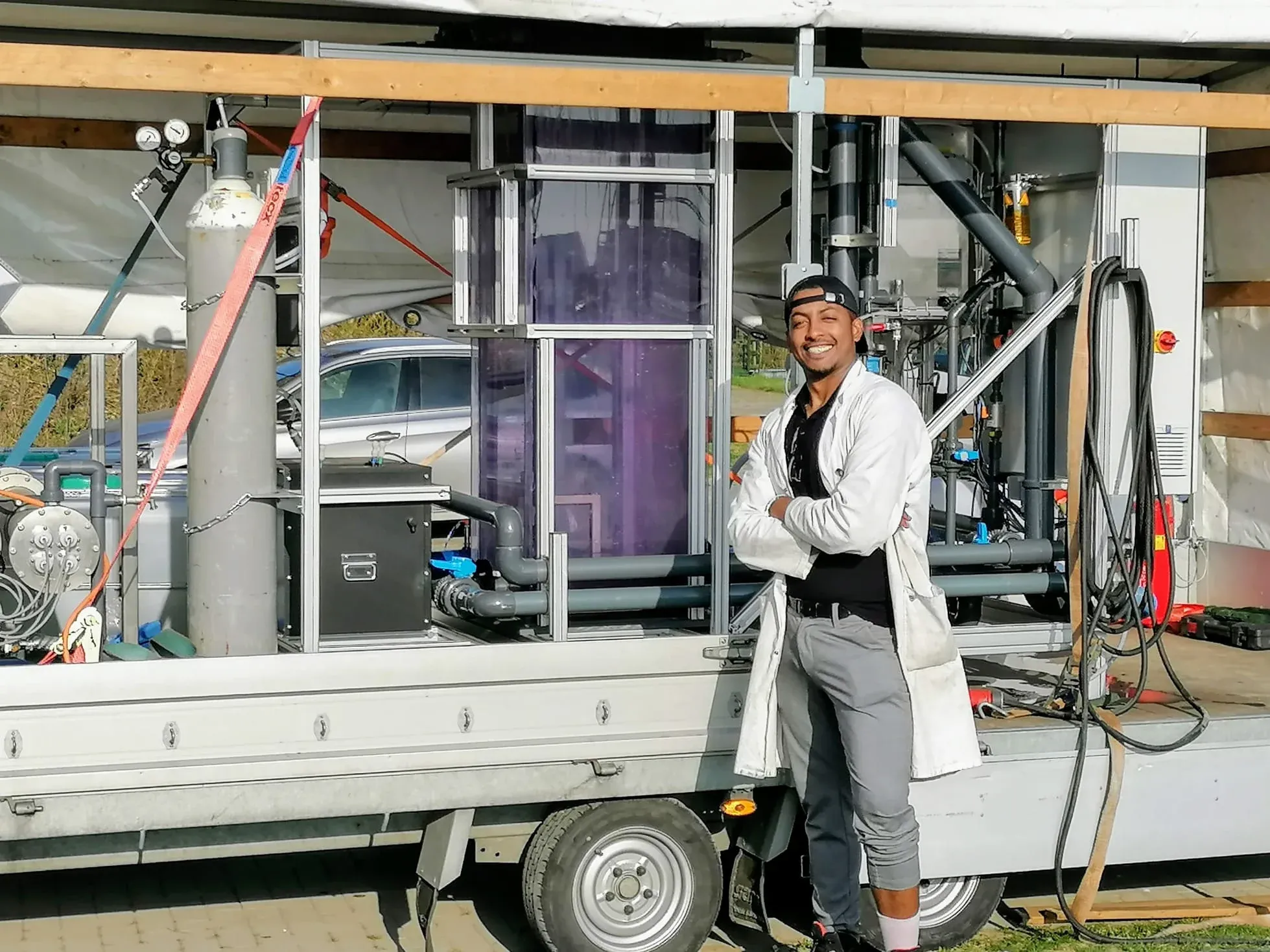
Our innovative solution encompasses both hardware and a sophisticated software platform. Initially, we assess the specific types of pollutants in the water and the processes involved before tailoring the treatment accordingly. Our software provides clients with real-time visibility into their water consumption, contamination levels, flow rates, and other key performance indicators. Designed to be decentralized, compact, and modular, our system circumvents the extensive land requirements and construction burdens typically associated with conventional wastewater treatment plants, making it adaptable to existing facilities.
With a focus on efficiency, we aim to deliver our solution to clients within a remarkable 48-hour timeframe following the assessment and design stages. This agility positions us favorably in a market that demands swift, effective solutions.
Mobile and modular treatment units present a compelling alternative to traditional wastewater treatment facilities, particularly for industries constrained by space. The ability to integrate our systems into existing operations without extensive renovations offers a significant advantage. Residential developments also stand to benefit; by designing systems that separate blackwater and greywater from the outset, our technology can effectively treat greywater for reuse in irrigation, promoting sustainability from the ground up. As Morocco's urban landscape rapidly evolves, incorporating water reuse solutions early in the development process is far more efficient than retrofitting costly systems later.
Today, SITELI CW is in its pilot phase, collaborating with one of Morocco's largest agricultural enterprises to validate our technology and treatment unit. Our goal is to transition from bespoke solutions for every client to offering a ready-to-deploy product that addresses common challenges in the industry. With nine letters of intent from organizations interested in our technology, we are optimistic about the market's receptiveness to our innovative solutions. As a startup operating with a lean team, our strategy involves focusing on one market at a time, establishing a solid foundation before branching out into new sectors.
Having gained insights from my experiences in the Netherlands and Morocco, I've observed notable differences in water management approaches. The Dutch employ a 'diamond perspective' that emphasizes collaboration among businesses, universities, public institutions, and society to address social challenges. This model underscores the importance of public awareness and ethical considerations surrounding water management. I strive to implement this holistic approach in Morocco, partnering with organizations like Wavemakers United to raise awareness, particularly among younger generations. Additionally, I aim to collaborate with the École Nationale Supérieure de Chimie at Ibn Tofail University to conduct in-depth research into water reuse practices in the Moroccan context. By bridging technical research, business engagement, and public education, my goal is to foster the necessary partnerships to tackle Morocco's water challenges effectively.
As reported by en.yabiladi.com.