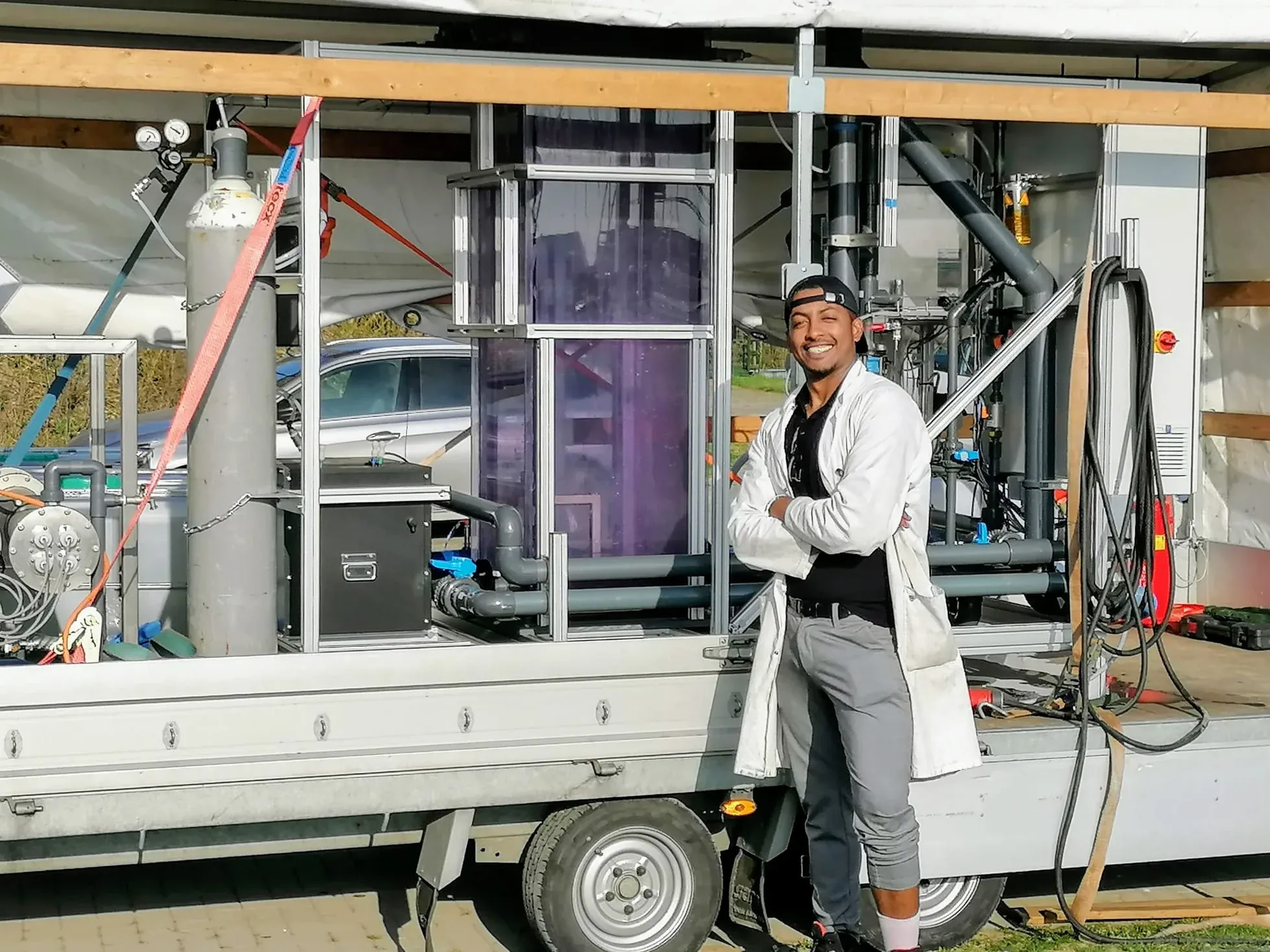

Returning to Morocco: A Journey of Purpose in Water Management
When reflecting on my decision to return to Morocco to launch a business in the complex field of water management, I must admit that I often struggled to feel truly at home while living abroad. Although I worked on several impactful projects during my time away, leading a project in Morocco offers me a sense of fulfillment that is distinct because I feel that I am contributing to something genuinely beneficial in a place where the need is paramount. Agadir, in particular, is a region where water reuse is already starting to gain traction, especially within the hotel industry, golf complexes, and green spaces. However, industries also require innovative solutions to meet their water management needs.
During a discussion in Silicon Valley, someone pointed out that I was entering a market valued at an astonishing $1 trillion, and capturing even a fraction of that would be more than sufficient. However, my reasoning does not center around market size. Instead, I constantly ponder how I can create a meaningful impact in this region and contribute to altering our mindset regarding water utilization.
Support from Technopark Agadir: A Catalyst for Entrepreneurial Growth
The entrepreneurial journey commenced around May 2025 when a friend, already incubated at the Cité de l’Innovation, introduced me to the Technopark team. He believed that my idea had substantial potential and could indeed create a significant impact. The team embraced the project and helped me refine my presentation, clarifying my value proposition for regional stakeholders. Throughout this process, I realized that despite possessing robust technical expertise, I was still inexperienced in the entrepreneurial realm.
They encouraged me to think about how to evolve into an entrepreneur capable of grasping the financial and commercial aspects of a business while continuing to develop my technology. The Technopark and the Cité de l’Innovation Souss-Massa also offered coaching and access to an extensive regional network, connecting me with stakeholders and potential investors. What struck me most was the team's pragmatic orientation towards solutions. Whenever I present a proposal, they immediately begin contemplating how they can assist in advancing it.
In 2023 or 2024, I came to understand that the treatment and reuse of wastewater could evolve into a business opportunity in Morocco, especially after a royal speech highlighted the water crisis in the country. This realization compelled me to consider how I could leverage my knowledge and experience to serve this cause. I wanted to go beyond merely discussing water scarcity; I aimed to take concrete action. With my technical skills, professional experience, and connections to potential suppliers, all I needed was to assemble a team that believed in the project and begin transforming the idea into a viable business.
SITELI CW aspires to transform wastewater into a valuable resource. Our approach tackles the problem of how to extend water's lifecycle. For years, discussions have revolved around the reuse and recycling of materials like plastics, yet water reuse is just beginning to garner attention. We are currently preparing a pilot project with one of Morocco's largest agricultural companies, which will take place in the northern region of the country. This project aims to explore how the company can maintain access to irrigation water throughout the year. Presently, the company stores water, but its quality may deteriorate over time. Our proposal is to treat this water to ensure it remains suitable for irrigation year-round, thereby enhancing the resilience of the company and supporting its revenue stream.
The same principle applies to industrial applications. Water used in certain industrial processes or for cleaning can be treated and reused instead of being discharged, which reduces freshwater consumption, lowers costs, and makes production more resilient. Sustainability is no longer just a matter of corporate image. When a company adopts sustainable practices, it can also achieve cost savings, which lies at the heart of our value proposition.
Our solution comprises both hardware and a software platform. We begin by analyzing the type of pollution present in the water and the process in which it was utilized, configuring the treatment accordingly. The software provides clients with visibility into their water consumption, contamination levels, flow rates, pressure, and other indicators to assess system performance. Our solution is decentralized, compact, and modular, as traditional wastewater treatment facilities often require substantial land and extensive construction, which many plants cannot afford. We aim to offer similar treatment capacity within a much smaller footprint, allowing the equipment to integrate seamlessly with existing facilities. Treated water can then be stored in tanks or IBC containers or reused immediately.
After discussing client needs, conducting tests, and designing the appropriate system, our goal is to deliver the solution within 48 hours.
Mobile and modular treatment units are particularly relevant for industries with limited land availability, as the equipment can be integrated into their existing facilities without necessitating extensive construction. Another potential application is in residential projects, where a complex generates both black water, which requires more intensive treatment, and grey water from showers, sinks, and similar uses. If these two flows are separated during the design phase, our system can treat grey water for reuse in landscaping and other green spaces within the project. Ideally, developers should consider this before construction begins. Moroccan cities and infrastructure are rapidly developing, and incorporating water reuse from the outset is more efficient than adding a more costly solution later.
As of now, SITELI CW is in the pilot phase, preparing a project with one of Morocco's largest agricultural companies to validate both our technology and the treatment unit. We aim to move away from the model of developing a fully customized system for each client. Instead, our goal is to offer a ready-to-deploy product that addresses problems we have already identified and mapped out. We have also received nine letters of intent from organizations interested in our technology, indicating a market exists for such solutions. As a startup with a limited team, we must progress gradually, avoiding the temptation to tackle too many fronts at once. Our initial focus is to establish a presence in one primary market, validate the relevance of our solution there, and then gradually expand into other industries.
Having lived and worked in the Netherlands and Morocco, I have observed significant differences in their approaches to water management. The Netherlands often employs what is referred to as the "diamond perspective" when addressing major societal challenges. This approach emphasizes the involvement of businesses, universities, public institutions, and society as a whole. Society is arguably the most critical element, as citizens must understand the ethical value of water rather than viewing it solely from a financial standpoint. I strive to apply this perspective in Morocco by collaborating with Wavemakers United, a Dutch organization that has gained international recognition for raising public awareness about water, particularly among children. I am also engaging with the National School of Chemistry at Ibn Tofail University, with hopes of conducting further research into water reuse in Morocco.
By connecting technical research, business engagement, and public awareness, I aspire to contribute to building the type of cooperation necessary to effectively address the water challenges facing Morocco.
As reported by yabiladi.com.