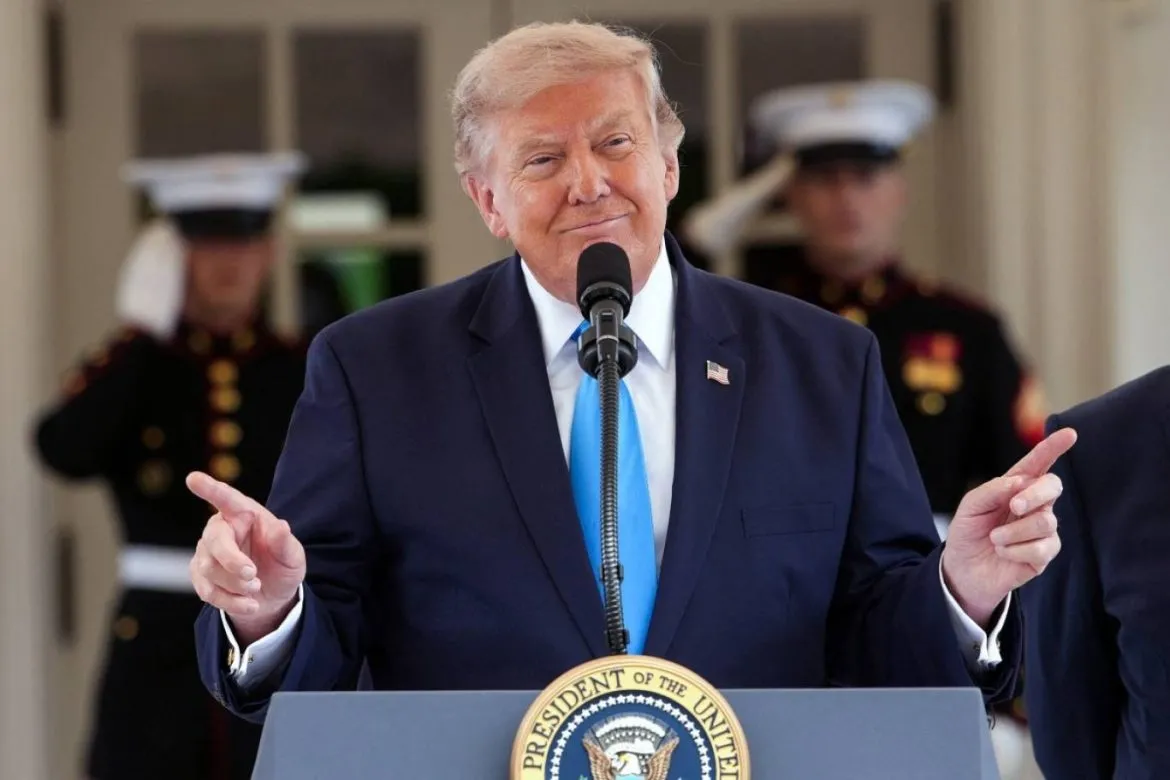

In a recent statement, U.S. President Donald Trump emphasized that Iran will not acquire nuclear weapons, characterizing the confrontation with Tehran as a "simple matter" for the United States. He noted the significant progress achieved by his administration in thwarting Iran's nuclear capabilities, stating that the U.S. has been executing "sporadic strikes" against Iranian interests, although it is not currently engaged in direct combat. Trump asserted that the U.S. has control over the Strait of Hormuz, allowing for the uninterrupted movement of oil tankers and ships, while also suggesting that the strategic significance of the strait has diminished due to the existence of alternative routes and pipelines.
Furthermore, Trump disclosed that U.S. forces have targeted advanced Iranian radar systems and hinted at a potential strike on the Jabal al-Fas nuclear facility in the near future, asserting that the U.S. is closely monitoring the site, including the comings and goings of personnel. He also announced the destruction of three Iranian nuclear sites, underscoring a robust military stance against Iran's nuclear ambitions.
In a new escalation of military tensions, U.S. Secretary of Defense Pete Hegseth declared that the United States would eliminate Iranian oil tankers if Iran were to fire upon American vessels. The U.S. Central Command reported that airstrikes were carried out on three Iranian oil tankers following the Iranian Revolutionary Guard's ballistic missile attacks directed at two American warships, confirming that no U.S. personnel were injured in these incidents. The targeted tankers were identified as part of a clandestine network that finances the Revolutionary Guard and its regional proxies.
Simultaneously, the United States, along with allies Britain, France, and Germany, is working to rally support within the Board of Governors of the International Atomic Energy Agency (IAEA) for a resolution that could lead to Iran being referred to the United Nations Security Council. This move comes amid ongoing Iranian resistance to allowing IAEA inspectors back into damaged facilities to verify the country's enriched uranium stockpile, which is reportedly enriched to a level of 60%. On the economic front, U.S. Treasury Secretary Scott Pisent announced the European Union's alignment with economic pressures against Iran, focusing on cutting off funding sources for its nuclear program, military armament, and regional proxies.
Additionally, the U.S. has offered a reward of up to $10 million for information leading to the capture of Amir Yaryab, the cyber chief of the Revolutionary Guard, who is accused of overseeing cyberattacks targeting critical sectors in the U.S., Europe, and the Middle East. This development coincided with reports from Iranian media indicating that an oil tanker near Khark Island had been struck by U.S. fire, marking the latest incident in the escalating tensions between the two nations.
As reported by albiladdaily.com.