The Ceuta Crisis: A New Chapter in U.S.-Spain Relations
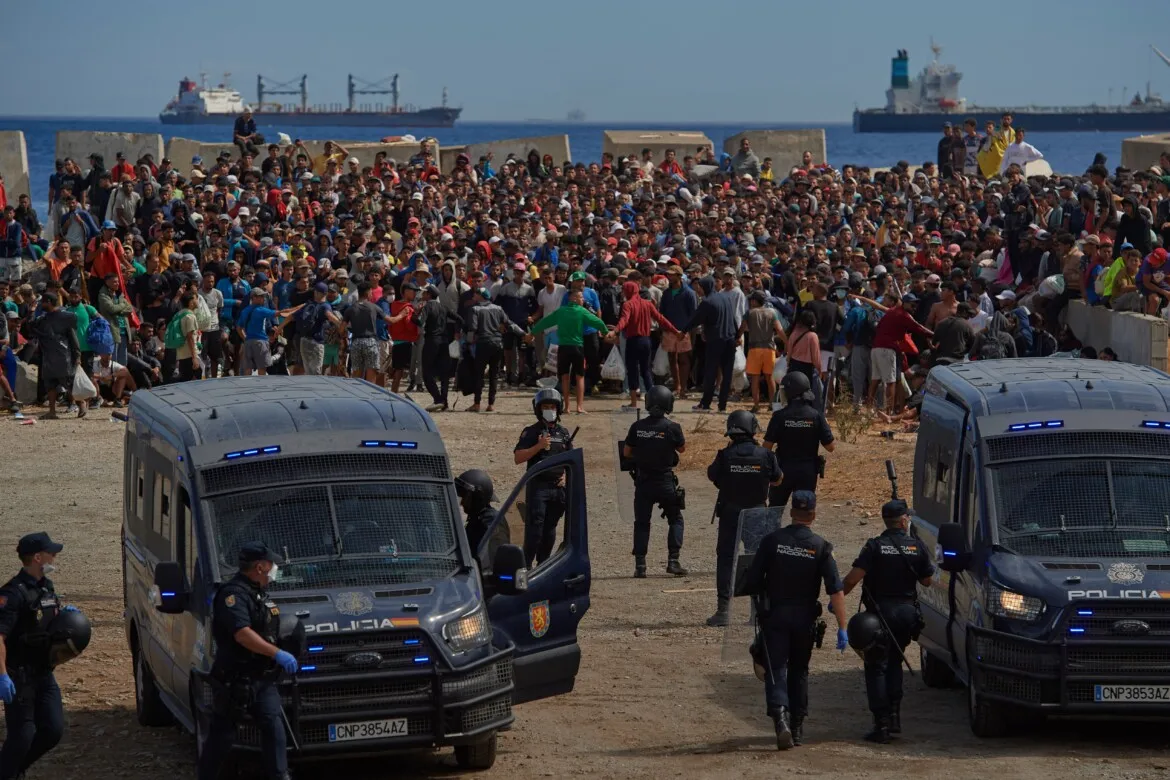
In a significant escalation of the ongoing Ceuta crisis, U.S. President Donald Trump has publicly weighed in on the situation, making controversial remarks during a televised interview. Speaking to GB News on September 3, Trump did not hold back in his criticism of Spain, asserting that the nation is on the brink of becoming a "ruined country" due to the mass influx of migrants witnessed in Ceuta at the end of July. He described the situation as "very sad to see" and characterized the migrant surge as "worse than an invasion," highlighting his concerns about Spain's ability to maintain control of its borders.
Trump's comments are particularly noteworthy as they coincide with renewed claims from Morocco regarding the Spanish enclave. In this backdrop, he also criticized Spain's commitment to NATO, suggesting that the country is not fulfilling its financial obligations towards the alliance. He expressed that the implications of the migrant crisis could extend beyond Spain, potentially leading to an influx of migrants into other European nations and even the United Kingdom. However, Trump's remarks notably avoided placing any blame on Morocco, which has been at the center of the crisis.
Rising Tensions Between Spain and Morocco
Adding to the complexity of the situation, Nizar Baraka, Morocco’s Minister of Equipment and Water, recently reiterated his country's stance on territorial claims over Ceuta. Baraka declared that Morocco would not yield an inch of its national territory, emphasizing the importance of Spain as a partner while simultaneously asserting Rabat's claim over the Spanish cities in North Africa. This statement is particularly significant given Baraka's role within the Istiqlal Party, which has historical ties to the expansionist ideology of 'Greater Morocco.' The party's foundational beliefs, established after Morocco's independence in 1956, included aspirations for territories such as Ceuta and Melilla.
In response, Spanish Prime Minister Pedro Sánchez has made it clear that Spain's sovereignty over Ceuta and Melilla is non-negotiable and termed Morocco’s territorial ambitions as "unacceptable." Despite the mounting tensions, Sánchez has also indicated that there is currently no "solid evidence" to suggest that Morocco orchestrated the recent surge in migrants, despite indications from police reports suggesting Moroccan authorities may have been complicit in facilitating the influx.
The Ceuta crisis has thus evolved from a simple issue of migration management into a multifaceted geopolitical dilemma that affects Spanish sovereignty, Spain's diplomatic relations with Morocco, and the broader dynamics between Madrid and Washington.
As reported by europeanconservative.com.