
Trump's Military Threats and Iran's Defiance
Former President Donald Trump has intensified his verbal assaults against the Iranian regime through his platform Truth Social, stating, "The failed state of Iran does not pay salaries to large sectors of the Iranian military, while at the same time killing protesters – even if they are not protesting – at unprecedented levels. This is a humanitarian crisis of epic proportions, and it must stop now." Trump's remarks reflect a growing concern over Iran's treatment of its citizens amidst ongoing geopolitical tensions.
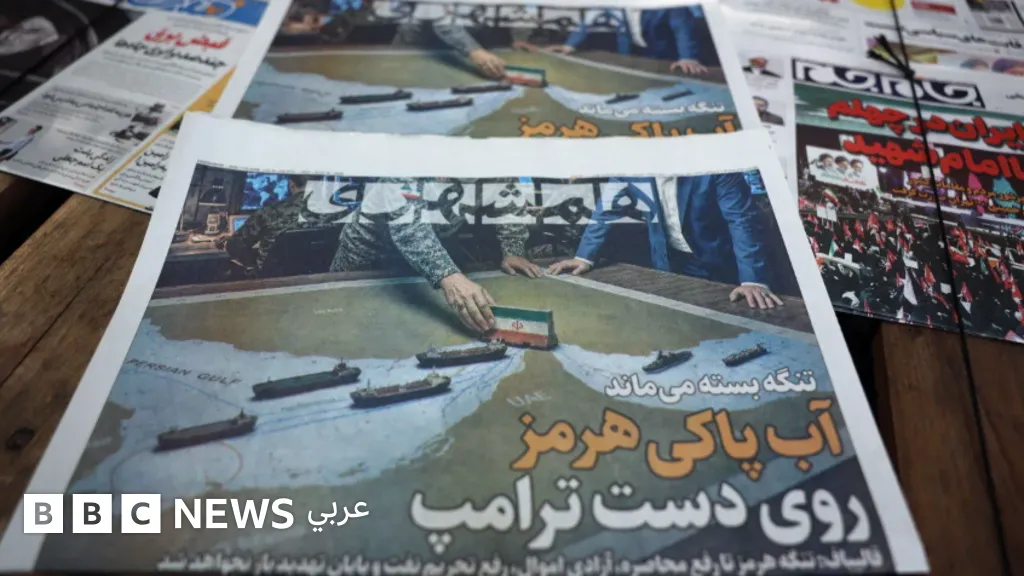
In a subsequent post, Trump claimed to have received an alert from the U.S. Navy indicating that all mines had been removed or destroyed in the territorial waters of the Strait of Hormuz. He warned Iran that any ship or vessel laying new mines would face immediate and systematic destruction. Through Space Force, he asserted that the U.S. is closely monitoring every square inch of the Strait of Hormuz, as well as the Mount Zagros area and other nuclear sites that have already been targeted. He emphasized a strict "zero tolerance" policy regarding mine-laying activities.
Trump had previously vowed to destroy Mount Zagros, located in Isfahan province near the Natanz facility, one of Iran's key uranium enrichment sites. Meanwhile, from Oman, the Foreign Minister, Badr al-Busaidi, visited Tehran to meet with his Iranian counterpart, Abbas Araqchi, to discuss a proposed interim framework for establishing a "temporary joint shipping corridor" through the Strait of Hormuz, as well as a joint project to clear mines from the strait, according to Oman’s state news agency.
Diplomatic Developments and Economic Pressures
In a separate diplomatic move, Pakistani officials reported significant progress towards ending the conflict concerning Iran. This statement followed a visit by a Pakistani delegation to Tehran, where Army Chief Asim Munir held discussions focused on reopening the Strait of Hormuz. Munir reportedly communicated with Trump earlier, with Tehran stating that Washington was eager to revive talks. Abbas Golrou, head of the Iranian Parliament's Foreign Relations Committee, indicated that the Pakistani Army Chief carried a message from the United States to Iran on this matter.
While Washington remained silent on these comments, analysts suggest that the Trump administration is banking on tightening sanctions against Iran and isolating it financially, hoping to bring Tehran back to the negotiating table. Conversely, Iran is relying on its ability to maintain pressure on shipping in the Gulf, thereby impacting global energy prices, which serves as a punishment for countries cooperating with the U.S. This strategy is particularly sensitive given the upcoming midterm elections in November, which could affect Trump’s political standing.
Iran has vowed to retaliate against the expanded U.S. sanctions aimed at economically isolating the country, threatening that "not a single drop of oil" will pass through the Gulf if U.S. pressures continue. Tehran remains confident in the resilience of its major trading partners against these pressures. U.S. Treasury Secretary Scott Piesen warned of "broader measures" against Iran's trading partners, stating that countries still engaging commercially with Iran risk exclusion from the dollar-based financial system.
While the Treasury Secretary did not specify these trading partners or the timeline for these measures, he merely stated that they would be given a chance to comply with new directives. In this context, China, one of the largest importers of Iranian oil, asserted that its trade with Iran would remain unaffected, despite the suspension of Iranian oil flows to China due to the U.S. blockade on Iranian ports. The Chinese Foreign Ministry spokesman, Lin Jian, remarked that the economic war would only exacerbate tensions and disrupt the global economy, affirming that China would take necessary measures to safeguard its rights and interests.
Amid fears in Washington regarding potential sanctions affecting Chinese banks, there are concerns that such actions might overshadow the upcoming talks between the U.S. and China’s leaders. Beijing has reiterated that its partnership with Tehran operates within international law and should not be obstructed by external parties. Turkey, another significant trading partner of Iran, has downplayed the potential impacts of U.S. sanctions on countries cooperating with Iran.
In Doha, the Qatari Foreign Ministry spokesperson, Majid Al-Ansari, labeled the U.S. sanctions on Iran as "unilateral," expressing Qatar's support for mediation efforts between the two nations. On the market front, oil prices have declined for the second consecutive day, influenced by U.S. sanctions and investor concerns about Iran's continued capacity to disrupt maritime shipping. Prices fell nearly three percent, with Brent crude dipping below $90 per barrel.
After six months of conflict, thousands of sailors remain stranded in the Gulf, and the movement of commodity tankers has significantly decreased. Negotiations concerning the reopening of the Strait of Hormuz seem stalled, with no signs of either party willing to back down. Iranian authorities assert that the country can withstand U.S. pressures and refuse to comply with Washington's demands to reopen the Strait.
The Iranian Acting Defense Minister, Majid Ibn Al-Ridha, stated that "any pressures targeting the livelihoods and security of Iranians are part of the war on Iran," threatening to meet the expansion of pressures with an escalation of military operations to safeguard national interests. Reports from Tehran indicate long queues at gas stations coinciding with the announcement of U.S. sanctions and the ongoing blockade on Iran, alongside a significant depreciation of the Iranian currency to two million rials per dollar, with inflation rates nearing 90 percent year-on-year. Food price inflation has surged to around 130 percent, according to the Financial Times.
As reported by a5r5br.net.