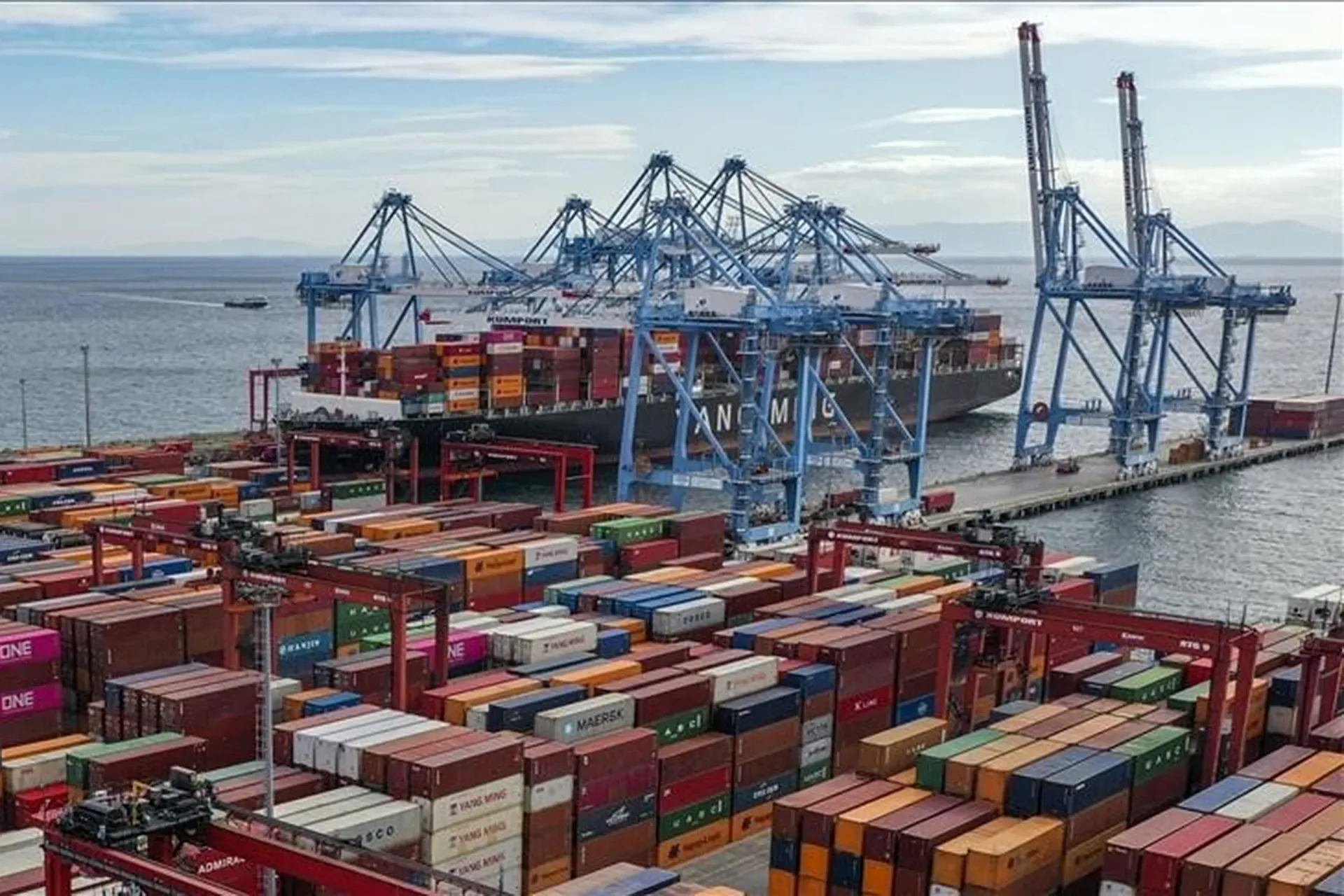

As of August 23, 2026, Turkey's exports to African nations have seen a remarkable increase of 12.6% year-on-year during the first seven months of this year, totaling an impressive $13.3 billion. This growth has been significantly driven by rising sales to key markets, particularly Egypt, Nigeria, and South Africa. According to data reported by Anadolu Agency, the acceleration in export growth was particularly notable in July, with a 16.3% increase compared to the same month last year, reaching $2.3 billion.
Key Highlights of Export Growth
Egypt led the African markets in imports from Turkey during July, with exports soaring by 49.3% year-on-year to $426.2 million. From January to July, Turkish exports to Egypt surpassed $2.3 billion, marking a 26.1% increase compared to the same period last year. Similarly, Nigeria experienced robust growth, with Turkish exports rising by 52.1% in the first seven months to $453.2 million, while July alone recorded $60.2 million, reflecting a 7.5% increase. South Africa also reported a 31.3% rise in exports from Turkey, totaling $479 million by the end of July, with July's exports reaching $66.9 million, up by 8.3%.
Exports to Libya increased by 2.3% to $1.59 billion, with a notable 22.4% rise in July to $289 million. Tunisia recorded over $720 million in exports during the first seven months, an increase of 9.9%, while July's exports were approximately $101 million. Niger experienced one of the most significant monthly increases, with exports rising by 80.5% in July to $255 million, and a total of $302 million over the seven-month period, reflecting an 8% growth.
Variations Between Markets
Conversely, the performance of exports to Morocco and Algeria showed a mixed trend. During the first seven months, exports to Morocco grew by 11.7% to $2.43 billion, despite a 24.8% decline in July to $277.5 million. In Algeria, exports dropped by 18.8% over the same period to $1.09 billion, with a 5.8% decline in July to $142.5 million. Osman Aksoy, Chairman of the Turkish-African Business Councils Coordination Committee, noted that monthly fluctuations should be viewed separately from medium-term trends, suggesting that the downturn in some markets may be cyclical and linked to current circumstances.
Aksoy identified three primary factors underpinning the expansion of Turkish exports to Africa: first, logistical capabilities, with Turkish Airlines operating flights to over 60 destinations across the continent, alongside container shipping routes; second, the active involvement of Turkish contracting companies in projects related to ports, roads, airports, and housing, which generates demand for construction materials, equipment, and Turkish products; and third, trade diplomacy through official communication channels, business delegations, and economic forums that connect Turkish companies with African markets.
As the trade relationship continues to grow, Aksoy believes that the next phase requires moving beyond a model of merely exporting goods to increasing investment, joint production, establishing distribution networks, and developing more flexible financing tools. The African Continental Free Trade Area presents an opportunity for Turkish companies to set up production and logistics bases in strategic locations, enabling access to multiple markets from a single center. In this context, Egypt emerges as a potential base for joint production, benefiting from its free trade agreement with Turkey and its strategic location and trade relationship network, along with the possibility of increased Turkish investments in industrial zones around the Suez Canal.
In South Africa, potential opportunities are concentrated in industrial equipment, electronics, and renewable energy, while Nigeria offers a large consumer market, albeit with challenges posed by currency fluctuations. The increase in exports to $13.3 billion over seven months indicates a broadening Turkish commercial presence in Africa, with the upcoming phase, according to Aksoy, focusing on transforming a larger portion of these relationships from direct trade into investments, production, financing, and joint logistics services.
As reported by aljazeera.net.