
UN Session Highlights Tensions Between Morocco and Algeria
The recent session of the United Nations Committee of 24, held in New York from June 15 to June 26, witnessed a renewed exchange between Morocco and Algeria regarding the contentious issue of the Sahara. In a departure from the usual heated confrontations, both parties maintained a more measured tone while presenting their respective positions. This shift in dialogue is occurring in the context of renewed efforts by the administration of former President Donald Trump to revitalize the political process surrounding the dispute.
During the session, Algeria's permanent representative to the UN, Amar Benjamaa, reiterated his country's stance, describing the Sahara issue as a "decolonization question that must be resolved by the international community." He emphasized that this matter has been on the C24 agenda since the 1960s, neglecting to mention that Morocco was the one to initially bring the issue to the attention of the United Nations.
Historically, before Algeria's independence in 1962 and the establishment of the Polisario Front in 1972, Morocco had already initiated discussions regarding the Sahara at the United Nations. Notably, the first meeting of the C24 outside New York was held in Tangier in May 1962, where Morocco successfully advocated for the inclusion of the Sahara issue on the C24 agenda in 1963.
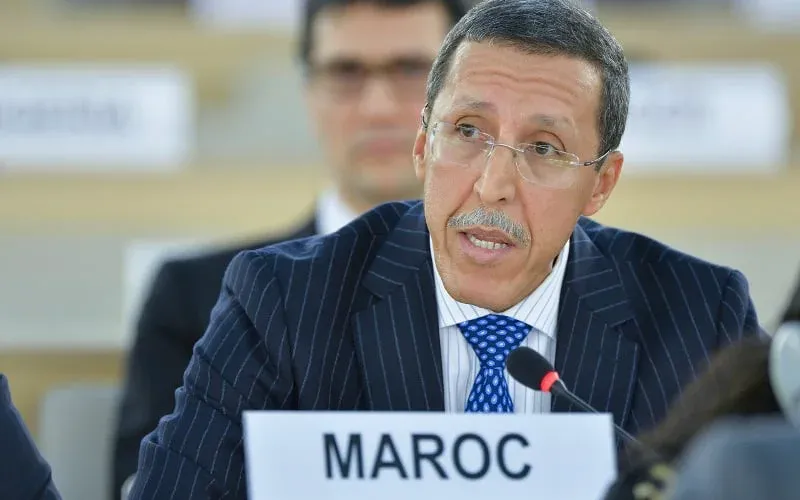
In response to Benjamaa's remarks, Morocco's permanent representative to the UN, Omar Hilale, countered that "those who continue to portray the Moroccan Sahara as a decolonization issue are presenting an outdated and obsolete interpretation." He asserted that the decolonization process concluded with Morocco's return to its rightful territory in 1975, rejecting the Algerian narrative by stating that "there is no administering power or characteristics of a non-self-governing territory, but rather a regional conflict fueled from abroad."
Furthermore, Hilale reiterated Morocco's call to remove the Sahara issue from the C24 agenda, a request he had previously made during a meeting in Managua. He cited the Security Council's adoption of Resolution 2797 on October 31, 2025, as a pivotal moment in the history of this conflict, labeling it a "roadmap for definitively resolving this dispute." It is noteworthy that the exchanges in New York were less confrontational than usual, with both sides defending their positions without resorting to direct accusations.
Notably, Morocco refrained from mentioning the self-determination of Kabylie or human rights violations in Algeria, even in response to Algerian claims regarding the self-determination of the Sahrawi people. According to sources close to the situation, the American mediator had previously requested both Morocco and Algeria to exercise restraint to facilitate the resumption of political dialogue. Thus far, both parties appear to be adhering to this directive.
As reported by yabiladi.com.