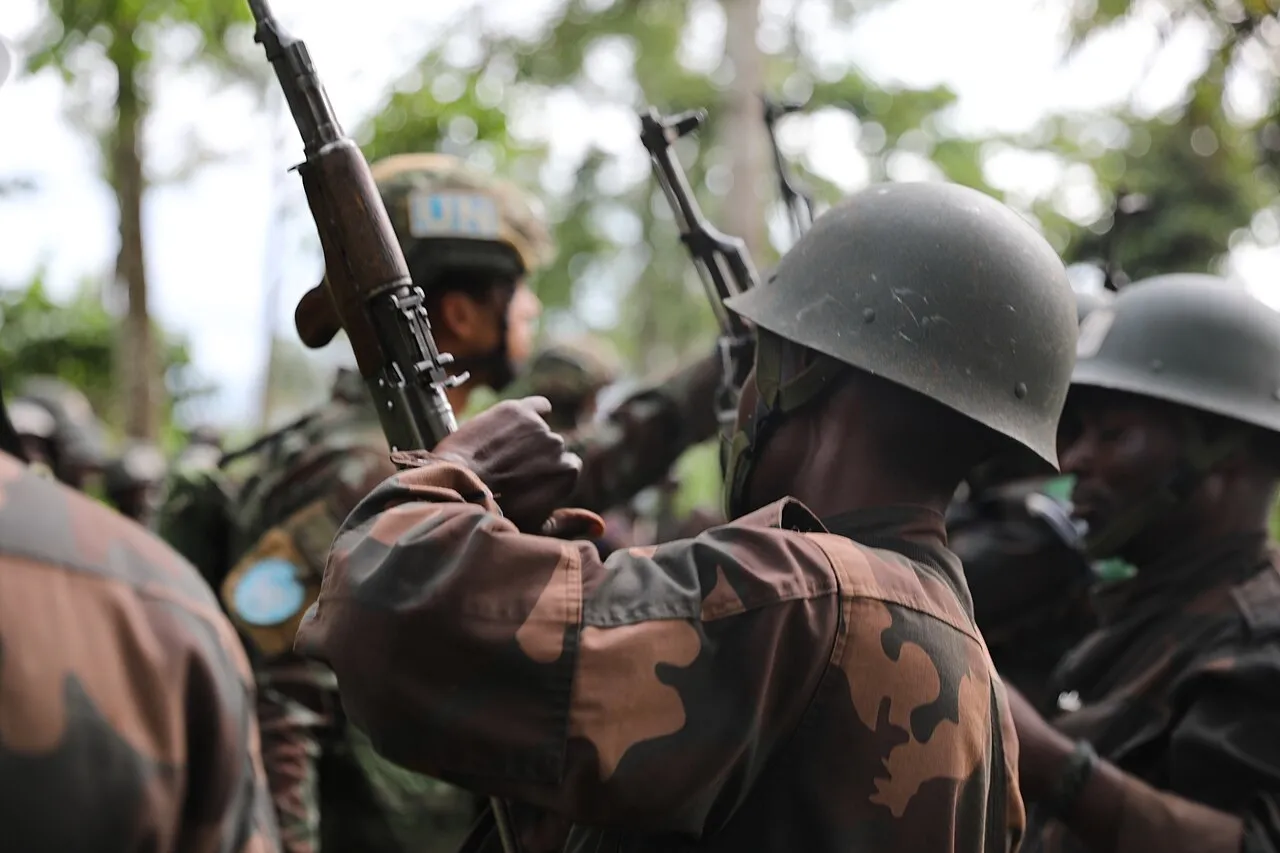

Rethinking Peacekeeping Missions
On September 18, 2026, during a debate at the UN Security Council in New York, UN Secretary-General António Guterres advocated for a significant change in the approach to peacekeeping operations. He proposed that United Nations peacekeepers, commonly known as Blue Helmets, should only be deployed when a peace agreement or a credible ceasefire is already in place. Guterres emphasized that peacekeeping missions are political tools designed to support political solutions rather than replacing them. Consequently, he called for a renewed focus on mediation, prevention, and ceasefires prior to the initiation of military peacekeeping operations.
This proposal arises in response to a troubling trend that has increasingly put traditional peacekeeping under pressure. Many current missions are operating not in the aftermath of comprehensive peace agreements but rather amidst ongoing conflicts where warring parties show little willingness to engage in political resolution. Furthermore, the evolving landscape of warfare, marked by the introduction of drones, autonomous weapon systems, and AI-driven misinformation, exacerbates the challenges faced by peacekeepers, especially in an environment of reduced budgets and personnel.
The Security Council itself has acknowledged the need for reform, moving away from a model where Blue Helmets indefinitely contain conflicts that remain politically unresolved. Guterres aims to redirect peacekeeping missions towards securing already established political agreements, seeking a more effective and targeted approach.
The Role of the African Union in Peace Enforcement
In his proposal, Guterres outlined a clear division of responsibilities regarding peacekeeping in Africa. Traditional UN missions are to be deployed only in contexts where a political process has created a foundation for peace. In situations requiring peace enforcement, he envisions regional forces or coalitions stepping in, with a particular emphasis on the African Union (AU). He referenced Security Council Resolution 2719 from 2023, which established a framework for financing AU-led peace operations through regular UN budget contributions, allowing for the Security Council to approve such missions on a case-by-case basis. The resolution permits UN financing to cover up to 75% of the annual budget for these operations.
Guterres has called for the implementation of this mechanism, noting that peace enforcement may be necessary when the conditions for traditional peacekeeping are absent. He underscored that any use of force must align with political strategies, adhere to international law, and operate under the authority of the Security Council. This approach aligns with Guterres' previous stance regarding the African Union, particularly in conflicts involving terrorism and violent extremism, where he has argued that classic Blue Helmet missions are inadequate, and AU-led operations with Security Council mandates might be more suitable.
Despite these proposals, significant hurdles remain between political decisions and their execution, as evidenced by the situation in Somalia. Guterres reiterated the importance of Resolution 2719 at the AU summit in early 2026, while simultaneously expressing disappointment over the lack of consensus within the Security Council regarding the full transition of the AU Support and Stabilization Mission in Somalia into the new financing framework. This raises a crucial question regarding whether the UN is genuinely prepared to grant African organizations not only political responsibility for more robust missions but also sustainable funding to support these efforts.
Resolution 2719 was unanimously adopted at the end of 2023, explicitly allowing AU-led enforcement operations, but it requires Security Council approval for each specific case and mandates the inclusion of political strategies, human rights protections, and clear exit plans.
Currently, five of the eleven ongoing UN peacekeeping missions are located in Africa, including MINURSO in Western Sahara, MINUSCA in the Central African Republic, MONUSCO in the Democratic Republic of Congo, UNISFA in Abyei, and UNMISS in South Sudan. Guterres has indicated that future missions will have clearer objectives and defined exit conditions from the outset, with mandates focusing on political stability, security, and, where necessary, civilian protection. This shift aims to enable quicker adaptations, restructuring, or withdrawals in response to changing conditions.
The ongoing discussions within the Security Council illustrate a lack of consensus regarding the direction of these reforms. The United States has expressed a loss of confidence in the current form of peacekeeping to deliver results that justify the costs and scope of missions, calling for realistic goals, enhanced success monitoring, and a focus on security tasks that support a political strategy. Conversely, Pakistan cautioned against allowing budget constraints to dictate the reform process, asserting that narrower mandates should lead to "better peacekeeping, not less peacekeeping," and stressing that missions should not be arbitrarily limited by predetermined budgets.
Similarly, the Democratic Republic of Congo has opposed the notion of associating smaller budgets with weaker missions, arguing that transitions must be orderly and reversible in the event of deteriorating security conditions, with the host state's consent remaining a central consideration throughout the mission's duration. Guterres links the proposed restructuring to a second demand: missions should be more closely aligned with the political objectives of host countries while being equipped with personnel, resources, and modern technology that match their mandates. This would further delineate the boundary between UN Blue Helmets and AU-led robust peace operations in Africa.
As reported by fokus-afrika.de.