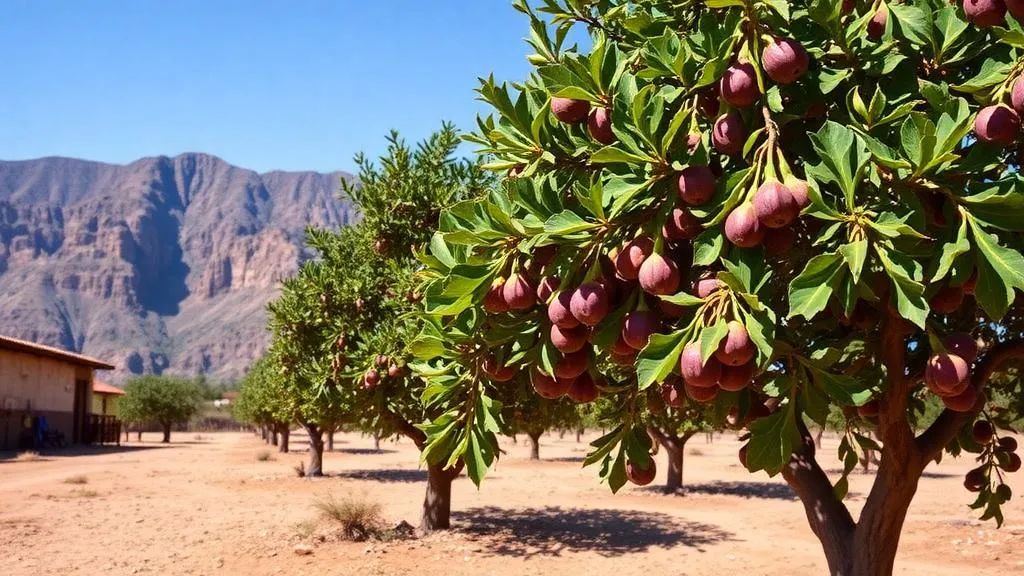

In the heart of southern Morocco, nestled within its lush oases and the rugged Atlas Mountains, local farmers have cultivated fig trees for generations, unknowingly preserving a remarkable genetic legacy. A groundbreaking study led by Ibtissam Mardoume from Sultan Moulay Slimane University has unveiled that these traditional agricultural systems are vital reservoirs of genetic diversity. The research, published in Plant Biosystems, meticulously analyzed 93 different fig cultivars sourced from Morocco's Atlas regions and its southern and southeastern oases, revealing a level of genetic variation that exceeded the researchers' expectations. This study represents one of the most comprehensive molecular assessments of the fig tree, Ficus carica, in a nation that lies at the historical epicenter of this species.
The research team employed inter-simple sequence repeat (ISSR) markers to investigate the genetic makeup of the collected fig trees. ISSR markers focus on short, repeated DNA sequences throughout the genome, amplifying the regions between them to create distinct genetic fingerprints that can be compared across various individuals. Due to their relatively rapid mutation rates, these markers are adept at identifying variations, even among closely related fig cultivars. The study utilized 14 ISSR primers, generating 214 observable genetic bands across the 93 cultivars, with an astonishing 184 of these bands—representing 85.98 percent—demonstrating polymorphism, indicating genetic differences among the sampled trees.
This remarkable genetic diversity is particularly noteworthy for a cultivated species. The researchers calculated various metrics to illustrate the extent of this diversity, including a resolving power of 8.00, a Nei’s gene diversity index of 0.34, a polymorphism information content of 0.52, and a Shannon information index of 0.34. Each of these metrics provides insight into the level of genetic variation present, from the capability of the markers to distinguish between individual genotypes to the uncertainty in predicting the genetic composition of a randomly selected tree. A PIC value exceeding 0.5 is generally deemed highly informative, suggesting that the ISSR markers effectively captured significant genetic discrimination across the Moroccan fig collection.
The implications of this study extend beyond mere statistics. Analyzing molecular variance (AMOVA) revealed that a staggering 89 percent of the total genetic variation was found within groups of cultivars rather than between them. This suggests that an orchard belonging to a farmer in one valley could harbor as much hidden genetic variation as an entire region located hundreds of kilometers away. Traditional agricultural practices, where multiple fig varieties are cultivated side by side and shared informally among neighbors, appear to foster genetic diversity rather than merely store it.
Cluster analysis further substantiated this finding, employing UPGMA, a hierarchical clustering technique that organizes genotypes based on overall band-sharing similarity. The analysis classified the 93 cultivars into five primary groups, with female edible figs from the Beni Mellal-Khenifra region exhibiting particularly high genetic dispersion. This dispersion indicates a rich history of exchange in planting materials, farmer selection of seedlings, and possibly several historical introductions of fig germplasm into the region, which has historically acted as a crossroads for trans-Saharan trade routes.
In contrast, caprifigs—male, inedible figs crucial for pollination—presented a different narrative. These figs formed a distinct genetic cluster that remained homogenous, regardless of their collection location, indicating a clear genetic separation from the edible female cultivars. This distinct genetic divide aligns with the gynodioecious breeding system of Ficus carica, validating the effectiveness of molecular markers in differentiating caprifig germplasm for breeding and pollination management.
The significance of this research transcends Moroccan borders, as figs are among the oldest domesticated fruit trees globally, with their center of diversity located in the Middle East and the Mediterranean basin. Morocco is recognized as a critical secondary reservoir of fig diversity. Previous studies have documented fig diversity in Turkey, Tunisia, Algeria, and Jordan; however, this new research provides a broad survey that encompasses both the mountain agroecosystems of the Atlas and the arid desert oases of the south, both of which impose unique environmental pressures on their fig trees.
This environmental variance is crucial for conservation strategies. The fragile ecosystems of the oases face threats from water scarcity, salinization, and rural depopulation, while mountainous terraces are challenged by land abandonment and climate change. When genetic variation is predominantly found within specific sites rather than distributed across them, the loss of any single site can significantly diminish the overall genetic diversity of the species. The authors of the study emphasize the importance of ISSR markers for conservation and breeding initiatives, offering an economical method to identify unique genotypes, prevent duplication in germplasm collections, and select optimal parents for breeding programs aimed at enhancing fruit quality, drought resilience, or disease resistance.
This research is part of a broader effort by the team at Sultan Moulay Slimane University, who have also applied ISSR markers to other Moroccan crops, including walnuts, plums, and apples, alongside studies focusing on the chemical profiles, organic acids, antioxidant activity, and phenotypic variability of Moroccan figs. Collectively, this molecular data illustrates not only the genetic richness of Moroccan figs but also their chemical and morphological diversity. For breeders aiming to develop climate-resilient cultivars, this multidimensional diversity represents invaluable raw material that is irreplaceable once lost.
Ultimately, the findings from Morocco's oases and mountains convey a message of hope: centuries of traditional agriculture have inadvertently cultivated one of the most genetically diverse populations of fig trees ever documented through molecular analysis. The pressing challenge now is to accurately document and conserve this diversity before the agroecosystems that nurture it vanish. With 85.98 percent of their marker bands exhibiting polymorphism and nearly 90 percent of the genetic variation residing within local cultivars, Moroccan figs illustrate that the future of food security amidst global change may hinge as much on the smallholdings of traditional farmers as on advanced genetic preservation technologies.
As reported by bioengineer.org.