
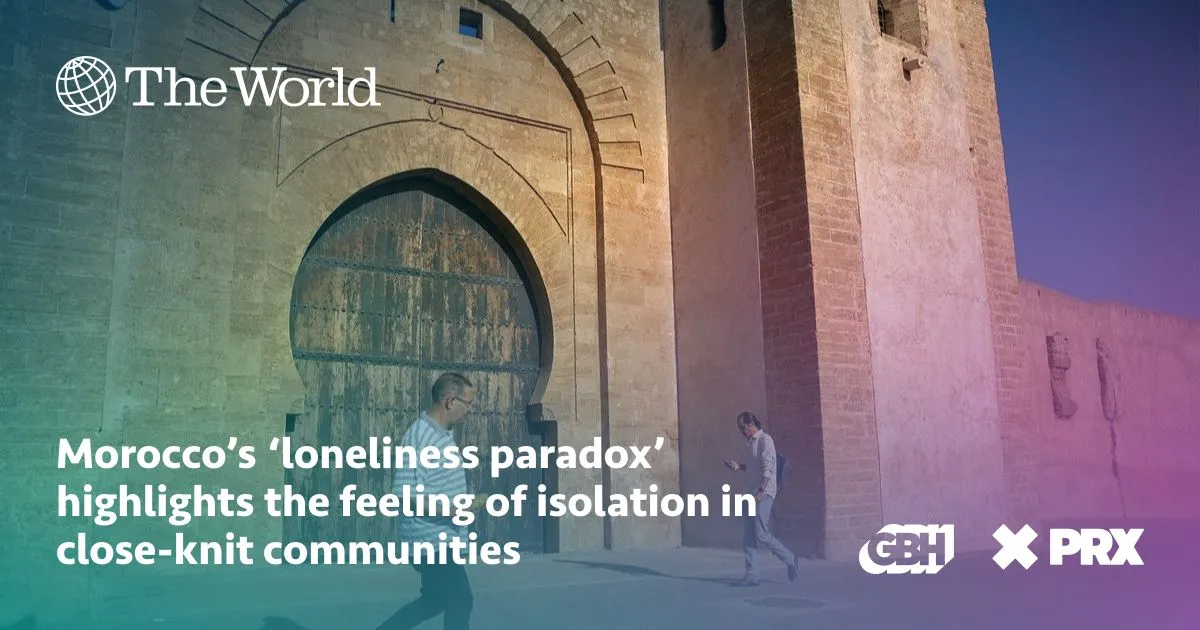

Exploring the Loneliness Paradox in Morocco
Loneliness is becoming an increasingly pressing global health concern, yet its presence is often obscured in tightly woven societies like Morocco. Here, the abundance of family and friends can create a deceptive façade, masking the deeper feelings of isolation and despair that many individuals experience. Mohammed Abu Obeid, a 28-year-old tailor from Tangier, exemplifies this struggle. Despite being surrounded by loved ones, he finds it challenging to voice his feelings of loneliness, fearing that others may dismiss or misinterpret his emotional state. This sentiment is echoed across Moroccan society, where expressing loneliness can lead to accusations of ingratitude or weakness.
Moroccan sociologist Safae Ben Fraiha articulates this phenomenon as the "loneliness paradox," highlighting the societal stigma surrounding the acknowledgment of loneliness in the presence of community. The prevailing attitude within these communities suggests that one cannot feel lonely when surrounded by others, leading individuals to internalize their struggles and suppress their emotions. A recent study conducted by the Annecy Behavioral Science Lab underscores this issue, revealing that many Moroccans view loneliness as a taboo subject, often denied or minimized.
The Impact of Cultural Norms on Mental Health
Research indicates that loneliness in Morocco is often associated with negative connotations, equating it with laziness or a lack of initiative. This cultural mindset contributes to the invisibility of loneliness as a serious issue. Interviews conducted by researchers with individuals from various backgrounds revealed a profound disconnect between personal experiences of loneliness and societal perceptions. Participants reported that discussions about loneliness often led to feelings of isolation and misunderstanding, as they felt compelled to conform to societal expectations of emotional resilience.
Despite the challenges, the Annecy study aims to shed light on the complexities of loneliness and foster dialogue around mental health in Morocco. Young people, particularly those from the Gen Z demographic, are increasingly vocal about their mental health needs, advocating for greater attention to educational and healthcare spending, including mental health services. However, the traditional values upheld by older generations often hinder open conversations about emotional distress.
In the absence of formal government initiatives aimed at addressing loneliness, younger Moroccans are finding solace in peer support. Individuals like Abnur Saberi, a 27-year-old PhD student, highlight the importance of trusted friendships in navigating feelings of isolation. This generation's willingness to discuss their emotions openly presents a glimmer of hope, suggesting that change may be on the horizon as more people begin to recognize the need for emotional support in their communities.
As reported by theworld.org.
