
Insights from the CIFAS Reports on Morocco's Actions
The Intelligence Center of the Armed Forces (CIFAS) and state security forces have recently clarified their findings following the declassification of official reports concerning the events that unfolded in Ceuta on July 30. These reports, which were issued shortly after the mass influx of immigrants began, highlighted the apparent inaction of Moroccan agents in the face of this "migratory wave." Although the documents do not directly criticize Morocco, they suggest two significant points: the lack of response from Moroccan authorities and the potential discontent stemming from Spanish Prime Minister Pedro Sánchez's visit to Algeria.
One particular CIFAS report, dated at 1 PM on July 30, indicates that it is "very likely" that Moroccan authorities are not actively facilitating the migratory wave; however, they have thus far acted in a negligent and passive manner. The report also notes that a certain level of dissatisfaction may exist in Morocco related to Sánchez's visit to Algeria on July 20, 2026. Furthermore, it speculates that Morocco might attempt to exploit the situation in Ceuta to benefit its strategic interests, adding another layer of complexity to the scenario.
Potential Security Implications and the Role of the Guardia Civil
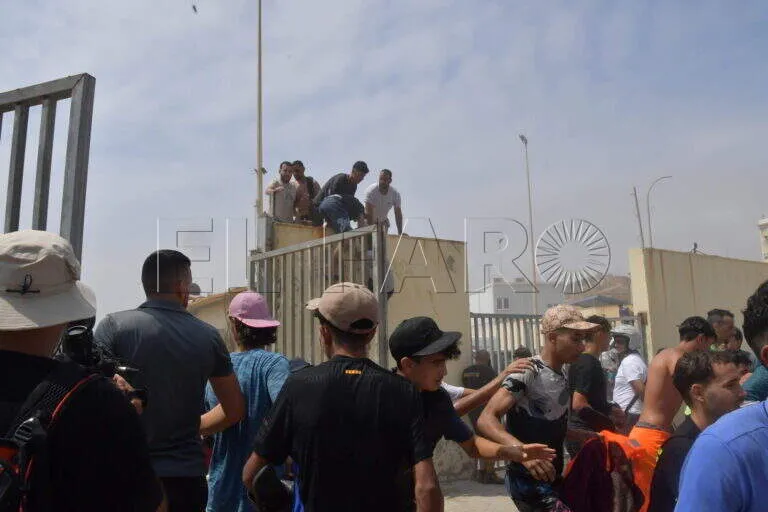
The CIFAS report posits that the deterioration of conditions in Ceuta is likely to require the mobilization of the Armed Forces in the near future, with a probable increase in public security incidents in response to the worsening situation. The Guardia Civil has also contributed to this assessment, presenting additional reports that provide a clearer picture of the unfolding events. According to these documents, thousands of individuals were waiting in nearby towns such as Castillejos and Rincón for the right moment to attempt entry into Ceuta, with estimates suggesting groups as large as 6,000 congregating near the city.
Interestingly, despite Morocco's plan to bolster its border presence with around 1,000 military and gendarmerie personnel, the Guardia Civil observed a continued passive stance from Moroccan forces during this period. This observation was significant, as earlier analyses by the CIFAS had already hypothesized a possible temporary relaxation of Moroccan border control coinciding with the Throne Day celebrations, potentially serving as a political pressure mechanism.
The reports do not provide definitive evidence of a political directive from Rabat; however, they do indicate that Spanish authorities noticed a sudden shift in Moroccan actions. A warning was issued to Rabat prior to July 30, yet the documents do not clarify how Moroccan services responded to this information or what instructions were relayed to their on-ground forces. The Guardia Civil noted that many candidates were moving at a slow pace towards the border, taking advantage of the apparent inactivity from Moroccan forces, which allowed them to directly access national territory without the need for the long swims often required in previous events.
Furthermore, the Guardia Civil drew attention to the King of Morocco's speech during the Throne Day celebrations, which emphasized improving the living conditions of Moroccans and reinforcing social justice and stability. The speech also stated Morocco's commitment to transparency and constructive partnerships with its allies, suggesting that the monarchy is not likely using immigration as a retaliatory tactic against Spain, especially on such a significant national day.
Ultimately, considering Morocco's unique sociopolitical context, it is challenging to believe that any significant event would occur without the regime's knowledge or consent. However, it is deemed improbable that the mass wave of immigrants was either sanctioned or encouraged by Moroccan authorities. Currently, several hypotheses have emerged regarding Morocco's inability to manage the migratory event, including operational overstretch and surprise, which may have left them ill-equipped to handle the surge of candidates.
As reported by elfarodeceuta.es.