
A new policy report from the Stimson Center, a distinguished think tank based in Washington, provides an in-depth analysis of Morocco's evolving political, economic, and geopolitical landscape. The document, authored by experts Lana Bleik, Hafed Al Ghwell, and Yusuf Can, illustrates Morocco's transformation from its traditional role to a proactive regional actor that plays a pivotal role at the intersection of Europe and Africa. This shift is characterized by what is termed 'strategic transactionality,' which emphasizes Morocco's calculated alignment of interests to garner diplomatic and economic backing while collaborating on shared priorities, including counterterrorism, migration management, and energy security.
Central to this foreign policy framework is the ongoing Western Sahara dispute, which the report identifies as the cornerstone of Morocco's diplomatic efforts. The Stimson Center highlights how Morocco's assertion of sovereignty over the region shapes its international relations. The report asserts that Morocco effectively administers the territory west of a defensive sand wall while the eastern area remains a UN-monitored buffer zone. Notably, it specifies that the Polisario Front lacks administrative presence in Western Sahara, with its supporters residing in camps near Tindouf, Algeria.
The recent adoption of UN Security Council Resolution 2797 in October 2025, which positions Morocco's autonomy proposal as the primary solution to the conflict, represents a significant diplomatic achievement for Rabat. The report emphasizes that subsequent negotiations have taken place in Madrid and Washington under US leadership. Moreover, it notes concerns raised by US officials regarding the Polisario's alleged ties to regional terrorist networks, leading to proposals in Congress to designate the group as a foreign terrorist organization.
Morocco's continental diplomacy is further bolstered by its growing influence in Africa. The report reveals that only 15 out of 54 African Union member states continue to recognize the self-proclaimed Sahrawi Arab Democratic Republic (SADR), which lacks recognition from the United Nations. In contrast, 22 African nations have established consulates in Morocco's southern provinces. Morocco's reintegration into the African Union in 2017 was a strategic move to challenge the AU's recognition of SADR from within the organization.
The recognition of Moroccan sovereignty over Western Sahara by the United States in December 2020, linked to the Abraham Accords with Israel, marks a substantial shift in international consensus. This recognition has not been reversed by the Biden administration, indicating its perceived permanence. The European Union has also expressed that genuine autonomy could represent a viable solution to the conflict.
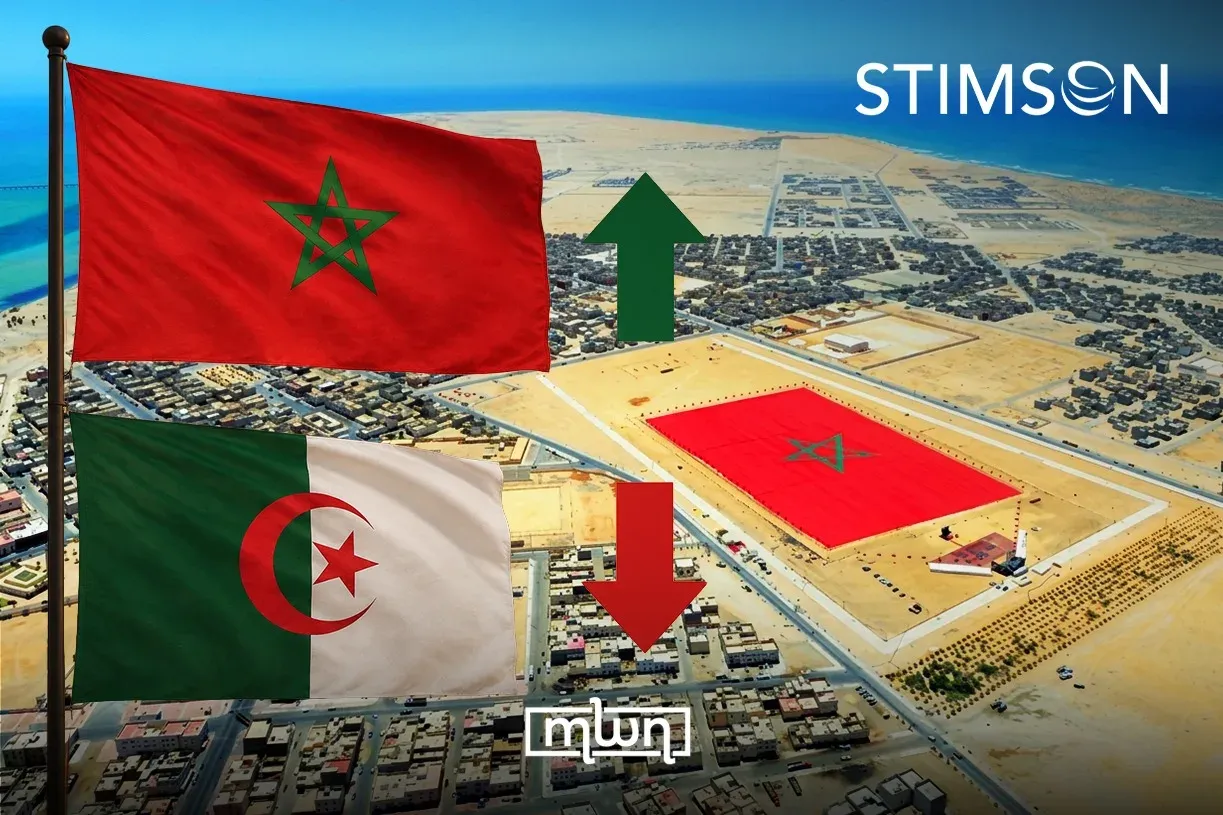
The report devotes significant attention to the rivalry between Morocco and Algeria, highlighting a geopolitical shift that has seen Morocco gain diplomatic supremacy while Algeria's influence wanes. It recounts Algeria's severance of diplomatic ties with Morocco and escalatory actions, including imposing visa requirements on Moroccan citizens. The authors emphasize that the rivalry encompasses competition for regional influence, divergent geopolitical orientations, and a significant arms race.
Amidst this rivalry, there is cautious optimism for potential reconciliation. Following the adoption of Resolution 2797, King Mohammed VI extended an invitation for dialogue to Algerian President Tebboune, signaling a willingness to mend ties. However, the anticipated timeline for negotiations proved to be overly optimistic, reflecting the complexities of the situation.
The Stimson Center's analysis suggests that Morocco has successfully built a coalition that effectively limits Algeria's options regarding the Sahara debate, leaving the latter with diminishing diplomatic leverage. The report further notes Algeria's growing isolation in the Sahel region, while Morocco strengthens its relationships with neighboring states. Successful reconciliation could lead to enhanced economic integration within the broader Maghreb region, improved cooperation on counter-terrorism, and a reduction in irregular migration to Europe.
Morocco's economic transformation is also pivotal to its diplomatic positioning. The country's GDP, estimated at around $154 billion in 2024, makes it Africa's fifth-largest economy, with a real GDP growth rate projected at 4.9% for 2025. The report highlights the significance of Morocco's automotive sector, which represents approximately 25% of total goods exports, and its ambition to become a hub for battery materials and green energy.
However, the report also addresses structural challenges facing Morocco, such as declining water availability, high unemployment rates, and educational disparities. The nation aims to produce substantial amounts of desalinated water and has implemented reforms to promote inclusive growth by 2035. The Stimson Center warns that Morocco's future trajectory hinges on its ability to create jobs, adapt to climate change, and effectively deliver on its policy ambitions.
As reported by moroccoworldnews.com.