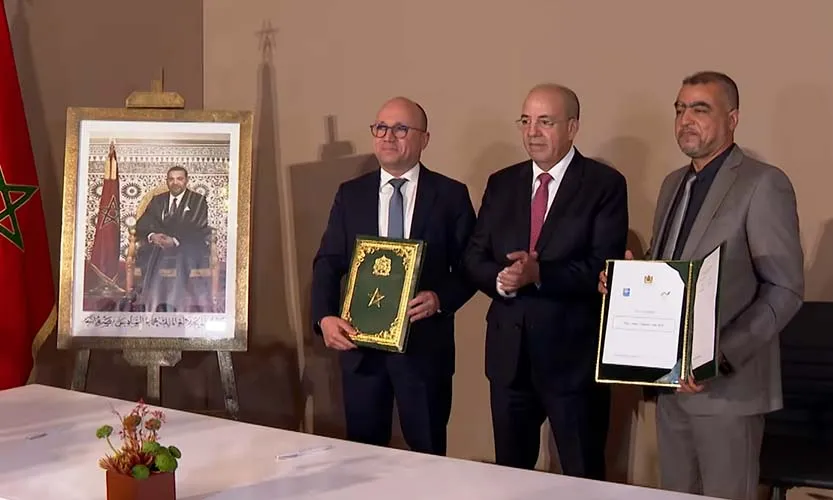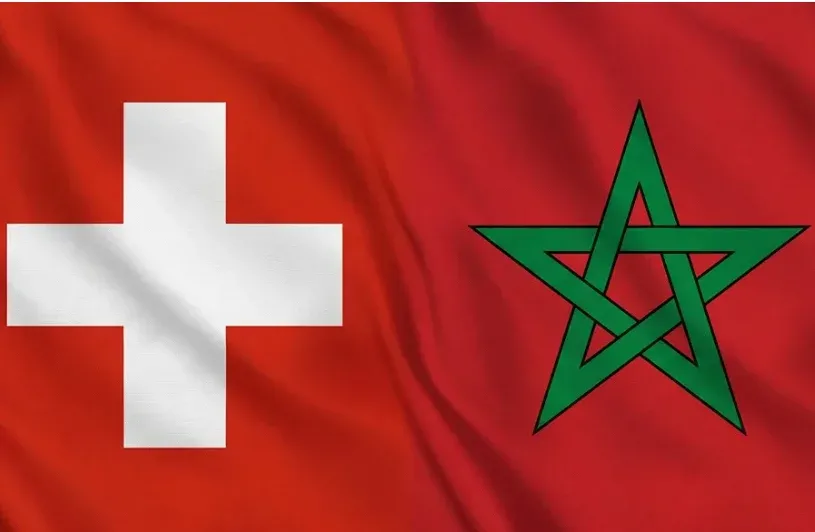
The recent dissemination of a summary from the joint statement issued between Switzerland and Morocco, which was signed on April 24 in Bern, has sparked a partial interpretation of Switzerland's stance on Western Sahara. However, the complete document introduces crucial nuances that are absent from the abridged version circulated by Rabat. The widely shared excerpt highlights that Switzerland regards Morocco's autonomy proposal as the 'most serious, credible, and pragmatic basis' for resolving the conflict. This phrasing, utilized in various diplomatic contexts, has been portrayed as significant support for Morocco's position.
Yet, the full text of the statement presents a more balanced framework. In the section dedicated to Western Sahara, Switzerland first reaffirms its traditional position within the United Nations framework. 'Regarding the process concerning the question of Western Sahara, Switzerland reiterates its support for the central role played by the United Nations, as well as for the efforts of the Secretary-General's Personal Envoy to facilitate and conduct negotiations aimed at achieving a fair, lasting, and mutually acceptable political solution that guarantees respect for the right to self-determination.'
This element is fundamental: the document does not merely mention the autonomy proposal but situates it within a negotiation process overseen by the UN, explicitly linked to the right to self-determination. The statement further adds another paragraph that has been highlighted in Morocco's official communication: 'In this context, Switzerland considers the autonomy initiative presented by Morocco to the Secretary-General of the United Nations on April 11, 2007, as the most serious, credible, and pragmatic basis for resolving this dispute.'
The key lies in the phrase 'in this context.' This means that the reference to autonomy does not appear as an independent or exclusive solution; rather, it is integrated into a broader framework that includes negotiation, consensus among the parties, and respect for international law. The statement also incorporates a relevant reminder that is seldom included in summaries: 'Switzerland recalls the cardinal importance of the fundamental principles enshrined in the UN Charter [...] and the right to self-determination.'
This balance is part of Switzerland's traditional position, characterized by the defense of multilateralism and international law, without explicitly aligning with either party. The distinction between the circulated excerpt and the complete document is significant. While the summarized version emphasizes recognition of the Moroccan initiative, the full text maintains the legal framework of the United Nations and the explicit reference to the right to self-determination.
Practically, this means that Switzerland, in a conflict where diplomatic language is particularly precise, recognizes that the omission of certain elements can significantly alter the perception of a state's positioning. The joint statement between Switzerland and Morocco does not constitute a fundamental shift in position but rather a balanced formulation within the existing international framework. The difference between the complete text and the circulated excerpt illustrates, once again, the importance of accessing integral sources in a conflict where the battle for narratives is a central aspect of the dispute.
As reported by noteolvidesdelsaharaoccidental.org.