
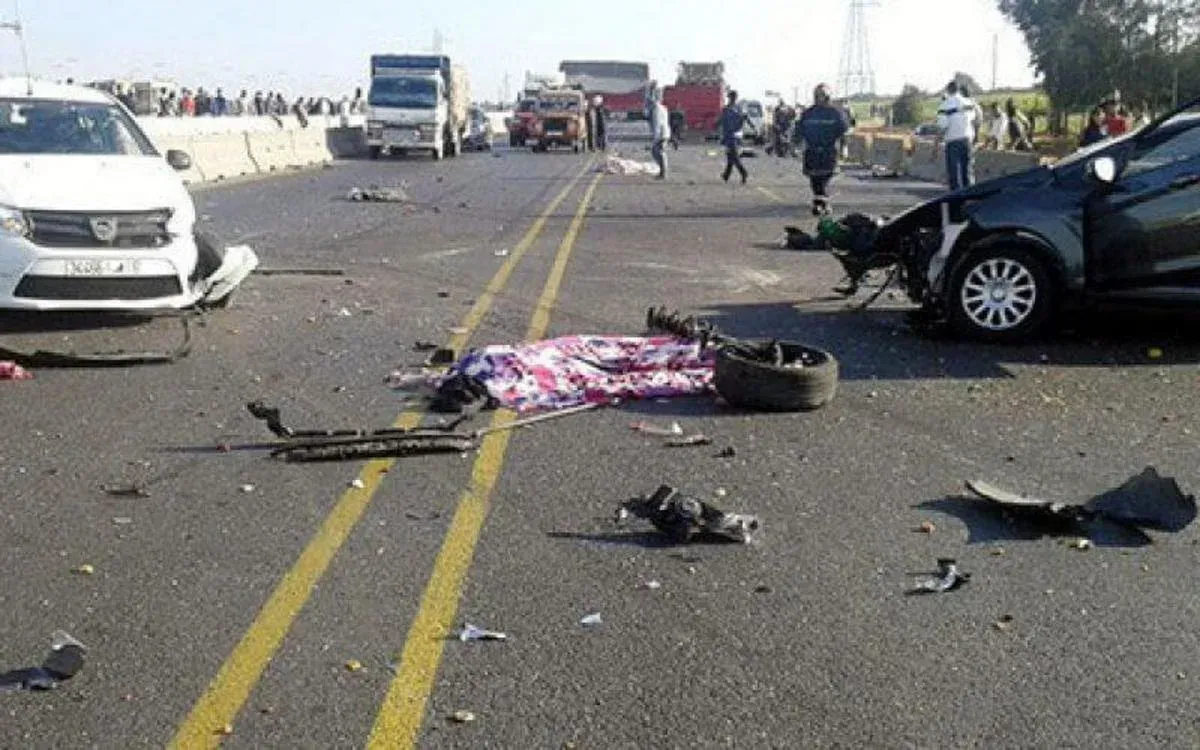

When a foreign vehicle is temporarily admitted into Morocco, it is crucial for the owner to understand that it must eventually leave the country, regardless of its condition. This includes vehicles that have been involved in accidents or are no longer operational. The responsibility for the vehicle remains with its owner as far as customs are concerned, and without proper regulation, the owner may be barred from exiting the territory.
Motorists traveling to Morocco with foreign-registered vehicles must exercise caution, particularly in the event of an accident. The temporary admission granted at the border does not evaporate simply because the vehicle is significantly damaged or inoperable. In a notice aimed at travelers, the German Foreign Office emphasizes that any vehicle brought into Morocco must be re-exported. Failure to do so can result in the owner being denied exit from the country and facing significant customs penalties. Notably, this rule applies to vehicles that have been involved in accidents.
The core of this issue lies within the framework of temporary admission. Upon entering Morocco, the foreign vehicle is registered by customs in the name of the traveler. Until the vehicle is re-exported or its status is regularized, the owner remains accountable for its presence in the kingdom. Therefore, a vehicle that has become unusable cannot simply be abandoned in a garage or permanently entrusted to someone else. The German Foreign Office clarifies that a vehicle admitted temporarily cannot be left with a third party without the explicit permission of Moroccan customs.
This regulation affects Moroccans residing abroad (MRE) who return to Morocco with their personal vehicles, as well as foreign tourists. It complements the various formalities imposed on foreign vehicle owners in Morocco.
Accidents Do Not Nullify Customs Obligations
In the event of a serious accident, the vehicle owner must promptly notify their insurance provider and contact customs to clarify the conditions for regularization. Depending on the vehicle's condition, the issue must be resolved before departure, which may involve re-exporting the vehicle or going through customs clearance. The German notice also highlights the importance of having valid insurance; the driver must possess a green card that is recognized in Morocco. This document is subject to verification by the police and will be requested in the event of an accident.
The situation can become particularly complex if the vehicle is immobilized far from the port or border used for entry. Transporting a severely damaged car back to its original location can incur substantial costs. However, abandoning the vehicle without following proper procedures can lead to complications and potential restrictions when trying to leave Morocco.
Similarly, if a motorist intends to sell a vehicle temporarily admitted in Morocco, the vehicle must first undergo customs clearance, and the applicable taxes must be paid. MREs aged 60 and above may, under certain conditions, qualify for a 90% reduction on the value assessed for customs clearance of their vehicle. However, this benefit does not automatically resolve the situation for an accident-damaged car.
Before leaving Morocco without their vehicle, owners must ensure that their temporary admission has been appropriately cleared by customs. An accident may render the car unusable, but it does not eliminate its record in Moroccan customs databases.
As reported by bladi.net.
