
The Shift in Eid al-Fitr Celebration in Morocco
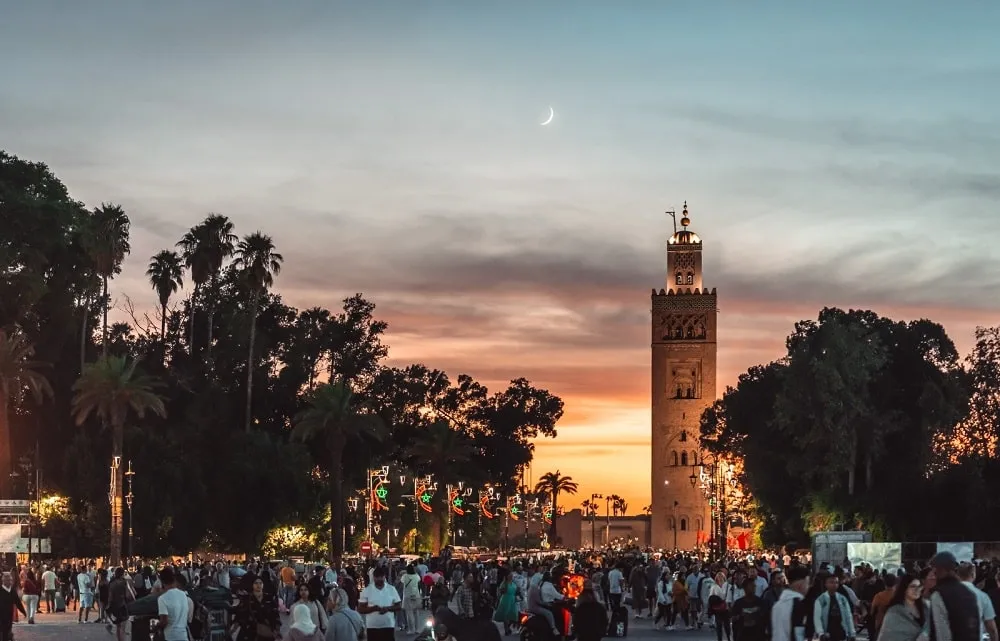
The recent celebration of Eid al-Fitr in Morocco has sparked discussions and raised questions regarding the methodologies used for determining the date of this significant Islamic holiday. Initially, astronomical calculations indicated that Eid would be observed on Saturday, March 21, 2026. However, to the surprise of many, the actual celebration took place on the preceding Friday. This shift underscores the importance of real visibility conditions when observing the lunar crescent, which marks the end of Ramadan and the beginning of the month of Shawwal.
On the evening of March 19, the expectation based on astronomical data was that visibility of the lunar crescent would be challenging, leading to predictions of a continued Ramadan lasting 30 days. This was attributed to the expected conditions at sunset, where the crescent would be young and low on the horizon. Specifically, the crescent was projected to be observable only if it met certain astronomical criteria, including a minimum duration of visibility after sunset, an optimal age of the crescent, and a sufficient angle above the horizon.
Reconciling Astronomical Calculations with Observational Data
As it turned out, the crescent was observed on Thursday evening, March 19, by the Moroccan Ministry of Habous and Islamic Affairs. This finding confirmed the commencement of Shawwal on Friday, leading to the unexpected celebration of Eid al-Fitr. Astronomer Hassan Talibi explained that discrepancies between calculated predictions and actual observations highlight the necessity of relying on empirical data. While astronomical models provide valuable estimates, they cannot guarantee the conditions necessary for visibility, such as clear skies or the experience of observers.
It is essential to note that the Moroccan process for determining the sighting of the crescent involves both astronomical calculations and observational practices. The criteria for visibility are well-established and include factors like the crescent's age and its position in the sky. Despite the initial predictions, the successful observation of the crescent demonstrates the adaptability of traditional practices to incorporate new empirical evidence.
Ultimately, this incident does not undermine the reliability of the astronomical calculations used in Morocco, nor does it diminish the country's standing as an exemplary nation in lunar observations within the Arab and Islamic communities. The observations made by expert committees, who have extensive experience and favorable weather conditions, allowed for the confirmation of Eid al-Fitr on Friday. This event serves as a reminder of the importance of both science and tradition in marking significant religious occasions.
As reported by medias24.com.