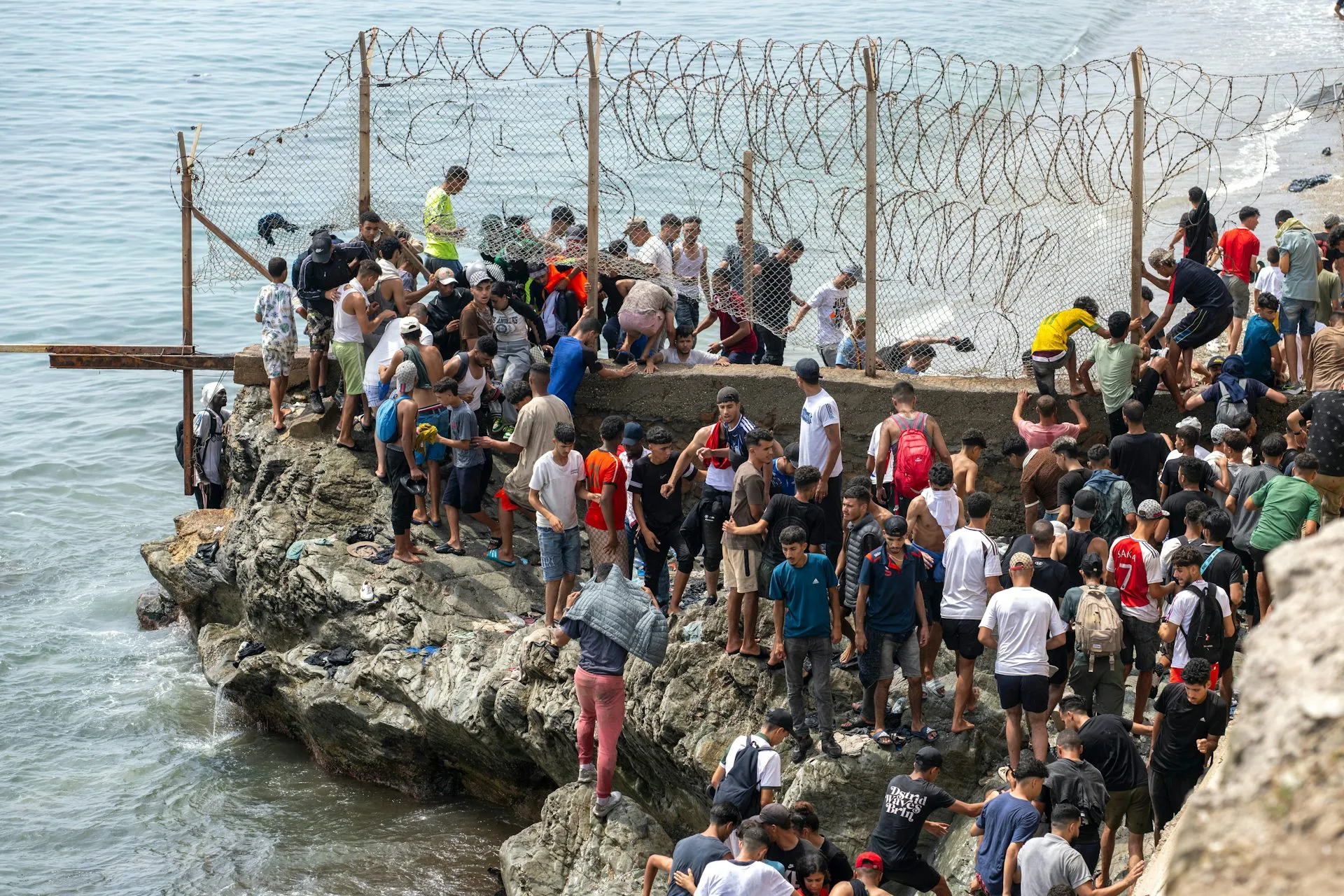

In June 2021, a resolution from the European Parliament highlighted a significant shift in border control policies at Ceuta, a Spanish enclave situated on the North African coast and home to approximately 83,000 residents. According to the resolution, Moroccan authorities temporarily relaxed their border controls, leading to a surge of roughly 9,000 individuals crossing into Ceuta that May. This influx included at least 1,200 unaccompanied minors and came shortly after Spain allowed the leader of the Polisario Front, Brahim Ghali, to receive medical treatment within its territory. Ghali heads the movement advocating for Western Sahara's independence—a territory Morocco claims as its own and prioritizes in its diplomatic engagements. Morocco viewed Spain's actions as a betrayal and subsequently recalled its ambassador from Madrid, marking a significant diplomatic rift.
By March 2022, Spanish Prime Minister Pedro Sánchez altered decades of Spanish neutrality by endorsing Morocco's plan for Western Sahara's autonomy. This shift in stance underscores the complex geopolitical dynamics at play in the region. Fast forward to July 31, 2026, when Ceuta faced another crisis as tens of thousands of Moroccans attempted to cross into the enclave, with estimates varying from 40,000 to 60,000 arrivals. Tragically, this event resulted in at least 72 deaths, primarily by drowning, as many of those who crossed sought to return home soon after, spurred by the influx of misleading information regarding their status in Spain. The European Union's migration commissioner confirmed that none of these individuals reached mainland Europe, emphasizing the chaotic nature of this latest migration episode.
The persistent migration challenges at Ceuta are deeply intertwined with historical and geopolitical issues. The Spanish enclaves of Ceuta and Melilla have been under Spanish control for centuries, and their status remains controversial. Researchers argue that Spain has treated these territories as integral parts of its nation rather than as colonial remnants. This perspective has allowed Spain to maintain its sovereignty over the enclaves, even after Morocco gained independence in 1956. Despite Morocco’s attempts to have these territories recognized as areas awaiting decolonization by the United Nations, the situation remains unresolved, further complicating migration dynamics in the region.
Migration diplomacy has emerged as a tactic in this territorial dispute, where control over migration flows is leveraged for political gains. Ceuta is particularly susceptible to this strategy because Spain relies on Morocco to manage its border, even as Morocco asserts claims over that very border. The primary territorial contention for Morocco lies not with Ceuta or Melilla but with Western Sahara, a former Spanish colony that continues to be listed by the United Nations as a territory pending decolonization. Despite Morocco's autonomy proposal for Western Sahara receiving increasing international acknowledgment, the situation remains fraught with tension, particularly with Algeria's support for independence.
The events of July 31, 2026, were precipitated by a ruling from Spain’s Supreme Court, which mandated that individuals intercepted at sea could not be immediately returned to Morocco and required individual assessments. This legal decision coincided with rampant misinformation spread across social media platforms, creating a false narrative that the border was open and that obtaining legal status in Spain was feasible. The closure of the Bab Sebta border crossing by Morocco in December 2019 exacerbated economic challenges for those in the surrounding communities, leading to an increase in migration attempts as individuals sought alternative means of livelihood.
As the crisis unfolded, the European Commission reaffirmed that Ceuta is not part of the Schengen free-movement area, clarifying that irregular arrivals could not simply traverse to mainland Europe. The rhetoric surrounding the crossings, particularly the framing of them as an 'invasion,' diverts attention from the core issues—namely, the unresolved status of Ceuta, the economic hardships in nearby Fnideq, and the implications of Spanish immigration policies. The dramatic narratives surrounding migration often obscure the underlying causes, as evidenced by a 37 percent decline in irregular crossings into the EU during the first half of 2026. Thus, the situation in Ceuta is not merely an immigration crisis but a complex interplay of geopolitics, economic despair, and historical grievances that continue to shape the region.
As reported by theconversation.com.