
Understanding the Ceuta Migration Crisis
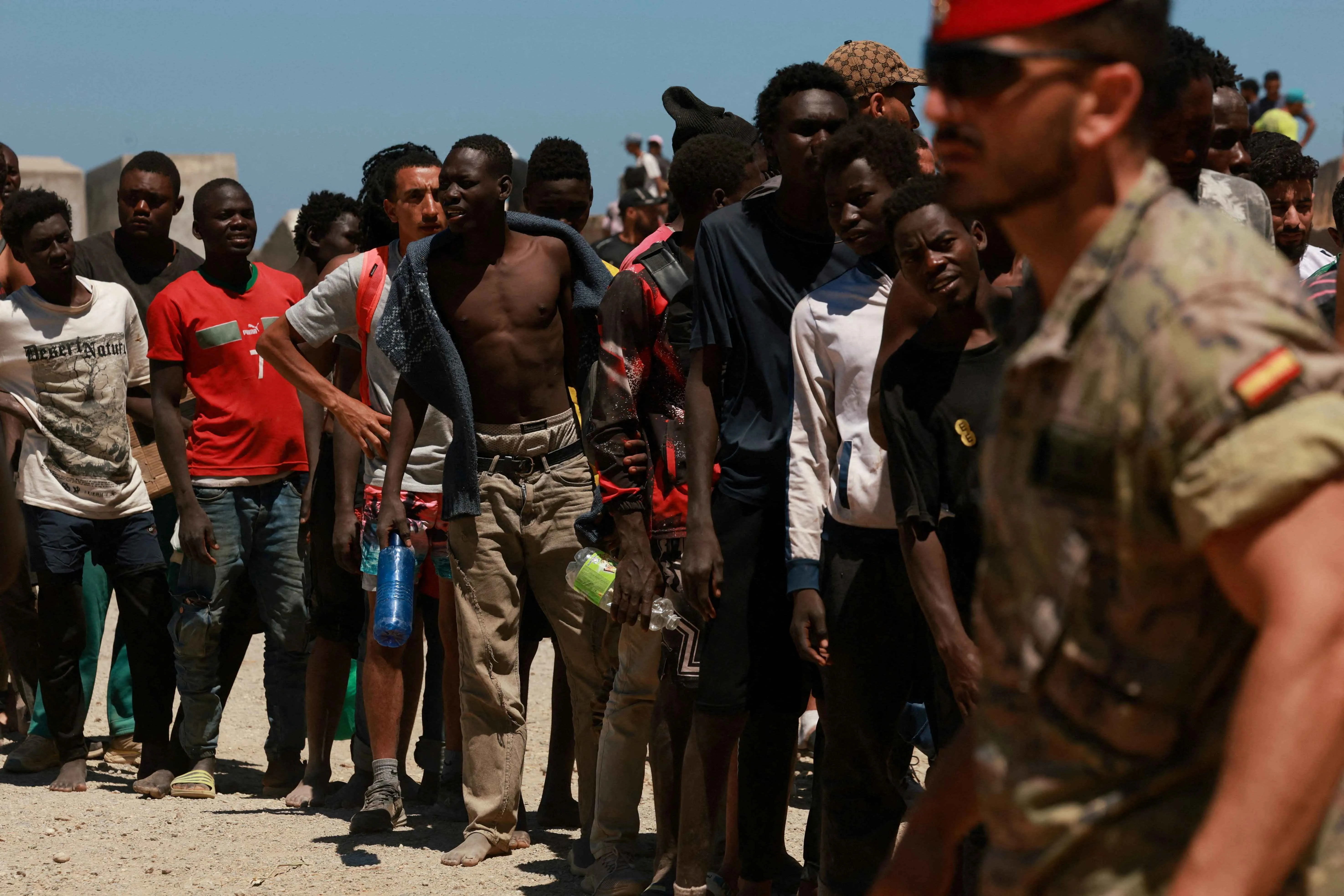
Recently, the world witnessed a significant influx of migrants from Morocco to the Spanish enclave of Ceuta, with reports indicating that over 60,000 individuals crossed the border within a mere 24 hours. This unprecedented event has led to Spain deploying troops and resources to manage the situation, pushing migrants back and attempting to regain control of the territory. However, this incident transcends a simple migration crisis; it reflects deeper ideological struggles and political maneuvers that are currently playing out between Morocco and various domestic factions.
To grasp the full scope of what transpired in Ceuta, one must look beyond the immediate ramifications of Europe’s open-border policies. It is crucial to delve into the internal dynamics within Morocco itself. The country operates as a semi-constitutional monarchy, with a king at the helm alongside an elected parliament where various political entities, including Islamist, secular, and nationalist parties, vie for power. Tensions have escalated in recent years, particularly following Morocco's normalization of relations with Israel under the Abraham Accords, a move that has drawn ire from various Islamist factions within the nation. These groups contest the monarchy's legitimacy, asserting that the king's governance does not align with their interpretation of Islamic law.
The political landscape shifted further after the normalization agreement, as opposition groups seized on the recent Palestinian narratives to garner support against the monarchy. The division within Moroccan society, primarily between the ruling establishment and radical Islamist groups, has created a volatile environment, setting the stage for the mass migration we observed. It is this backdrop of political strife and ideological conflict that contributed significantly to the crisis in Ceuta, revealing the intricate interplay between domestic unrest in Morocco and the broader implications for European border policies.
As reported by thefp.com.