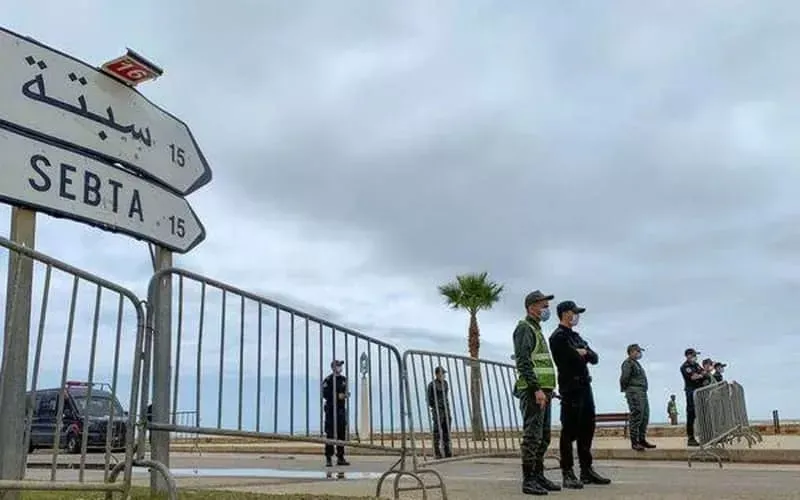

Analyzing the Sebta Crisis: More Than Meets the Eye
The Sebta crisis has sparked intense discussions, but to attribute such a significant event to a state requires more than geographical proximity, coincidental timing, or the presence of digital networks operating within its borders. Morocco, as a sovereign state, possesses a complex institutional system comprised of various administrations, services, and decision-making chains. Therefore, merely noting that an event occurred on its territory is insufficient to ascertain its origin or imply that it was orchestrated or commissioned by the state. The real question here shifts from "Did Morocco orchestrate Sebta?" to a more nuanced inquiry: who knew what, when, who prepared what, who amplified the situation, and who benefited from the narrative surrounding the crisis that ensued? This shift in perspective is crucial for understanding the deeper implications of this situation.
Political Timing and Regional Tensions
The timing of the crisis cannot be overlooked. It coincides with a politically and symbolically charged period in Morocco, marked by the royal speech, Throne Day celebrations, and an allegiance ceremony in Tétouan. The geographic closeness to Sebta lends extra weight to this timing. While this should not be construed as definitive evidence, in intelligence analysis, timing is a crucial factor. A massive mobilization, which is inherently unpredictable, occurs precisely when Morocco is engaged in one of its key institutional sequences of the year. The question arises: why provoke a crisis that could swiftly transcend the migration issue and impact the country’s international image and its relations with Madrid and, more broadly, its European environment? Just weeks before elections, amidst Throne Day celebrations, a crisis of this magnitude appears more as a considerable risk than an obvious tool of foreign policy.
Furthermore, the crisis unfolds in a context where relations between Algeria and Morocco have significantly deteriorated, especially following Pedro Sánchez's visit to Algeria. Although it’s clear that the hostility between Rabat and Algiers exists, it would be reductive to consider them as symmetrically hostile entities. Morocco has not adopted confrontation with Algeria as a continuous diplomatic line and has kept the door open for dialogue and rapprochement, while Algeria's stance remains notably rigid. This asymmetry complicates any claims of a direct link between Sánchez's visit and the events in Sebta. Instead, it leads to the broader question of whether external actors perceived the vulnerabilities surrounding Sebta as an opportunity for influence or amplification, highlighting the importance of recognizing the transnational aspect of digital activity related to the crisis.
The internal political calendar in Morocco also plays a vital role in this analysis. With the country on the brink of significant electoral deadlines, it’s essential to question whether a crisis of this nature genuinely benefits Moroccan institutions. For political parties, a dip in the country’s image and a renewed crisis with a European partner does not necessarily translate to electoral gains. For the government, the episode adds political and diplomatic pressure during an already sensitive period. For the Ministry of Interior, which is central to organizing and securing the electoral process, a major migration crisis that mobilizes security forces and attracts significant international attention presents more complications than benefits. Thus, the strategic rationality comes into play: which actor would intentionally provoke a crisis with such high political, diplomatic, and security costs at such an unfavorable moment?
In the context of the Sebta crisis, the security measures on both sides of the border must also be examined critically. While the Guardia Civil was indeed present, reports indicate that they were quickly overwhelmed by the scale of the mobilization. The pertinent question is not about their absence but rather what they anticipated and the resources they had at their disposal. If a mobilization had been brewing in the digital space for weeks prior, the central issue of preventive intelligence emerges: who knew what, and when? A border represents an interface where flow control does not solely depend on the territory of departure but also involves surveillance, anticipation, and interception mechanisms from the other side.
In conclusion, the Sebta crisis serves as a reminder that events are seldom straightforward and often involve a myriad of actors and motivations. The complexities surrounding this situation challenge us to look beyond surface-level interpretations and consider the broader implications of digital mobilization and regional dynamics.
As reported by mobile.telquel.ma.