

Why Some Moroccans Choose to Stay in Ceuta Despite Harsh Realities
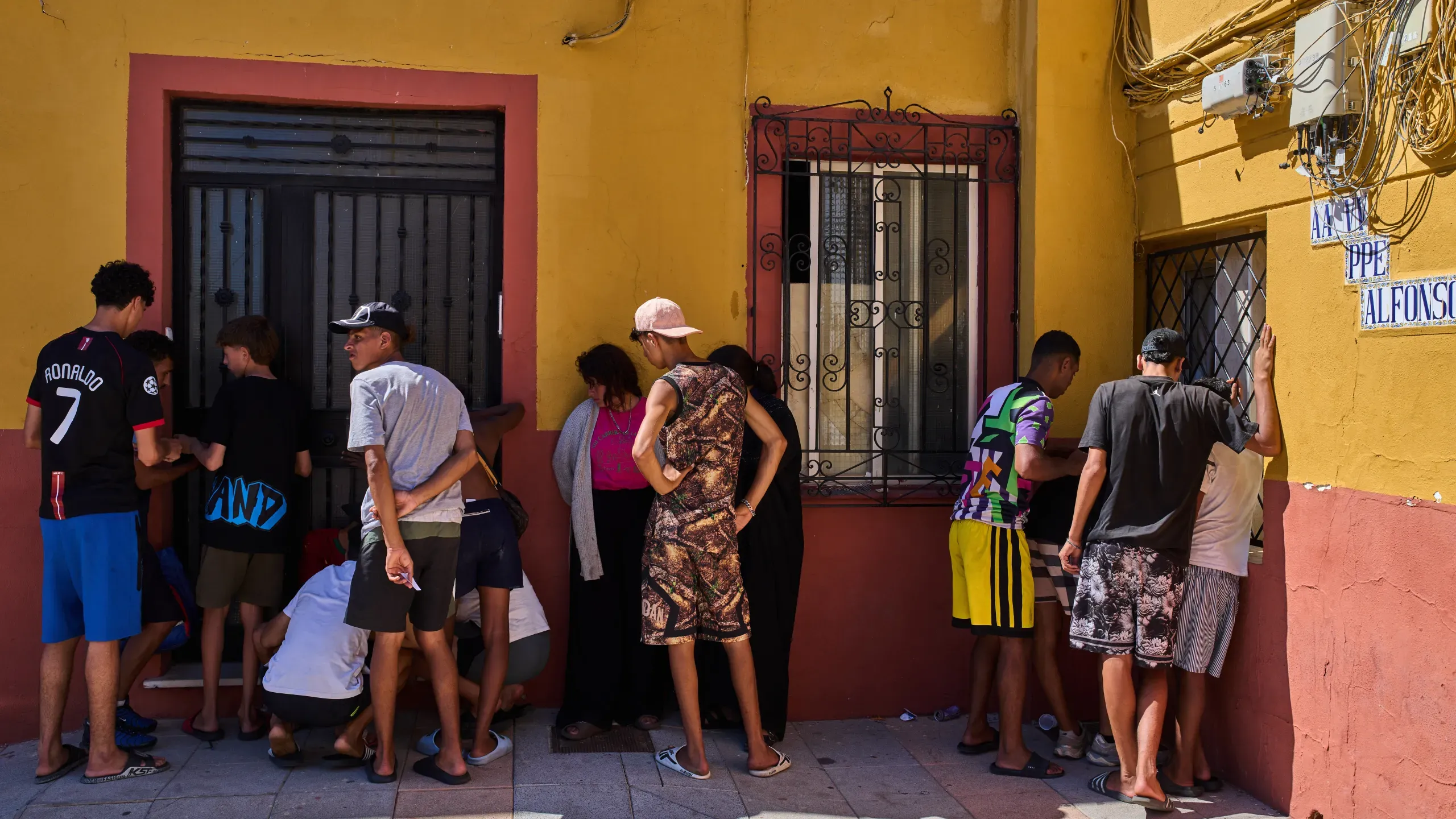
In the wake of an unprecedented wave of mass crossings to the Spanish city of Ceuta, tens of thousands of individuals who had arrived have since returned to Morocco after enduring days without adequate shelter or food. Buses have been organized to transport these returnees back to their original cities. However, a significant number of others have chosen to remain in Ceuta, despite the precariousness of their situation, the lack of guarantees for transitioning to mainland Spain, and the ongoing risks of deportation. A recent investigation published by the British newspaper The Sunday Times on August 8, 2026, sought to unravel the reasons behind this phenomenon, asking why some Moroccans who reached Ceuta are reluctant to return home despite facing a starkly different reality than the one that motivated their journey.
The article revisits Morocco and Ceuta through the testimonies of young individuals, employees, and researchers, linking the decision to remain with a combination of unemployment, low wages, rising living costs, and challenges related to healthcare and education. Many young people express a deep-seated belief that the positive economic indicators reported in Morocco are not reflected in their personal lives or opportunities.
The Impact of Social Media on Migration Decisions
Among the many stories highlighted, the narrative of 23-year-old Aladdin Boulaaz stands out. On July 30, while repairing his motorcycle at home in Tangier, Aladdin opened Instagram and came across posts claiming that "the borders were open" and videos of others celebrating their arrival on the Spanish side. It was in that moment that he saw an opportunity he could not ignore. He shared this information with his younger brother, Anas, a 21-year-old unemployed individual. After gathering some belongings and bidding farewell to their parents and two sisters, they set off on the motorcycle toward the border.
Aladdin left his motorcycle at a gas station along the way and continued on foot. A week later, he informed the newspaper that he was uncertain of its fate, suspecting he had lost it for good. However, the loss of his motorcycle was not enough of a reason to turn back. With a degree in business management, he had found work at a fruit export factory but earned only about 300 euros per month, barely covering his expenses. Aladdin’s personal experience illustrates why he is determined to remain outside Morocco, where many of his friends are also unemployed. He also highlights the difficulties in accessing quality health and educational services and the scarcity of stable job opportunities. When presented with a sudden chance to reach Europe, he viewed it not merely as a rumor but as a potential turning point in his life.
After crossing into Ceuta, he experienced the same harsh conditions as many other newcomers, facing shortages of food, water, and shelter. These dire circumstances led the majority to opt for voluntary return, while Aladdin and his brother decided to stay. "I want a better life for my family," Aladdin summarized to the correspondent, Katie Gattens, as the underlying motivation for his choice. His ambition is not linked to a specific project or job in Spain but rather to reach a place where he believes he can build a better life for his family and live with dignity.
This notion reveals a critical aspect of the phenomenon examined in the investigation: many who remain in Ceuta do not necessarily have a clear plan for what comes next, yet they share a strong conviction that returning to the conditions they left behind is not the option they desire. The article notes that this sentiment is not confined to the most impoverished sectors. It cites the case of "Fatima", a 33-year-old human resources professional from Rabat with two university degrees and an above-average salary, who also considers seeking a better life outside Morocco. She attributes her thoughts to rising living costs over the past two years and worries about health, education for her children, and future stability, indicating that despite her relatively better social standing, she too is losing hope.
The investigation further conveys feelings of inequality in opportunities and the difficulty of social mobility among young people. Some respondents mentioned the prevalence of nepotism and corruption, believing that personal success is not solely dependent on education and hard work. Fatima illustrates how families with limited incomes struggle with the costs of medicine, the need for children to drop out of school, or the absence of social security. She notes that the youth who left witnessed these daily struggles within their families before deciding to depart. While these testimonies do not yield a single unified reason for migration or staying, the cases that remained, which are the focus of the article, share a common element: the uncertainty in Ceuta has not yet made returning seem like a better option.
The article juxtaposes these experiences against the backdrop of Morocco's macroeconomic picture, highlighting a reported economic growth of around 4.5%, advances in the automotive industry as a key export sector, and a booming tourism sector that saw a 14% growth in 2025. However, the investigation raises questions about the distribution of the benefits of this growth. Political science professor Mohamed Dadawi from Oklahoma City University points out that the needs for development remain substantial, and national successes are not felt equally throughout all regions, fostering a sense of what he describes as "relative deprivation" among many. The piece also notes the expansion of the informal sector and the impact of drought years on agriculture, complicating the ability of segments of the youth to secure stable incomes.
From this perspective, the investigation does not portray those crossing to Ceuta as a monolithic social group; rather, it finds a common thread among the testimonies that reflects a lack of confidence in the likelihood of improving personal circumstances within Morocco in the near future. The article ties the wave of migration to the protests that occurred in Morocco the previous year, recalling the "Generation Z" demonstrations in various cities that raised demands related to health, education, and social conditions. Aladdin mentions that his friends participated in those protests, but he feels they did not produce the change they were hoping for.
The article revisits the discourse surrounding those protests, highlighting what was referred to as "Morocco at two speeds," contrasting investments in major infrastructure and the preparations for the 2030 World Cup with the calls for improvements in health and education. It also reflects on the slogan that gained traction during the protests, advocating for prioritizing hospitals over stadiums, and for revising the 2026 budget to allocate additional social spending after the Ministry of Economy acknowledged that youth demands centered on enhancing education and health.
In addition to the reasons for staying, the investigation provides further details on how many of these individuals reached Ceuta. According to figures from the Spanish Ministry of Interior used in the article, 2026 recorded 3,835 border crossings by July 29, marking a 160% increase compared to the same period the previous year, the highest level since records began in 2017. However, the most significant spike occurred as social media transitioned from merely broadcasting general news about migration to sharing content detailing how to reach and cross the border. The investigation cites research conducted by Sebastien Vandermeerch from the open-source investigative platform Bellingcat, which observed the emergence of groups and posts on Facebook related to irregular crossings to Ceuta, some of which were later deleted. It also noted an increase in the online usage of terms like "Fnideq-Ceuta" and "harraka" (migrants). Among the most widely circulated examples was a video posted on Instagram on July 28, which garnered 1.4 million views, showing a young Moroccan with a selfie stick, while the screen displayed a route on Google Maps from Fnideq to Ceuta. Such content contributed to transforming the concept of migration from an abstract desire among some youth to a tangible pathway by identifying a point of departure, the route, and images proving that others had successfully made it. This was exactly the situation for Aladdin and his brother.
The newspaper estimates that around 70,000 individuals attempted to reach Ceuta in the wave at the end of July, with most returning after days of difficult conditions in the city. In Fnideq, the newspaper observed last week the arrival of dozens of buses designated for returning individuals to their original regions, indicating a gradual shift from the influx of tens of thousands to a much smaller number who chose to stay, including Aladdin and his brother. However, the investigation notes that posts continue to circulate on social media announcing a new date for another collective attempt on Saturday, August 15.
As reported by thevoice.ma.
