
Exploring the Recent Diplomatic Developments
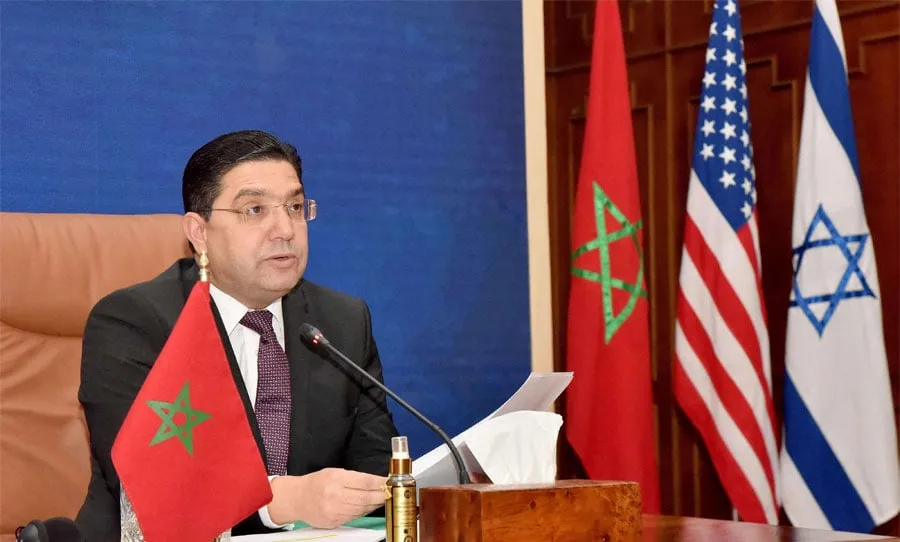
In a significant move driven by American mediation, Morocco and Israel have decided to elevate their diplomatic representation, exchange ambassadors, and enhance bilateral agreements focused on investment protection and avoiding double taxation. Furthermore, the two nations are set to resume direct flights. This decision raises questions about the motivations behind this shift in relations at this particular juncture. Moroccan decision-makers assert that the foundation of this renewed relationship was established through a trilateral agreement signed in 2020 between Morocco, the United States, and Israel. This agreement facilitated discussions on various strategic issues among the three nations, with Morocco's ties to the US being notably strategic.
Over the past six years, the relationship has evolved to possess significant geostrategic dimensions, particularly concerning security in the Sahel region of Africa and shared interests. The Moroccan leadership believes that it is now appropriate to transition the Moroccan-Israeli relationship from mere management to institutionalization, which includes the establishment of embassies, the appointment of ambassadors, and the development of strategic partnerships. Another compelling justification for enhancing ties between Morocco and Israel is the country’s strategic vision regarding international relations. Morocco seeks to engage with all parties and form robust alliances while taking the necessary time to assess these interactions within its strategic framework, avoiding a purely circumstantial or procedural approach.
Public Sentiment and Political Context
However, there exists a pervasive sense of frustration among the Moroccan populace regarding the manner in which significant strategic decisions are made, often without consulting public opinion. Data indicates that Israel has become a primary arms supplier to Morocco, ranking second only to the United States from 2021 to 2025, according to SIPRI. Additionally, Morocco aims to establish itself as a leading African nation in cybersecurity, leveraging Israeli technology. The trade volume between Morocco and Israel surged from a mere $20 million in 2021 to $118 million last year, signaling a growing economic relationship.
Despite these developments, Morocco had previously delayed this diplomatic elevation, linking it to improvements in the regional and international climate. The recent atrocities in Gaza posed challenges for Moroccan policymakers in advancing these relations. Interestingly, the timing of the announcement — coinciding with the current electoral climate in Morocco, where various parties are advocating for a freeze on relations with Israel — came as a surprise. Moroccan Foreign Minister's personal attendance alongside his Israeli counterpart at a recent UN meeting, followed by the announcement of upgraded ties, left many Moroccans feeling bitter, particularly as there was no comment from the Moroccan authorities on this decision.
It is essential to recall that the official resumption of relations between Morocco and Israel occurred under the previous government, which faced significant political repercussions as its parliamentary representation dwindled from 125 seats to just 13. The current ruling party, which is campaigning on an anti-normalization platform, will likely face the repercussions of this renewed relationship amid upcoming elections. Public apathy towards participation in the electoral process is expected to increase as a result, reflecting broader discontent with how strategic decisions are made without public consultation.
From Israel's perspective, the timing appears calculated, especially as Israeli Foreign Minister's visit to the United Nations was unannounced, occurring against the backdrop of significant internal crises due to ongoing conflicts in Gaza and Lebanon. Any diplomatic achievement could bolster Prime Minister Benjamin Netanyahu's standing in the upcoming elections, particularly as Israel continues to grapple with increasing international isolation. While this event may be framed as a diplomatic victory within Israel, it remains a modest achievement given the complexities at play.
The joint statement issued by Morocco, the US, and Israel reflects several overlooked variables. Public support for normalization in Morocco has plummeted from 31% to just 13% following the events of October 7 and the subsequent violence in Gaza. Critics argue that while strategic relationships are often dictated by what is termed the 'strategic mind' of the state, the stark reality is that Morocco will open an Israeli embassy in Rabat, while Spain will simultaneously establish a Palestinian embassy in Madrid.
As reported by alquds.co.uk.