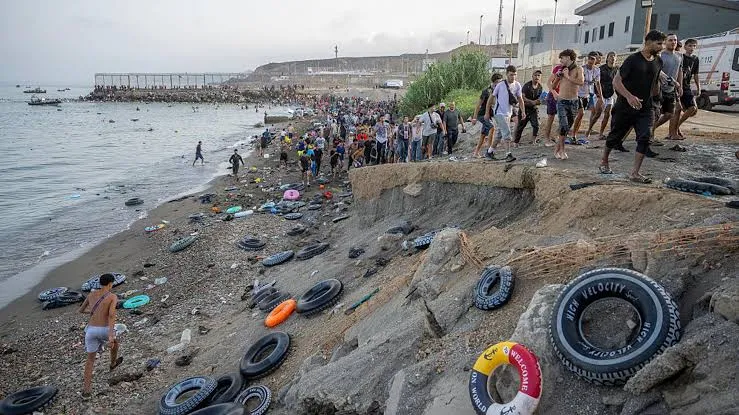

Unraveling the Migration Crisis in Ceuta
In recent weeks, the Spanish enclave of Ceuta has witnessed an unprecedented influx of migrants, with over 70,000 individuals crossing the border from Morocco. While the Spanish government claims that most of these migrants have returned to Morocco, reports indicate that thousands remain in Ceuta, including minors, creating a complex and tense situation. Maria Munoz Morillo, the Spain bureau chief for Euronews, sheds light on the factors contributing to this migration crisis, which has roots in both historical and contemporary geopolitical dynamics.
Morillo emphasizes that the mass migration to Ceuta is not an isolated incident; a similar event occurred in 2021 when 10,000 migrants crossed the border. This pattern suggests a strategic use of migration by Morocco to exert pressure on Spain. The recent surge has been linked to social media rumors, which spread messages claiming that the border was open and that migrants would receive residency documents and housing upon arrival in Spain. This misinformation has fueled the rush of individuals seeking a better life in Europe.
The Role of Government and International Relations
While the Spanish government initially attributed the migration wave to human trafficking networks, it later became clear that Morocco might have played a more active role in this situation. Although there is no concrete evidence of Moroccan government involvement, intelligence reports suggest that Moroccan authorities may have facilitated the mass crossing as a means of political leverage. The Spanish government, however, continues to publicly support Morocco, highlighting their collaboration in addressing migration issues. This relationship complicates the narrative, as public sentiment in Spain grows increasingly critical of Morocco's actions.
In addition, the geopolitical context cannot be overlooked. The recent tensions between Spain and the United States, particularly under the Trump administration, have left Spain in a vulnerable position. With Morocco being a U.S. ally, there are concerns that the United States may prioritize its relationship with Morocco over Spain, further complicating the situation for the Spanish government. As Morillo points out, many citizens in Spain are frustrated with their government's stance, feeling that there should be greater accountability directed toward Morocco for its role in the crisis.
This ongoing migration crisis in Ceuta highlights not only the immediate humanitarian challenges but also the broader implications of international relations and the complex dynamics of migration in the region. As the situation develops, it raises critical questions about the responsibilities of governments and the impact of misinformation on vulnerable populations.
As reported by npr.org.