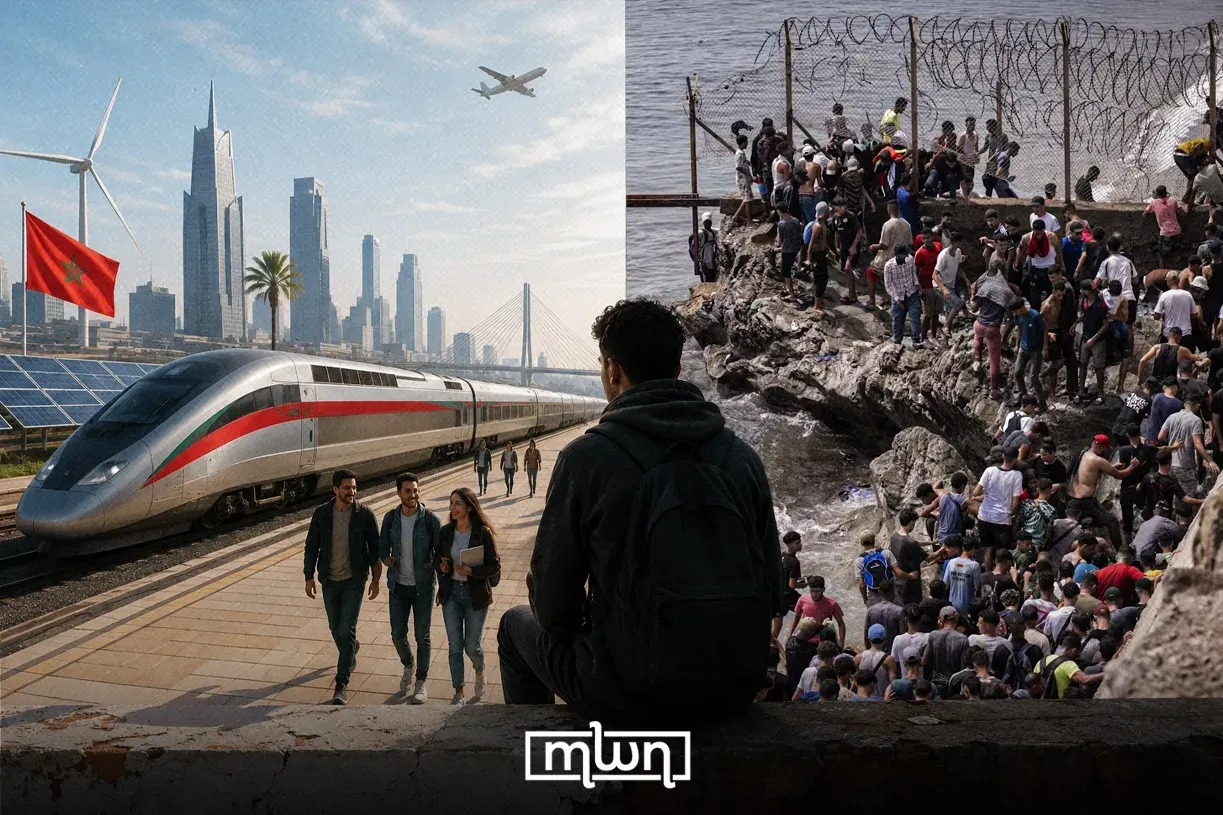

The recent surge of young Moroccans attempting to reach Ceuta has ignited a profound discussion surrounding the motivations behind such perilous journeys toward Spanish soil. This troubling phenomenon has laid bare the tendency of journalists, politicians, and commentators to abandon nuanced analysis in favor of narratives that align with their own agendas. Rather than engaging in thoughtful reflection, many seized the opportunity to reinforce pre-existing beliefs, launch attacks on political adversaries, or promote specific nationalist or ideological stances. The same powerful imagery was employed to construct vastly different narratives: some focused on the themes of irregular migration and border security, while others reignited discussions about Ceuta and Melilla—two Spanish-controlled enclaves on the Moroccan coast that Morocco perceives as remnants of colonialism. Additionally, a faction interpreted the crisis through the lens of shifting geopolitical dynamics involving Morocco, Spain, Israel, and the United States, suggesting that Morocco's growing alliances were influencing its relationship with Spain. Meanwhile, the official accounts of Morocco’s rapid economic advancement starkly contrasted with the desperation exhibited by the youth striving to leave the country.
While each of these issues warrants serious consideration, it is crucial to avoid reducing them to mere slogans or manipulating them to fit pre-determined conclusions. The incident has illuminated four interlinked realities: the ongoing pressure of migration, the unresolved status of Ceuta and Melilla, the impact of American and Israeli partnerships with Morocco on its relations with Spain, and the contradictions inherent in a swiftly developing Moroccan economy that still leaves many behind. To grasp the complexities of this situation requires a careful disentangling of evidence from political rhetoric and an examination of each of these four perspectives on its own merits. This article marks the first in a series addressing these intricate issues, beginning with the current state of the Moroccan economy as viewed through the experiences of the nation's youth.
The Struggles of Young Moroccans: A Personal Perspective
The events unfolding in Ceuta brought to mind the stories of two young Moroccans, whom I will refer to as Omar and Redouane, whom I encountered during a migration surge at the U.S.-Mexico border under the Biden administration. Their experiences profoundly reshaped my understanding of migration—not only towards the United States but also regarding what I am now witnessing in Ceuta. These two individuals initially traveled to Brazil, a country that does not require a visa for Moroccans, before journeying through Central and South America. Their journey entailed crossing treacherous jungles, engaging the services of smugglers, enduring robberies, and sleeping under the stars for a month. They witnessed fellow migrants suffer severe injuries, disappear, or even die far from their homes. By the time they entered the United States, they had traversed one of the most hazardous migration routes in the world.
Upon being processed and released by U.S. immigration authorities, Omar and Redouane shared advice with other migrants regarding potential pathways to remain in the country. Some considered applying for asylum based on religious conversion, sexual orientation, or political persecution for opposing their governments. While the accuracy of these ideas in reflecting U.S. asylum law was less significant than the insights they provided into the migrants’ motivations. When I raised the topic of political asylum, both young men reacted with shock, expressing a belief that such a claim would preclude them from ever returning to Morocco, which they firmly rejected. This response puzzled me; if they were desperate enough to risk their lives crossing continents, why did the possibility of returning to Morocco still hold such importance? Their attachment to their homeland was commendable, as their aspirations were not to escape Morocco but to secure enough resources to return, invest in their country, and uplift their families to lead dignified lives, just as many of their compatriots had done before them. The substantial remittances sent back by the Moroccan diaspora not only encourage others to leave but also lead some in the government to support such endeavors. Regrettably, I lost touch with Omar and Redouane and can only hope they achieve their dreams and obtain a piece of the American dream.
Economic Growth Amidst Inequality
Morocco has made considerable strides in infrastructure development, establishing high-speed railways, modern ports, highways, industrial zones, renewable energy projects, and sports facilities. The Tangier Med port has emerged as one of the Mediterranean's key ports, further integrating Morocco into international supply chains, particularly within the automotive and aerospace industries. Moreover, the nation is vigorously preparing for the 2030 World Cup. The International Monetary Fund (IMF) estimated that Morocco’s economy grew by 3.2 percent in 2024, with projections suggesting growth could exceed 5% in 2026, according to the OECD (Organization for Economic Cooperation and Development). However, the tangible effects of this economic advancement are not solely represented by impressive statistics or advanced infrastructure; for ordinary citizens, development is fundamentally measured by job availability, wages, housing, education, healthcare, and the opportunity to lead independent lives. On these critical metrics, Morocco's transformation appears strikingly uneven. The OECD has characterized the labor market as plagued by widespread informal employment, high youth unemployment rates, low female workforce participation, and significant emigration. Similarly, the IMF acknowledges Morocco's ongoing struggles with inactive youth, unequal opportunities for women, and an economic framework that fails to distribute opportunities equitably.
One of the most glaring indicators of this systemic exclusion is the number of young Moroccans classified as NEET—an acronym for individuals who are Not in Employment, Education, or Training. This classification encompasses not only the unemployed actively seeking work but also inactive youths who are neither studying nor looking for employment, thereby capturing a broader and often obscured crisis than the unemployment rate alone. According to a report from Morocco’s High Commission for Planning (HCP) released in April 2026, approximately one in three Moroccans aged 15 to 29 falls into the NEET category. The HCP also highlighted that young women are disproportionately represented among these figures, with many NEET individuals classified as inactive rather than officially unemployed. In the narrower 15-24 age group, the OECD previously reported a NEET rate of approximately 25%, with notable disparities between rural youth (30.3%) and urban youth (21.8%). Alarmingly, women accounted for nearly three-quarters of that group.
While these statistics indicate that the NEET issue extends beyond Morocco to encompass a regional North African challenge, it is essential to approach such comparisons with caution, as variations in the year, age range, and methodologies between sources can lead to discrepancies. Notably, available data reveals that Morocco's NEET rate is roughly twice that of Spain, which stands at 15.3%, with the EU average being even lower at 12.8%. The implications of these figures are stark; many of these young people are not merely “unemployed,” but have become disconnected from the very institutions designed to facilitate their transition into adulthood. As they fail to acquire qualifications or gain experience, they struggle to earn the income necessary to establish independent lives, marry, and start families, effectively living outside the economic progress their country is celebrated for.
Morocco is at risk of squandering its demographic dividend—the limited window in which working-age individuals outnumber dependents such as children and the elderly. With nearly one-third of Moroccans aged 15 to 29 currently inactive in employment, education, or training, coupled with a rapidly aging population projected to see those over 60 rise from 13.8% of the population today to 22.9% by 2050, the urgency becomes clear. If Morocco cannot effectively employ and nurture its youth before this critical period concludes, it risks aging without achieving prosperity, leading to a smaller workforce tasked with supporting an increasingly large elderly demographic.
The disparities and contradictions within Morocco's development are particularly pronounced at the lower end of the economic spectrum. Visual documentation has captured families watching as bulldozers demolish their shanties and dilapidated homes. While the government aims to replace unsafe settlements with modern housing, such experiences can be traumatic for affected residents. A structure deemed an urban blight by planners may represent a family's home, workplace, and social support system. Even with replacement housing offered, families often encounter delays, eligibility disputes, debt, transportation costs, or relocations far from their established livelihoods. Additionally, the same applies to land designated for roads, airports, tourist attractions, and public transit. Furthermore, development can inadvertently harm disadvantaged individuals by driving up living costs. New infrastructure, tourism growth, and foreign investment can inflate land prices, rents, and service costs, benefiting property owners and businesses while tenants, pensioners, informal workers, and families reliant on fixed incomes struggle to cope with escalating expenses. In the last decade, Morocco's consumer-price index surged by 21%, with food prices being particularly pressing as they constitute roughly 40% of the average Moroccan consumer's expenditure, impacting poorer households even more significantly. Even as inflation slows, it does not reverse the prior increases, leaving many families to contend with a continued erosion of purchasing power.
Historically, other nations have endured similar growing pains. Singapore, for instance, faced upheaval during its rapid transformation in the 1960s, as slums, farms, and informal communities were cleared for factories, roads, and planned neighborhoods, resulting in the resettlement of approximately 50,000 households between 1960 and 1972. However, Singapore's success was not solely attributed to demolition and infrastructure development; the government coupled redevelopment efforts with mass public housing initiatives, education, and industrial job creation, achieving full employment by the early 1970s. Displaced residents were provided with credible pathways into the burgeoning economy. The key lesson for Morocco is that physical modernization cannot be deemed successful merely by the replacement of old structures with new ones. It only becomes socially sustainable when ordinary citizens can afford to thrive within the society being created. Morocco's accomplishments in terms of ports, railways, stadiums, and industries are genuine achievements, but if progress becomes another source of hardship, it risks alienating the very youth who have embarked on treacherous journeys toward Ceuta, motivated not by a lack of progress, but by a perception that this progress benefits others while complicating their own lives.
The Moroccan government must remain vigilant against the potential for unrest brewing beneath the surface. In his most recent throne speech, delivered on the same day as the Ceuta incident, the king urged patience from his citizens, assuring them that the best is yet to come. This underlying tension was poignantly expressed during the GenZ 212 demonstrations that began in September 2025. Predominantly organized through social media platforms like Discord, TikTok, and Instagram, this decentralized youth movement called for enhanced healthcare, education, employment opportunities, and greater accountability from their leaders. The protests intensified following a tragic incident involving fatalities at a public hospital in Agadir and spread across major cities such as Rabat, Casablanca, Tangier, Marrakech, Agadir, and Oujda.
One of the movement's most compelling messages juxtaposed Morocco's investments in sports infrastructure with the dire conditions prevalent in public healthcare facilities and educational institutions. Protestors adopted slogans such as “Health first” and “We want hospitals, not stadiums,” emphasizing that while new infrastructure is essential, a modern nation cannot solely be evaluated based on visible advancements, especially when the institutions essential for citizen welfare remain inadequate. These demonstrations voice the frustrations echoed in NEET statistics, highlighting a shared sense of disillusionment among young people. While the individuals participating in the protests and those attempting to cross into Ceuta may not be identical, both groups are responding to a pervasive lack of confidence. They do not believe that Morocco's purported economic progress guarantees them a meaningful role in its future.
As reported by moroccoworldnews.com.