
The Southern Border and the Price of Incoherence
Directed by Miguel Ángel Sánchez Sáez, the discourse surrounding Spain's southern border highlights the critical nature of the Strait of Gibraltar and its implications for Spanish defense strategy. Gibraltar may delineate one side of this geopolitical pinch, yet Morocco compels us to recognize the Strait as a crucial area for national security. A mere glance at the map reveals that the issues at hand transcend the British colony and the autonomous cities of Ceuta and Melilla when considered in isolation. The coastal areas of Cádiz, the Campo de Gibraltar, and the Spanish positions in Northern Africa—including the Chafarinas Islands, Vélez de la Gomera, and Alhucemas—constitute a connected security network. For Spain, Morocco is not just another neighbor; it represents a pivotal element within this strategic flank.
The significance of Rabat's persistent interests cannot be overlooked. While it is typical for any serious state to have its own priorities, the real concern lies in Morocco's unwavering commitment to its objectives, in stark contrast to Spain's frequent oscillation between neglect, delayed reaction, and temporary fixes. For years, Spanish strategic reflection has identified the western Mediterranean, North Africa, and the Sahel as some of the most sensitive areas pertinent to national security. Yet, the repercussions become evident when this analysis fails to translate into sustained action, despite the absence of both diagnosis and doctrine.
Historically, North Africa was once part of the Roman Empire as Mauretania Tingitana and later incorporated into the administrative framework of Hispania in late antiquity. However, this historical connection does not grant the present-day Moroccan state any right to claim Spanish territories or to indulge in fanciful territorial aspirations. What this historical context underscores is a fundamental truth: the Strait has never been an indifferent periphery but a region bound by geography, commerce, warfare, and the necessity of vigilance. Thus, while the southern peninsula and North Africa can be distinguished, they cannot be understood as disconnected entities.
Historical Context and Ongoing Territorial Issues
The contemporary Moroccan state emerged in 1956, marking the end of the protectorate cycle, while the monarchy has adeptly woven this historical thread into a national narrative that solidifies its present and legitimizes its ambitions. Consequently, territorial issues frequently resurface, with the Western Sahara being the most significant yet not the sole matter. Ceuta and Melilla remain part of an enduring claim that seems to never fully fade away.
At times, tensions cool, while at others, they manifest through diplomatic, economic, or legal channels. Although the tone may vary, the underlying issue remains constant. This consistency speaks volumes; states that know what they want do not need to proclaim it daily; they simply advance in the direction they have set when the opportunity arises. Currently, the Western Sahara is still classified by the UN as a Non-Self-Governing Territory, with the Security Council extending the MINURSO mandate until October 2026. This situation is not a closed case but rather a live issue that shapes the dynamics between Rabat, Algiers, and Madrid.
In contrast, Spain has managed this critical juncture with an unsettling blend of caution, habit, and inconsistency. There is reliance on good neighborliness, management of the situation, and hope that time will ease what has not been faced with a firm line. The result is predictable: periodic hostilities toward Ceuta or Melilla, the ongoing Sahara debate, friction with Algeria, and the persistent feeling that this front always resurfaces as an urgent issue when, in reality, it is a permanent concern. Geography cannot be altered by fatigue, nor can the maritime zone grant reprieves to a state that reacts too late. Misunderstanding diplomatic courtesy for security, or sporadic cooperation for strategic loyalty, has proven to be one of the most enduring weaknesses in Spanish policy.
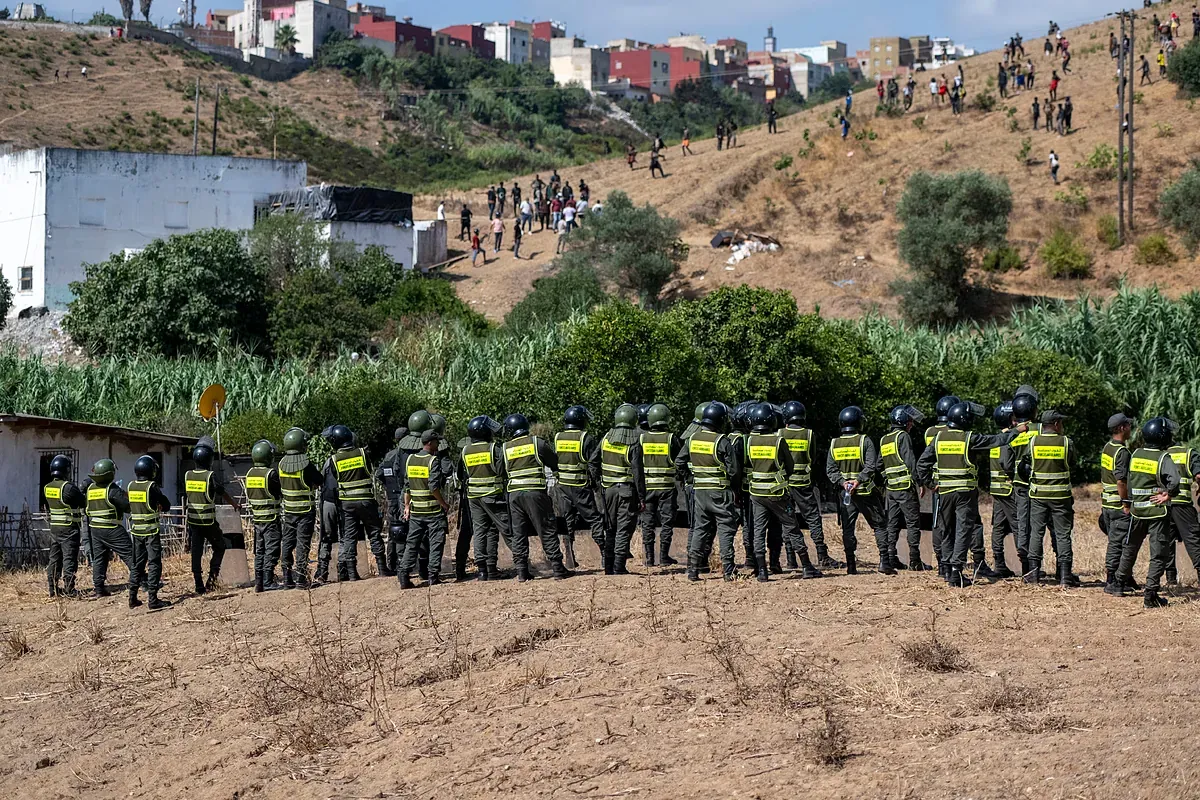
Ceuta and Melilla are not mere anomalies on the map or picturesque remnants of history; they are historically significant Spanish, European, and strategic positions—small in size yet immense in meaning. This significance makes them susceptible to gradual erosion. An overt act of aggression is not necessary to undermine them; rather, a well-calibrated combination of border coercion, economic strangulation, legal uncertainty, demographic pressure, psychological wear, and propaganda suffices. In this context, the European Parliament rejected the use of border control and migration pressure—particularly concerning unaccompanied minors—as instruments of pressure against Spain in 2021. Whether termed hybrid coercion, indirect imposition, or a policy of fait accompli, the underlying logic remains the same. When a state consistently employs multiple levers of erosion without crossing the threshold into open conflict, it transcends mere neighborhood friction.
Morocco has repeatedly demonstrated its skill in navigating this terrain. The Green March stands as a historical lesson, while the Perejil incident, occurring years later, served as a signal. The pressure on Ceuta and Melilla through various means and at different times reflects a pattern too consistent to feign surprise when it resurfaces. Spanish weakness in the face of such challenges does not seem to lie in military capability. Spain maintains a professional armed force, operational experience, and sufficient resources to defend its immediate interests. However, the issue arises a level higher when tactical capacity lacks coherent strategic backing. A state does not only weaken from a lack of means; it erodes when it alters essential criteria, disrupts loyalties, and conveys insecurity regarding its own boundaries. Deterrence relies not solely on available force but also on the credibility perceived in the will to uphold it.
Energy security is integral to this equation. Discussing gas or supplies as if they were separate from defense is insufficient. When relations with Algiers and Rabat are managed through improvisation, the costs extend beyond the diplomatic realm, impacting the stability of an entire flank. The migration issue does not lend itself to simplistic solutions. Frontex reported a 27% increase in the Western Mediterranean route during the first ten months of 2025, noting that over 75% of recorded departures from this route originated from Algeria. Reducing the phenomenon to a single Moroccan lever would be misleading; equally, denying the coercive capacity along the external limit is also incorrect. Additionally, the annual risk analysis warned of the danger that individuals with criminal intentions could blend into these flows and enter the European Union undetected.
The southern front does not end at Ceuta, Melilla, or the Strait; it encompasses the Canary Islands, the Sahel, illicit trafficking, irregular routes, competition for regional influence, maritime delimitations, and the ever-growing intermingling of politics, economics, and human flow control. Today, everything is more interconnected than it was two decades ago. Rabat has understood the value of patience and opportunity far better than Madrid. It knows how to apply pressure, wait, take a step back, and return later through alternative routes. It employs borders, diplomacy, economics, symbolism, and its geographical position in a complementary manner. Furthermore, Morocco possesses a notable ability to position itself favorably on the international stage and present itself to third parties as a useful, stable, and necessary partner. The manner in which the Moroccan state nurtures the sense of belonging among its nationals abroad is also significant, as this theme is explicitly articulated in the official discourse of the Crown. This connection is not treated as merely sentimental but as an extension of the national community and a political asset, even if this population resides in other territories.
The relationship with the United States holds a unique strategic profile, and the recent French rapprochement further reinforces Morocco's diplomatic weight. These maneuvers illustrate how well the Moroccan Kingdom knows how to transform its regional role into a solid negotiating position. A similar dynamic plays out in other sensitive areas, including fishing, agricultural products, relations with the European Union, and legal disputes related to the Sahara. Spain should not limit itself to tariffs or commercial volume but rather consider the genuine reciprocity of costs, demands, and controls.
The European Union has an official control system for imported products, yet it operates selectively and based on risk rather than as a comprehensive inspection of everything crossing the Schengen area. Even with enhanced measures, the frequency of identity and physical controls is set by percentages according to product, origin, and identified danger. It is essential to discuss the extent to which effective intensity and equal demands suffice to protect European producers and end consumers.
Ultimately, what is essential cannot be overlooked: sovereignty, territorial integrity, energy security, stability along the southern flank, and the capacity to avoid living at the mercy of external pressures. Anyone attempting to separate Gibraltar, Ceuta, Melilla, the Sahara, the Canary Islands, and North Africa into disconnected folders has fundamentally misunderstood the situation. The Strait operates as a system; its defense must be treated similarly. Therefore, Spain must articulate the equations of this triangle, addressing the seriousness with which it regards its gateway, establishing priorities, and deciding to defend them. It is imperative to move beyond improvisation, to maintain safeguarding instruments, and to recognize once and for all that defending the south is not episodic or a recurring nuisance but a permanent obligation. The price of incoherence at this border is never paid all at once; it is lost gradually, concession after concession, silence after silence, until one day the nation realizes it has not merely lost a debate but a position.
As reported by almeriahoy.com.