

The Legal Context of the Western Sahara Conflict
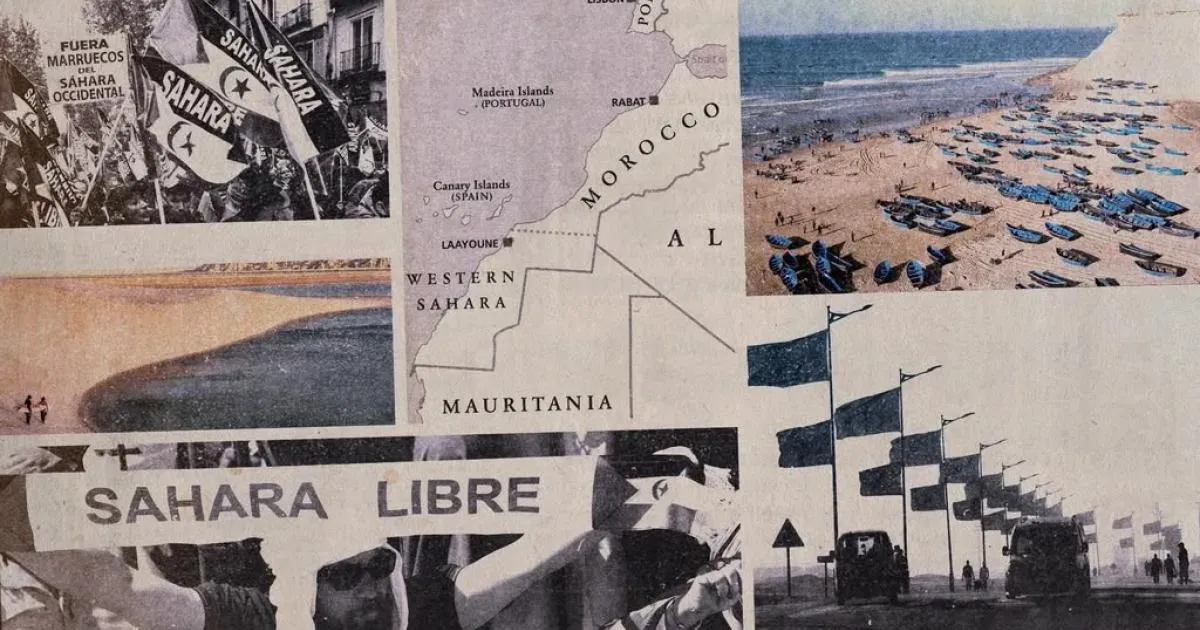
In recent reports, international media have spotlighted the ongoing conflict in Western Sahara, emphasizing its legal implications as a critical issue of decolonization. This focus has revealed Morocco's efforts to solidify a policy of fait accompli in the occupied regions, characterized by various investment and tourism initiatives alongside the exploitation of natural resources. Notably, the British magazine The Week has published a detailed article that delves into the legal framework surrounding the Western Sahara conflict, underscoring the United Nations' classification of the territory as a Non-Self-Governing Territory, which remains in an incomplete decolonization process. The article discusses Rabat's attempts to impose a policy of fait accompli through projects aimed at attracting tourists and investments, particularly those occurring in the coastal city of Dakhla. It is essential to recognize that many visitors traveling to this area may be unaware that they are stepping into a region grappling with one of the longest-standing conflicts globally.
The Historical Roots and Ongoing Struggles
In parallel, the US-based ZNetwork has explored the historical roots and trajectory of the Western Sahara issue, tracing its evolution from the era of Spanish colonial rule to Morocco's invasion in 1975, which sparked an armed struggle led by the Polisario Front. This examination highlights the Sahrawi people’s ongoing aspiration for a UN-sponsored referendum on self-determination, amidst what many describe as Moroccan maneuvers thwarting this essential right. In a revealing interview conducted by ZNetwork with Mohamed Salem Ahmed Labied, the Polisario Front's representative in Catalonia, the diplomat addressed Morocco's strategies to cement its control over occupied Western Sahara. Labied pointed out that the Polisario Front, recognized as the legitimate representative of the Sahrawi people, resumed armed struggle on November 13, 2020, in response to Morocco's breach of the ceasefire in the Guerguerat area. He referenced the findings of a UN fact-finding mission that visited the territory in May 1975, which concluded that there was a significant consensus among the local population favoring freedom and independence. Furthermore, Labied emphasized Morocco's obstruction of the self-determination referendum, its military presence in the region, the exploitation of natural resources, and the repression faced by the inhabitants of the occupied territories.
Concluding the interview, the Polisario Front representative reiterated the organization's primary demands, which include adherence to international law and the resolutions set forth by the United Nations and the African Union. He stressed the necessity of ensuring the Sahrawi people's right to self-determination through a free and democratic referendum organized by the United Nations, alongside the establishment of an independent international mechanism to monitor human rights and protect natural resources within the occupied territories.
As reported by spsrasd.info.
