

Investigating Mosquito Species in Moroccan Cities
Small, inconspicuous, and often challenging to detect, mosquitoes pose a significant threat as carriers of viruses that can adversely affect both human and animal health. Certain species of mosquitoes are known to transmit diseases such as dengue, chikungunya, Zika, and West Nile virus, making their presence in urban environments a matter of great concern that requires diligent monitoring by researchers and health authorities.
In Morocco, a team of researchers has been studying the mosquito populations present in the cities of Rabat and Casablanca since January 2026. This research is part of the BiodiveCITY project, an international initiative aimed at understanding how urban green spaces influence the presence and evolution of mosquito populations. As part of this project, researchers have set up traps at various locations to capture mosquitoes, identify the species present, and track their population dynamics throughout the seasons. One of the key objectives is to determine whether certain green spaces provide more favorable conditions for mosquito development.
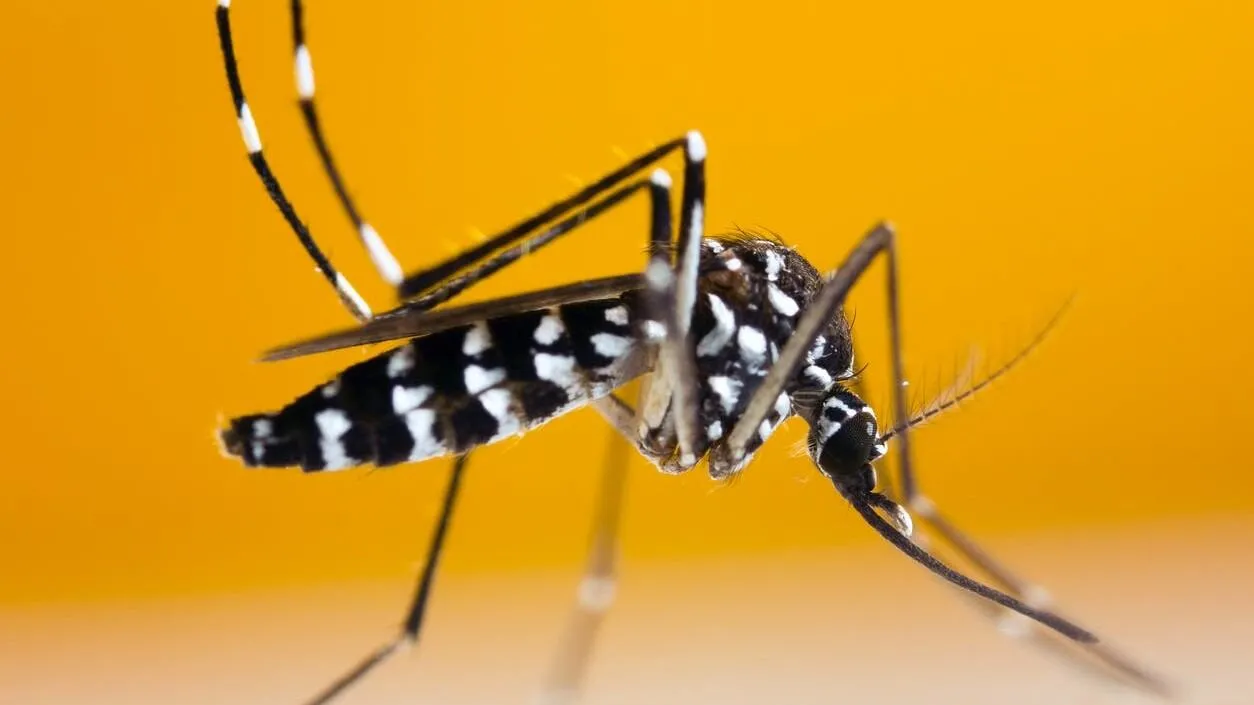
Initial findings have already revealed notable differences between the two study sites. For instance, the tiger mosquito, _Aedes albopictus_, has been identified in Rabat but not in the sampled locations in Casablanca. This observation is part of a broader effort to ascertain which species are present in Moroccan cities, their concentrations, and the environmental conditions in which they thrive. Maria Bourquia, a parasitology professor and project leader in Morocco, explains, "We have formed a unique multidisciplinary consortium that brings together partners from various countries. Our team includes researchers from the Netherlands, France, Spain, and Morocco, working across six cities: Amsterdam, Nijmegen, Barcelona, Montpellier, Rabat, and Casablanca." The comparison between these cities relies on a common protocol, ensuring that all teams operate simultaneously and follow standardized methodologies.
The choice to study Rabat and Casablanca was made primarily due to their proximity and differing urban characteristics, as well as logistical considerations. "We would have liked to work in several cities, but we chose Rabat as it is where our team is based, allowing us to conduct the study more efficiently," Bourquia notes. Casablanca was selected as the second study site for its closeness to Rabat, which facilitates easier access without straining resources or increasing travel time.
Monitoring and Citizen Participation
Since the monitoring began, researchers have utilized various trapping devices, including BG traps, to capture mosquitoes at selected sites. The initial months yielded only a few captures, with Bourquia noting, "We started with a very low population during January and February. However, the situation began to evolve in spring, with an observed increase from March onwards, particularly between March and April." By October, mosquito populations had surged significantly, with Bourquia stating, "We are now truly at the peak, having collected a substantial number of mosquito samples." The team anticipates a gradual decline in populations as temperatures drop, with the monitoring set to continue until January 2027, potentially extending the study further.
This monthly monitoring aims to enhance understanding of how mosquito populations evolve over time and in different environments, focusing particularly on urban green spaces that can offer varying favorable conditions for mosquito development, especially where there are water sources suitable for egg-laying.
“We seek to determine the effects of these urban green spaces on mosquito populations,” explains Professor Bourquia. The researchers hypothesize that these areas may promote the presence of mosquitoes and lead to increased populations. “This remains a hypothesis that we will confirm or refute at the end of our project,” she adds. To test this hypothesis, the study does not solely focus on the number of mosquitoes captured but also aims to identify the species present and understand the conditions under which they thrive.
Among the species being monitored, the tiger mosquito is of particular interest due to its known presence in Rabat since 2015 and its ability to transmit various pathogens. Bourquia highlights, "This mosquito is of significant concern as it can vector multiple pathogens affecting both humans and animals." Currently, the tiger mosquito has been found in Rabat but not in Casablanca, although this observation is still provisional, pending ongoing monitoring. Furthermore, it pertains only to the sampled locations and does not lead to conclusive assertions about its overall absence from Casablanca.
The tiger mosquito is notorious for transmitting viruses such as dengue, chikungunya, and Zika, alongside its relevance to animal health and diseases that can impact both animals and humans, like Rift Valley fever. In Morocco, several organizations are involved in monitoring mosquito populations, including the Directorate of Epidemiology and Disease Control, municipal hygiene offices, and the National Institute of Hygiene for human health, while the ONSSA oversees animal health surveillance.
Behaviorally, the tiger mosquito is distinct from the common mosquito, as it is primarily active during the day and its bites can provoke significant skin reactions in individuals unaccustomed to them. "Since we are not yet used to coexisting with this mosquito, its bites leave considerable marks," Bourquia explains, referring to the welts and itching that may accompany their stings.
In parallel, researchers are also monitoring _Culex pipiens_, a much more common household mosquito. Bourquia notes, "Culex pipiens is the common mosquito found in our homes," which primarily bites at night and can participate in the transmission cycle of the West Nile virus, affecting humans and equines, with birds serving as reservoirs. It may also be involved in the transmission of Rift Valley fever virus.
Moreover, the monitoring effort extends beyond the mosquitoes captured by researchers through traps. In both Rabat and Casablanca, citizens can contribute to the study via the Mosquito Alert application. Launched on September 21 as part of the BiodiveCITY initiative, this citizen science campaign allows individuals to report the presence of mosquitoes, bites, or potential water bodies that could serve as breeding sites for larvae. Initially set to conclude on October 2, the campaign has been extended to the end of the month.
Citizens can photograph a mosquito and submit the image through the app, where an artificial intelligence system performs an initial identification. This step facilitates the classification of observations, though it does not always suffice for definitive species identification. "Sometimes, it's not completely reliable," acknowledges Bourquia. The submitted photographs are then reviewed by volunteers and researchers to confirm that the insect is indeed a mosquito, as other flying insects can often be confused with them.
When feasible, the identification can be refined to determine the genus or even the species. Citizens can also report a bite by indicating the affected body part, whether it be a hand, leg, or face, and specify the number of bites: "1, 2, 3." Additionally, the app allows citizens to report the presence of mosquito larvae by indicating where they have been observed, particularly in water-rich environments. "Mosquito larvae breeding sites are simply aquatic media," explains the specialist. These alerts enable researchers to identify potentially favorable locations for mosquito development and incorporate them into the project’s data collection.
Thus, a citizen can photograph a breeding site or the larvae themselves and submit their location, with these observations later cross-referenced with the data collected by researchers at their study points. The Mosquito Alert campaign is still active and has been extended to the end of October, so researchers currently lack a complete tally of notifications. "At this moment, we have not yet collected the data because our campaign will continue until the end of October," Bourquia clarifies.
At the conclusion of the campaign, the team will receive a comprehensive report of citizen observations from the app's administrators. "Once we conclude this action, we will reach out to the app developers to provide us with a report of the citizen observations made," the researcher explains. These data will then be compared with the captures made in the field to determine whether the same species appear in both databases, if they are observed in the same areas, and whether citizen alerts are located near the study points. "Are they the same species of mosquitoes we found? Are they in the same locations? Are they near the places where we work?" summarizes Bourquia.
The goal is to complement scientific data rather than replace it. "This will greatly enrich our database, which is already based on field observations, supplemented by data provided by citizens," she emphasizes. In the long term, all this information will enable researchers to move beyond merely noting the presence or absence of a species in a neighborhood. By correlating trap captures, population dynamics throughout the seasons, characteristics of green spaces, potential larval breeding sites, and citizen observations, the team aims to obtain a more precise picture of mosquito distribution in both cities.
“The purpose of this project is to study the relationship between urban green spaces and the presence of these blood-feeding arthropods, namely mosquitoes,” Bourquia reminds us. Ultimately, this research will lead to the creation of risk maps for transmission of certain pathogens. "The ultimate goal is to develop transmission risk maps," the researcher emphasizes. These maps could be utilized by human and animal health stakeholders to better guide their monitoring and control efforts against mosquitoes. "Subsequently, this could inform decision-makers, including those in animal and human health sectors, the ONSSA, and the Ministry of Health, to undertake control measures," concludes Bourquia.
Thus, monitoring continues in Rabat and Casablanca. The upcoming data will help complete the evolution observed since January and assess the contributions of citizen notifications to the scientific framework. For researchers, the challenge now lies in connecting these various observations to better understand where mosquitoes are located, how their populations evolve in urban settings, and which environments may favor their presence.
As reported by es.le360.ma.
