
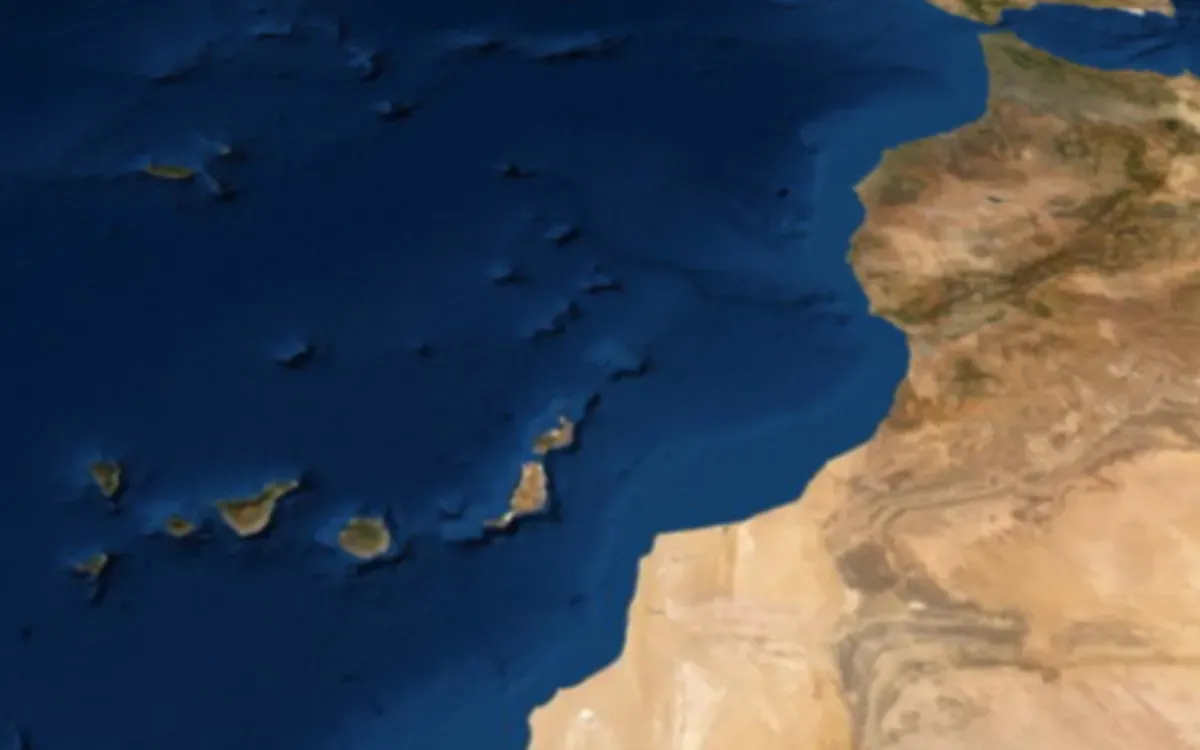

As tensions mount beneath the Atlantic Ocean between Morocco and the Canary Islands, a strategic underwater mountain rich in essential minerals has transformed a historical border dispute into a significant geopolitical issue for Spain, Morocco, and the European Union. This area, previously a mere point of contention regarding maritime boundaries, now potentially harbors valuable resources such as tellurium, cobalt, nickel, vanadium, platinum, and rare earth elements — all of which have become crucial for the production of batteries, renewable energy technologies, electronics, and defense equipment.
The focal point of this dispute is the Tropic Mountain, located southwest of the Canary archipelago. This underwater formation lies within a contested zone that both nations are keen to claim for the expansion of their continental shelf. Whichever country secures rights over this region stands to gain significant control over access to these vital resources.
Spain advocates a maritime boundary based on the median line, which is equidistant from the Canary Islands and the African coast. In contrast, Morocco favors a delimitation approach rooted in equity and proportionality, arguing that the length of its continental coastline should be factored into the equation. This disagreement over how to delineate maritime territories has escalated beyond fishing rights and potential hydrocarbon reserves to now encompass critical minerals.
The Treasure Redefining Boundaries
For decades, the Morocco-Spain dispute primarily revolved around fishing rights and the possible exploration of hydrocarbon reserves. However, the rising significance of critical minerals has shifted the dynamics of the debate. Europe is now striving to diminish its reliance on external sources for essential materials necessary for its energy transition and technological industries. According to the Cátedra Juan Miguel Sanjuán, the newfound importance of these resources may position the Eastern Atlantic as a central player in Europe's energy and industrial strategy by the years 2030 to 2050. The report also indicates that joint resource management could be a viable solution if Rabat and Madrid fail to establish a definitive border promptly.
Nonetheless, the prospect of mining these resources remains distant. The exact volume of commercially recoverable minerals has yet to be determined, and the fragility of deep-sea ecosystems necessitates stringent environmental precautions. Additionally, the legal status of the Sahara presents another legal hurdle that complicates any proposed boundary delineation from its coast.
Ultimately, behind the lines drawn on maps lies a more pressing question: who will have the opportunity to explore and potentially exploit the buried wealth beneath this segment of the Atlantic in the future?
As reported by bladi.net.
