
Jabaroot's Bold Challenge to Moroccan Authorities
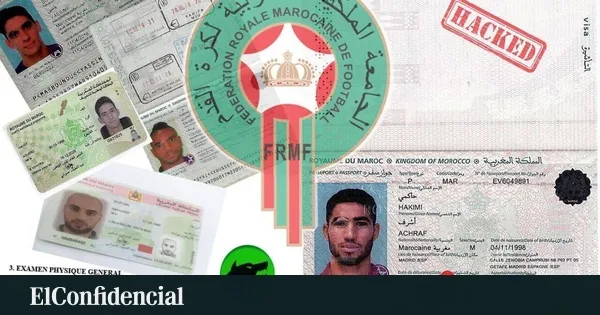
The ongoing crisis in Ceuta has led to alarming threats from Jabaroot, a group of hackers that has been unsettling Moroccan authorities for over a year. On Tuesday night, they posed a provocative question: will we learn the identities of all the spies working for Morocco's internal intelligence agency? To substantiate their threat, Jabaroot released a sample on their Telegram channel, revealing the names and birth dates of approximately twenty agents from the General Directorate for Territorial Surveillance (DGST), led by Abdellatif Hammouchi, who also serves as the head of the national police (DGSN). Furthermore, Jabaroot claims to possess a database containing around 70,000 names.
The seriousness of these hackers' threats cannot be overlooked, as they have a track record of following through on their actions. Every document and database they have shared via Telegram has proven accurate. Moroccan authorities have accused them of being in the employ of Algeria, a long-standing adversary, but cybersecurity experts and intelligence sources remain unsure of their true origins. Notably, the consultancy Navakintelligence attributes this operation to a single former agent.
Ceuta and the Allegations of a Royal Conspiracy
Since August 7, Jabaroot has been vocal about Ceuta on their channel, calling for official apologies for what they term a disaster, a national day of mourning, and the suspension of the upcoming legislative elections scheduled for September 23 in Morocco. Recently, they escalated their claims, alleging to provide an exclusive account of the events that transpired in late July surrounding the Moroccan royal palace. They accuse Fouad Ali el Himma, the king's chief advisor, of orchestrating an attack in collusion with another unnamed advisor, stating, "They are the ones who planned the attack to place Spain in a difficult situation." They insinuate the involvement of major powers, specifically referring to the United States and Israel as complicit parties.
Jabaroot's team absolves King Mohamed VI of any wrongdoing, asserting that he was unaware of the Ceuta events. They further claim that Hammouchi is now fearful due to his involvement in the operation linked to Ceuta, suggesting he is maneuvering to save himself as he anticipates being the scapegoat. Conclusively, they sent a warning in Spanish directed at Hammouchi: "Spanish authorities will uncover the farce of your failed agents." This narrative aligns partially with reports published by El Confidencial on August 12, which were based on testimonies from two exiled Moroccan agents, who claimed that the tight-knit power circle of Himma and Hammouchi was responsible for allowing migration to flow as a response to critical media articles about Moroccan intelligence practices.
Since April of last year, Jabaroot has demonstrated a remarkable capability for leaks through Telegram, disclosing sensitive information ranging from a list of 3,400 palace employees—interpreted as a punishment to the king for ignoring youth demands—to details involving two million Social Security affiliates. Their cyberattacks have unveiled documents linking prominent figures such as Nasser Bourita, the Minister of Foreign Affairs; Yassin Mansouri, head of the external intelligence agency (DGED); and Mohamed Raji, the second-in-command overseeing DGST wiretaps.
In a bid to curb these leaks, the king dismissed General Mostafa Rabil, who was in charge of the Directorate General for Information Systems Security, replacing him with General Abdellah Boutrig, who previously served as the deputy chief inspector of communications for the Royal Armed Forces.
This current wave of revelations echoes a significant incident from over a decade ago, in the fall of 2014, when hundreds of documents and emails from Moroccan diplomacy and external intelligence were leaked online, attributed to the French external security service (DGSE) as a form of retaliation following a prior attack on their representative in Rabat.
As reported by elconfidencial.com.