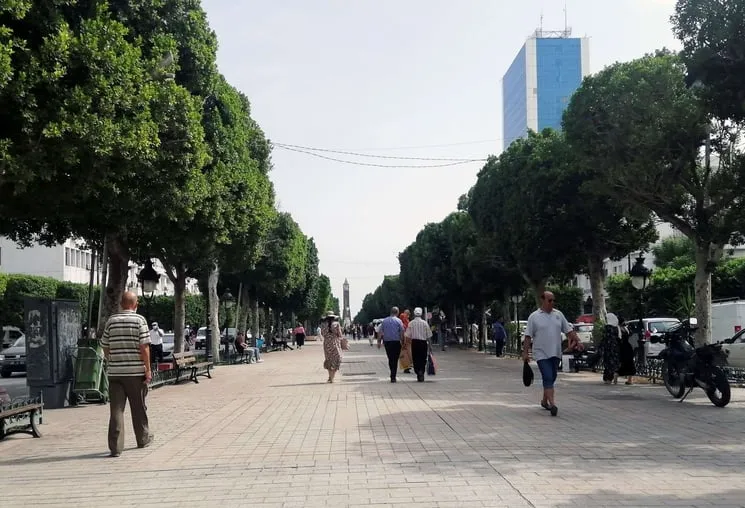

The countries of the Maghreb region, including Morocco, Algeria, and Tunisia, are experiencing an unprecedented decline in birth rates, influenced by various economic factors and social transformations. Many individuals are now prioritizing their mental well-being over the traditional expectation of parenthood. The three nations are moving in a similar direction towards a profound demographic transition, as highlighted by Tunisian demography expert Ali Ben Zina. A recent study from the French Institute for Demographic Studies indicates that this rapid decline in birth rates is expected to continue in the long term.
Experts attribute this significant demographic change to a combination of factors, such as extended educational pursuits, delayed marriage ages, rising divorce rates, increased professional ambitions among women, and the postponement of family planning. Economic pressures also play a crucial role in this shift. One notable individual reflecting on this trend is Nadia Al-Jawadi, a 42-year-old Tunisian civil servant, who expresses no regret about her decision made with her husband a decade ago to remain childless, stating, "Nothing encourages having even one child."
Social Transformations Affecting Family Planning
The fertility rate in the Maghreb countries has fallen by more than half since the 1970s. Currently, Tunisia reports the lowest fertility rate among the three nations, standing at 1.58 children per woman in 2023, with predictions suggesting a decrease to 1.53 by 2024. Meanwhile, Morocco has a fertility rate of 1.97, and Algeria's stands at 2.61. Tunisian researcher Hassan Ksar notes that these statistics indicate deep social transformations, particularly in relation to modernization and urban lifestyles. In Algeria, 66-year-old retired financial worker Said shares that he decided to limit his family to two children, emphasizing the importance of providing them with proper clothing and a good living environment, reflecting on his upbringing in a family of ten children where resources were stretched thin.
Shimaa Drioui, a researcher at the National Institute of Statistics and Applied Economics in Rabat, explains that the decline in fertility rates can be viewed as a rational decision made by families in response to a new economic and social reality. Traditionally, having children was seen as an investment in the future, particularly in poorer communities, but this perspective has shifted. Today, raising a child often incurs more costs than the potential economic benefits they might provide.
However, economic difficulties alone do not fully explain this trend. In transforming societies, there is also a growing concern about the moral and emotional responsibilities of parenthood. Zina, a 42-year-old Algerian, recounts her experience of motherhood at the age of 38 and asserts that she will not have more children, having realized the significant health and psychological challenges that come with being a mother. In Rabat, 38-year-old Kawthar, who works in the public sector, made a conscious decision to avoid parenthood, stating, "I chose to live a peaceful life, away from the worries and stress associated with raising a child." According to Drioui, the expansion of education and the 'independence' of women are leading to profound changes in family dynamics.
Implications of Declining Birth Rates
In practical terms, the decline in fertility rates in these three countries is contributing to an aging population. In Tunisia, the elderly now represent 17% of the population, amounting to nearly two million individuals, in stark contrast to just 253,000 in 1966. This phenomenon is less pronounced in Algeria and Morocco, where individuals over 60 comprise 10.5% of the population in Algeria in 2023 and 13.8% in Morocco in 2024. However, this trend is expected to increase in the coming years, according to the French Institute for Demographic Studies, which could weaken demographic balance and increase pressures on pension systems. The gradual decline in the active population will necessitate foreign labor, with experts suggesting a potential need for migrants from sub-Saharan Africa, as noted by Hassan Ksar. This demographic shift raises important questions about the future of labor markets and social structures within the Maghreb region.
As reported by alquds.co.uk.