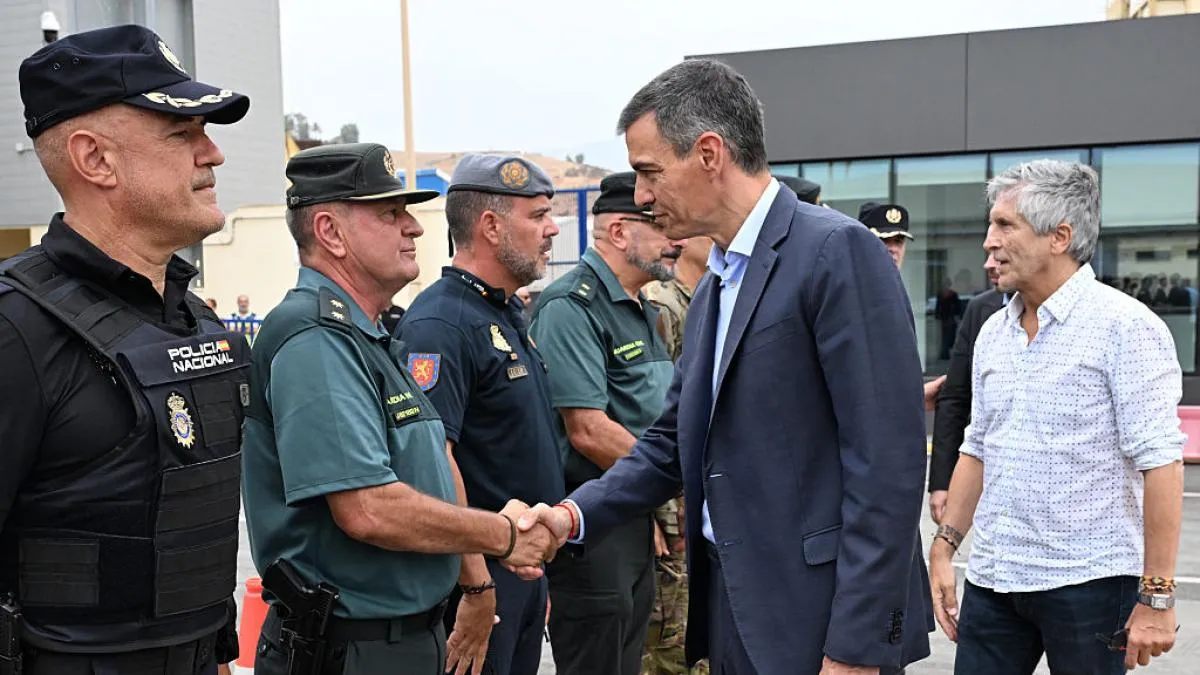

Understanding the Crisis at Ceuta
In late July, the arrival of tens of thousands of individuals at Ceuta raised significant questions regarding Morocco's involvement. Was this a mere migration crisis, or was there a deeper orchestrated effort behind it? The Spanish government has consistently refrained from attributing blame to Morocco, emphasizing instead the cooperative relationship between the two nations. Just recently, Spanish President Pedro Sánchez, during an interview with Cadena SER, asserted that there was no intelligence information suggesting Moroccan authorities played a role in this incident.
Revelations from Intelligence Reports
However, the narrative shifted dramatically with revelations from journalist María Peral in El Español. Shortly before 9:30 PM, it was disclosed that a report from the National Immigration and Borders Center (CENIF) indicated that the influx was guided by Moroccan gendarmes under the orders of plainclothes agents, suggesting motives beyond mere migration. This begs the question: what prompted this intelligence report, and was the Spanish government aware of its existence?
On July 31, María Tardón, a magistrate at the National Court, requested information from both the National Police and the Civil Guard to determine if there were grounds for opening criminal investigations into the events in Ceuta. A month later, the police submitted their findings, which detailed that the apparent migration incident served as a formal cover for an operation led by Moroccan agents, both in uniform and plainclothes. The report noted that Moroccan gendarmes directed migrants toward Ceuta, while ununiformed individuals provided instructions to Moroccan police, raising significant concerns regarding Spanish intelligence operations.
Should these findings prove accurate, they could undermine the Spanish government's narrative, which has steadfastly denied any Moroccan culpability. Furthermore, the existence of such a report raises additional questions about the government's transparency. If the police support this hypothesis, why has the government, including the Interior Minister, maintained a contrary stance for over a month? It is particularly striking that on the same day Sánchez claimed no intelligence report cast doubt on Moroccan involvement, a police intelligence unit was submitting a report that did exactly that.
This morning, reports emerged indicating that no one within the government was aware of such a significant piece of information until its publication in El Español. Interior Minister Fernando Grande-Marlaska has since requested a prompt briefing from Police Director Francisco Pardo regarding the report's contents. In a letter, Marlaska emphasized that aside from judicial proceedings, this information should have been immediately communicated to members of the National Security Council, highlighting a potential lapse in communication within government ranks.
Following the letter's disclosure, Justice Minister Félix Bolaños called for caution, stating that the government is currently analyzing the report's details. He stressed the importance of thoroughly understanding the implications of the findings before making any further public statements. It appears that Pardo, the Police Director, may not have been privy to the report's existence due to directives from the National Court not to disclose information regarding its preparation and content.
Moreover, the National Court has reportedly authorized investigators to share access to the document with their superiors. Pardo communicated to the Interior Minister that no police report attributes the planning or execution of the events on July 30 and 31 in Ceuta to Moroccan security forces. Regarding the CENIF alert issued to Ceuta's border posts on July 29, Pardo clarified that it was a routine risk notification, without any indication of a mass entry the following day.
As reported by huffingtonpost.es.