Unraveling the Controversy Surrounding the AFCON 2025 Final
Nearly three months after the conclusion of the Africa Cup of Nations (AFCON) 2025 final, the repercussions of this highly contentious event continue to ignite discussions within football circles and the media. Recent revelations have emerged, offering a fresh perspective on the events that unfolded both on and off the pitch during the match, which captivated thousands in the stadium and millions more watching from home.
Reports indicate that the incidents witnessed during the match were merely the tip of the iceberg. According to various media outlets, including the Spanish newspaper AS, tensions began to mount days before the kickoff. The Senegalese team allegedly failed to adhere to several organizational recommendations issued by the Confederation of African Football (CAF), both prior to and during the match. The newspaper further suggests that the protests raised by the Senegalese team throughout the tournament lose much of their credibility upon examining the events that transpired behind the scenes.
Specifically, it was noted that the Senegalese delegation had been alerted to the potential for significant crowd congestion during their train journey from Tangier to Rabat and was provided with logistical alternatives to avoid any confusion. Moreover, the contention extended to objections regarding their accommodation and training facilities. CAF designated the Mohammed VI Football Complex for the Senegalese team's training, a state-of-the-art facility that had also served as the Moroccan team's training base during the tournament. However, Senegalese officials expressed concerns over what they perceived as "potential espionage" and a "lack of tactical confidentiality" while preparing for the match. Nevertheless, these claims seem unfounded, considering that the complex boasts no less than 14 football pitches and various facilities that ensure each team can operate independently. Previous experiences during the tournament, including Cameroon sharing the same space with Morocco, had proceeded without incident.
The Climactic Moments of the Final
As the match approached, additional signs of rising tension became evident. The day before the final, the Senegalese Football Federation submitted an official protest to CAF, demanding the replacement of Congolese referee Jean-Jacques Ngambo Ndala due to concerns over his officiating, a request that was ultimately denied. These cumulative factors set the stage for what would soon escalate into a crisis during the match itself, transforming a continental football celebration into an unprecedented debacle in the final minutes.
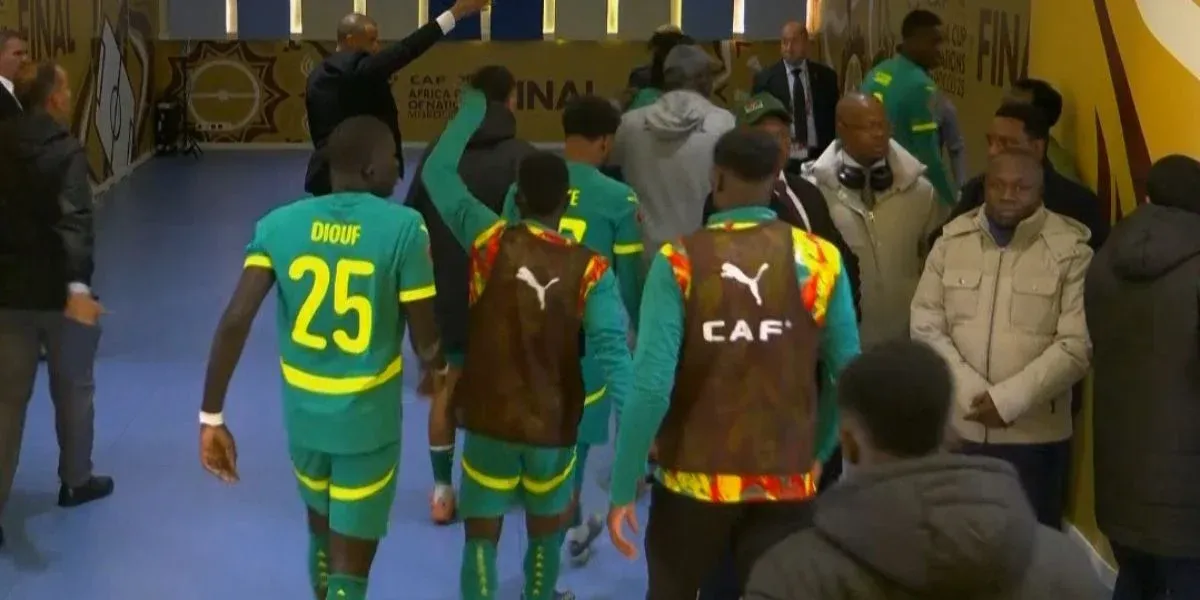
During stoppage time, specifically in the 97th minute, Senegalese players left the pitch in protest against the awarding of a penalty to Morocco, heading towards the locker rooms in a shocking display. Some players even broadcasted live on social media as organizers attempted to contain the situation with measures that incited further controversy. The French newspaper Le Monde reported that Olivier Safran, the head of the CAF refereeing committee, acknowledged institutional directives issued during the game stoppage that instructed officials not to issue yellow cards to Senegalese players upon their return to the field. This decision could have had a direct impact on the match’s proceedings and outcome, given that some players were already on yellow cards.
Additionally, official reports compiled post-match revealed significant discrepancies in the accounts of CAF officials regarding the events. Referee Jean-Jacques Ngambo Ndala noted in his report that "play was temporarily stopped" in the 97th minute following the Senegalese players’ protests, stating that they left the pitch based on their coach's instructions. Conversely, the final match coordinator, Tunisian Khaled Lamkachar, described the Senegalese reaction as "intense protests" that escalated following the penalty announcement, confirming that players abandoned the match altogether. He also added that only one player, Sadio Mané, remained on the pitch before requesting a staff member to inform his teammates to return and complete the game.
Official match commissioner Ahmed Osman indicated that there were moments of tension on the field, noting that "officials and substitute players from both teams attempted to engage in confrontation." Following the CAF disciplinary committee's decision, which sought to balance penalties imposed on both sides, Morocco appealed to the appeals committee. Their report referenced Article 82 of the AFCON regulations, asserting that this article directly applies to the incident involving the Senegalese players' withdrawal, as it does not mandate...
As reported by ar.yabiladi.com.