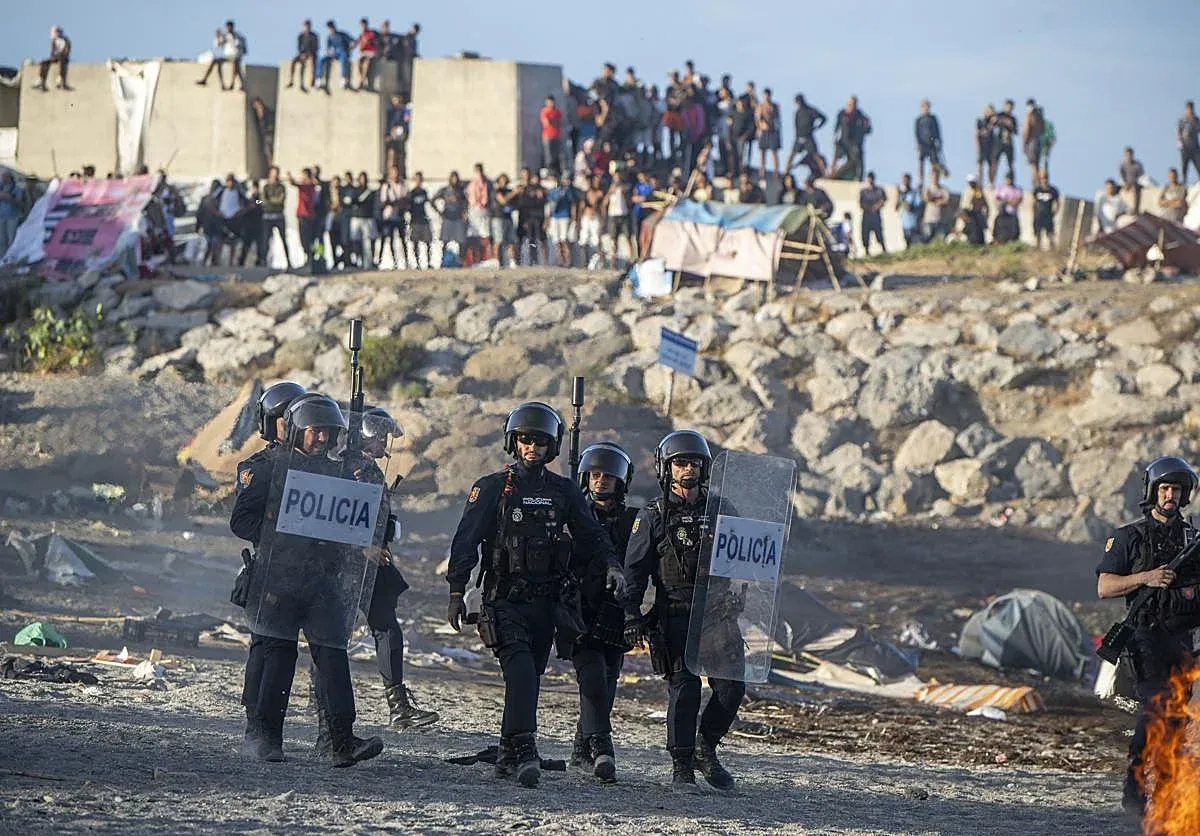

On September 3, 2026, the Madrid Forum held its fifth regional meeting in Santiago, Chile, where Kevin Roberts, the president of the Heritage Foundation, delivered a pivotal address. The speech was steeped in familiar far-right rhetoric, focusing on the defense of "the West" and lambasting various groups such as "socialists, atheists, woke fanatics, and elitists." However, the crux of his remarks revolved around a singular point regarding the Spanish city of Ceuta, located on the North African coast. Roberts asserted, "We are seeing such a physical attack right now in the invasion of the Spanish city Ceuta," coinciding with Spanish Prime Minister Pedro Sánchez's congressional testimony on the ongoing crisis. He emphasized the necessity for the United States and its allies to support Spain, characterizing the influx of migrants from Morocco as an invasion, while simultaneously criticizing Sánchez for his remarks about the Spanish monarchy, highlighting a troubling homage to the era of General Franco.
The media coverage of Roberts’ comments has generally framed them as an act of solidarity with Spain against Moroccan influence, yet this perspective oversimplifies the situation. In reality, Roberts' rhetoric serves as a strategic maneuver by far-right factions in both America and Europe, aimed at leveraging the Ceuta crisis to undermine the working class in Spain, Morocco, and globally. The Madrid Forum itself, established in 2020 by Spain’s Vox party and its intellectual counterpart Fundación Disenso, has evolved into an international coalition of far-right parties and think tanks. This coalition is deeply intertwined with the American far-right movement and the Trump faction within the Republican Party. The Madrid Charter, which laid the groundwork for this alliance, was drafted after Vox's Santiago Abascal engaged with key conservative organizations in the United States such as the Heritage Foundation and the International Republican Institute.
Roberts’ speech at the Santiago event epitomized the ideological underpinnings of this network, signifying a concerted effort to forge alliances among far-right leaders, including José Antonio Kast, Chile’s president, and Javier Milei, Argentina’s president. The gathering highlighted the increasing collaboration between the U.S. government and various far-right regimes in Latin America, all while promoting a narrative that seeks to fortify their political positions against popular dissent.
Delving deeper into the context, the so-called "invasion" narrative propagated by Roberts and others conflates the real migration crisis faced by Ceuta with an exaggerated civilizational threat, aimed at justifying repressive measures against the working class. In late July 2026, a significant surge of migrants, primarily young Moroccan men, attempted to cross into Ceuta amidst dire economic conditions in Morocco. Tragically, over 91 individuals lost their lives during these crossings. The rapid return of approximately 69,500 migrants within a week further complicated the narrative, as the majority were expelled back to Morocco. This situation has been manipulated by various political actors, including Sánchez, who has echoed similar sentiments about an "attack on Spain’s territorial integrity" while militarizing the border in response.
The geopolitical implications of the Ceuta crisis are deeply entwined with Spain’s recent estrangement from U.S. foreign policy, particularly regarding the conflict between the Sánchez government and the Trump administration over the Iran war. Following military strikes against Iran in February 2026, the Sánchez administration publicly condemned the actions and restricted U.S. access to crucial military bases in Spain, resulting in a significant shift in American-Spanish relations. This rupture has prompted a fierce backlash from the American far-right, who have seized on the situation to advocate for a narrative that frames Spain as an ally in need, while simultaneously courting Morocco as a strategic partner. The U.S. has been actively cultivating military and economic ties with Morocco, while portraying Spain as a rogue state for its refusal to comply with American interests.
Simultaneously, the far-right's portrayal of the migrant situation in Ceuta serves to galvanize support for their agendas ahead of upcoming elections, portraying the Sánchez government as ineffective and complicit in an alleged invasion. This strategy not only aims to consolidate power within Spain but also seeks to reshape public perception of immigration issues in Europe. As the far-right continues to exploit the narrative of crisis, it reveals an alarming trend of using humanitarian emergencies as a pretext for authoritarian governance and increased militarization.
In conclusion, the Madrid Forum and the rhetoric surrounding the Ceuta crisis encapsulate a broader movement among far-right factions to unify against perceived threats to their political ideologies, while simultaneously undermining the rights and dignity of the working class. The implications of this coalition extend beyond national borders, posing significant challenges for labor movements and progressive policies across Europe and the Americas.
As reported by wsws.org.