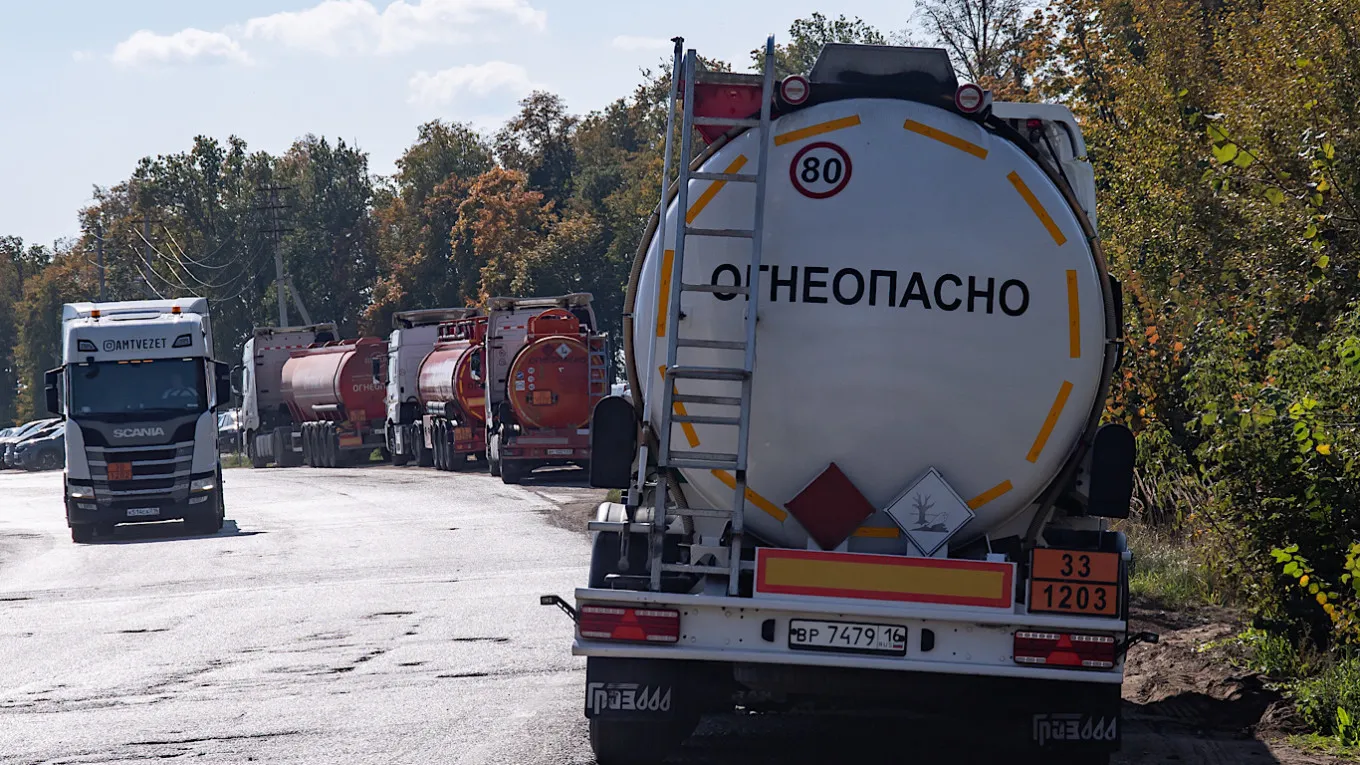

Moroccan Gasoline Stuck in Russian Ports Due to Pricing Disputes
As of August 14, reports indicate that gasoline shipped from Morocco to Russia has not yet reached the domestic Russian market. Specialized news portal InfoTEK, citing three sources within the oil industry, has stated that imported fuels, including those from Morocco and India, remain on tankers in the Arctic port of Murmansk. This delay is attributed to a pricing disagreement between oil companies and regulatory authorities concerning the sale price of the gasoline. At the time of publication, the Russian Ministry of Energy had not publicly confirmed these claims.
The situation specifically involves a shipment of approximately 30,000 tons of AI-92 gasoline that was loaded in Tangier in mid-July and transported to Murmansk. According to two industry sources who spoke to Reuters on July 31, the Panamanian-flagged tanker was in the process of unloading, with Lukoil acting as the supplier. However, there was no response from the company to the agency's inquiries. This prior report raises questions about the current status of the shipment as InfoTEK later stated that the imported fuel "has still not arrived on the domestic market," and the products in question have not been unloaded from the tankers. It remains unclear whether the shipment from Morocco was partially offloaded, if its unloading has been suspended, or if multiple distinct shipments are being referenced.
Pricing Discrepancies and Market Implications
Moreover, the origin of the gasoline must be approached with caution. While sources from Reuters confirmed that the cargo was imported from Morocco and loaded at the port of Tangier, public information alone does not establish the product's refining origin or confirm that the gasoline was produced in Morocco. However, it does verify that the product was dispatched from Moroccan territory to Russia. Reports indicate that sellers are demanding up to 150,000 rubles per ton (approximately 16,505 dirhams), which starkly contrasts the reference price of 77,620 rubles in the Russian market. This significant discrepancy is mainly due to the value at which imported cargoes might be sold. An InfoTEK source familiar with the matter noted that due to costly logistics, companies are proposing imported gasoline at prices reaching 150,000 rubles per ton, while Russian regulators seek to maintain prices consistent with those on the domestic market.
The price of AI-92 reached 77,620 rubles per ton (about 8,541 dirhams) at the conclusion of trading on August 13 for the European part of Russia, although the portal warns that prices may vary based on delivery location and producer. The conversions are based on the exchange rate from August 14, 2026, which was 1 ruble for 0.110033 dirham. However, this threshold of 150,000 rubles should not solely be attributed to the cargo from Morocco, as InfoTEK associates it with all imported fuels without distinguishing the Moroccan shipment from other supplies. The portal separately cites a trader who claimed that Indian AI-92 was successively offered at 130,000 rubles per ton (approximately 14,304 dirhams) and then at 110,000 rubles (about 12,104 dirhams), a claim corroborated by a second trader.
InfoTEK attributes this price gap to transportation costs, handling fees, taxes, and specific constraints related to delivery to Russia. A trader interviewed by the portal estimated the final cost of imported gasoline to be around 146,600 rubles (approximately 16,131 dirhams) after taxes. This estimation comes from an anonymous market participant and does not reflect an established price for the shipment from Morocco, nor does it represent official data from Russian authorities. Furthermore, the portal notes that on the Russian secondary market, some prices can significantly diverge from stock exchange quotations.
The conflicting information regarding the unloading reported on July 31 and the blockade mentioned on August 14 creates uncertainty about the fate of the shipment from Tangier. Reports describe two successive states that do not entirely align. Reuters had noted on July 31, based on two industry sources, that the tanker loaded in Tangier was "in the process of unloading" in Murmansk. The agency also mentioned that AI-92 was being offered for rail delivery from the Kola station, which serves the port. However, on August 14, InfoTEK claimed otherwise, stating that imported fuels from India and Morocco remained off the market and that transactions from this new delivery base had not commenced.
Finally, InfoTEK reports that several large oil companies have imported foreign cargoes, without specifying the volumes or the identities of the companies for each shipment. At this stage, Russian sources indicate that a pricing disagreement is delaying access to the market for imported fuels, including those shipped from Morocco; however, they do not confirm whether the entire 30,000 tons remain on the same tanker, nor can they attribute the maximum price of 150,000 rubles per ton solely to the shipment from Tangier.
As reported by barlamane.com.