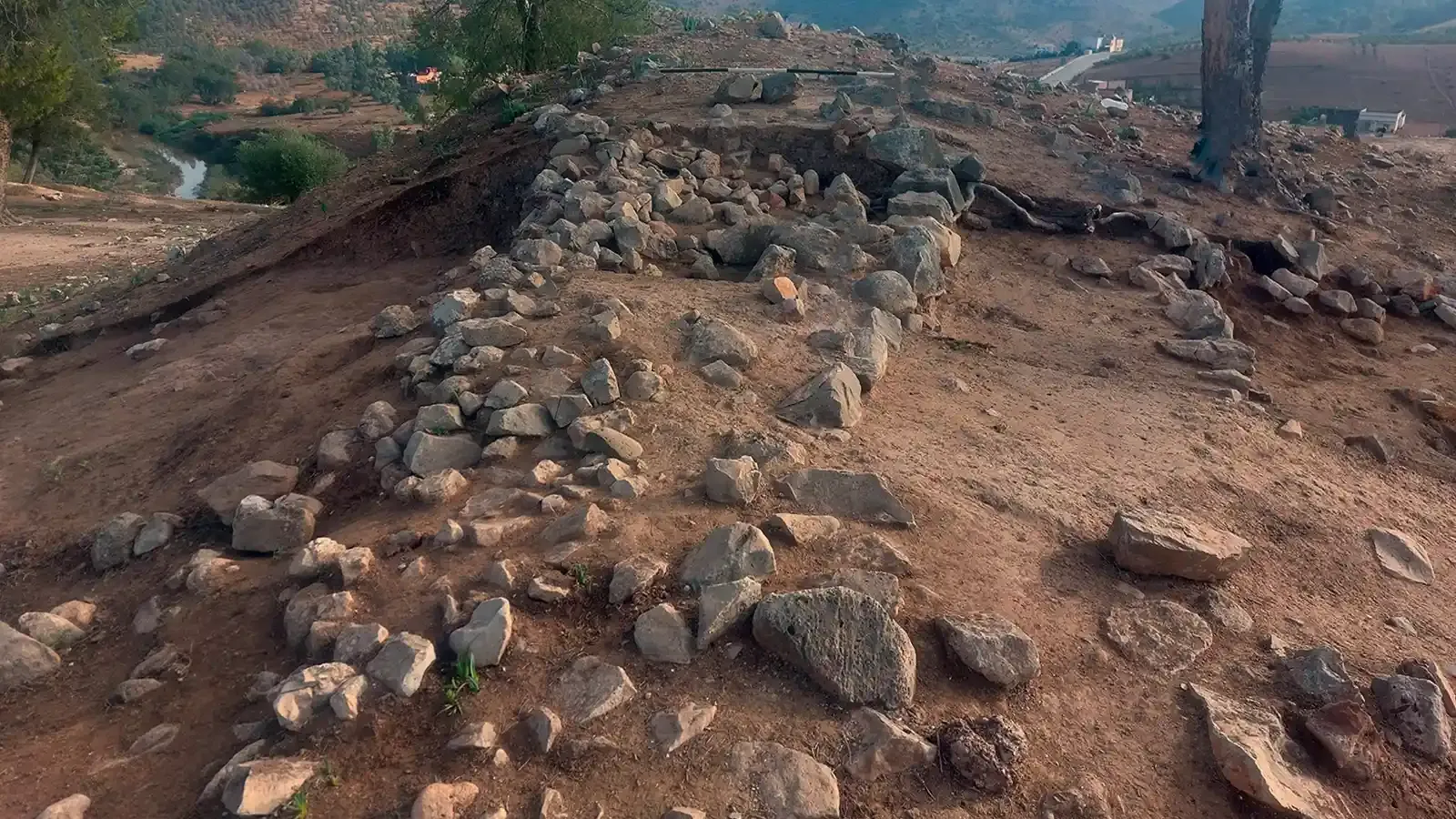

A remarkable archaeological discovery in northwestern Morocco has revealed that around 4,000 years ago, an ancient community began transforming their environment by constructing large-scale defensive structures. Excavations at Oued Beht have uncovered a complex that includes a ditch, an earthen embankment, and a wall, believed to have served as protection for the settlement situated beyond these fortifications. Recent radiocarbon dating has confirmed that this site represents the earliest recognized large-scale defensive construction in North Africa, outside of Egypt. This groundbreaking finding not only fills a significant gap in the region's archaeological history but also provides rare insights into the emergence of a Bronze Age society in the northwestern Maghreb.
Published in the journal Libyan Studies, this discovery showcases a major advancement in archaeological understanding, as researchers have established a timeline for the construction of these defensive features, dating back to the early to mid-second millennium BC. The shift from an expansive agricultural and manufacturing center on a plateau to a more constricted and defensible ridge suggests significant socio-economic changes within prehistoric North Africa. This transition may indicate growing competition for agricultural resources and land, rather than mere defense against external threats.
The site of Oued Beht, positioned overlooking a perennial river in Khémisset Province, has been of interest to archaeologists since the 1930s. Initial interpretations suggested the presence of a settlement protected by a barrier. However, the actual timeline of construction was unclear due to later repairs and modifications made to the structures. Recent excavations, which involved cutting a 46.5-foot trench across the main wall, revealed a complex sequence of walls, earthworks, and evidence of repeated construction and repair over time. Radiocarbon dating has shown that the earliest phases of construction began in the early second millennium BC, with evidence of charcoal and seeds from that period further corroborating this timeline.
The research indicates that this defensive structure was not merely a response to external threats but likely reflects broader social dynamics, including organized labor and community mobilization. The findings suggest that controlling access to resources and strategic locations became increasingly important during this period. The changes observed at Oued Beht might mirror wider transformations occurring across the western Mediterranean, where similar fortifications were being established in contemporary cultures.
Archaeological evidence points to a vibrant society at Oued Beht, previously characterized by extensive agricultural practices and manufacturing activities. The transition to a fortified settlement on the southern ridge indicates a shift in priorities, potentially due to environmental or social pressures. This site, therefore, is crucial for understanding the long-term settlement patterns and socio-economic developments in northwestern Morocco, as well as its interactions with surrounding civilizations.
As reported by thedebrief.org.