
The Historical Context of Colombia and Morocco's Relationship
Official records indicate that the diplomatic relations between Colombia and Morocco commenced on January 1, 1979. However, a deeper examination reveals that these interactions trace back to as early as 1825, long before the establishment of the modern Colombian state. This article invites readers to explore a captivating history that intertwines the destinies of these two nations. It is essential to clarify that in 1825, the term 'Gran Colombia' referred to a vast multinational republic that included present-day Colombia, Venezuela, Panama, and Ecuador. At that time, Morocco was known as the Sherifian Empire, a title that may not evoke the same interest as today's 'Kingdom of Morocco.' Therefore, the intriguing context surrounding this early diplomatic engagement deserves renewed attention.
Early Diplomatic Ventures and Their Significance
In my research on the Anfictiónico Congress of 1826, which marked the first multilateral meeting in the Americas, I stumbled upon previously undocumented information regarding the early diplomatic ties between Colombia and what is now Morocco. Most of the scholarship on this topic has been conducted by foreign historians, such as Polish researcher Andrzej Dziubinski, who published a work in 1974 discussing attempts to establish diplomatic relations between Colombia and Morocco in the years 1825 and 1827. Moroccan professor Abdelhak Hiri recently highlighted this history during a lecture in Panama, underscoring the forgotten diplomatic bridge between Latin America and Morocco, embodied by figures like Simón Bolívar and Sultan Moulay Abderrahman.
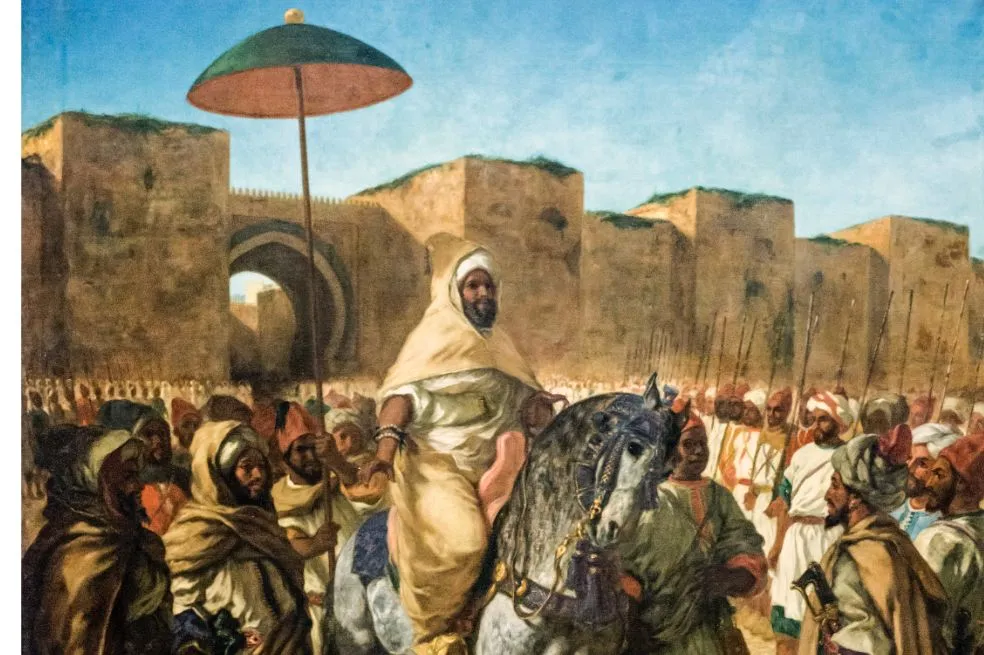
The Sherifian Empire, which existed from 1554 until 1957, was under the influential Alaouite dynasty during its most significant period. This dynasty, of which the current Moroccan monarch, King Mohamed VI, is a descendant, holds considerable esteem in the Islamic world due to its lineage tracing back to the Prophet Muhammad. It was the Alaouite rulers who unified the state by persuading or subjugating the Berber and Bedouin tribes across the region. In this context, the notable Sultan Abd ar-Rahman Iban Hisham, or Moulay Abderrahman, ascended to the throne in 1822.
The diplomatic engagement between Colombia and the Sherifian Empire takes on an adventurous narrative, as the Colombian vessel Trinidad arrived in the Tangier port in 1825, flying both the Colombian flag and a white flag symbolizing peace. The Trinidad was one of the privateers involved in Colombia's fight for independence at sea, as Bolívar sought assistance from these privateers, predominantly of English origin, to combat Spanish naval forces. Captain John Maitland, who led the Trinidad, was tasked with delivering a greeting from Bolívar to Sultan Moulay Abderrahman, effectively serving as a special envoy.
In his message, Bolívar expressed a desire for amicable relations and sought the Sultan's recognition of the fledgling republic. The letter proposed a mutual agreement allowing Colombian vessels and citizens access to Moroccan ports for operations against Spain, the common adversary of both nations. Remarkably, the Sultan accepted this proposal, leading to documented instances of Colombian privateers operating in the waters near Gibraltar and along the Spanish coastline, revealing that Colombia's struggle for independence extended into Spanish territories. Notably, Colombian privateers captured Spanish ships on June 11, sharing the spoils with the Moroccans.
Professor Hiri emphasizes in his work the significance of the Trinidad and Pichincha missions as early examples of South-South diplomacy that challenged the dominance of European colonial powers. This unprecedented relationship between an Arab-Islamic empire and the Republic of Colombia illustrates the depth of the diplomatic connection that was forged during this era. The appointment of a Colombian consul in Tangier further signified the strong ties between these two nations.
However, Spain's protests against Colombian naval operations eventually led to diplomatic tensions, culminating in the Sultan's declaration on June 2, 1828, to cease diplomatic contact with Colombia, a hiatus that lasted until the re-establishment of relations in 1979. With the Colombian training ship Gloria set to arrive in Moroccan waters later this year, it seems fitting to reflect on this rich historical narrative that remains largely unexplored. The task of uncovering these connections is best left to specialists and those with a keen interest in this remarkable story.
As reported by elespectador.com.