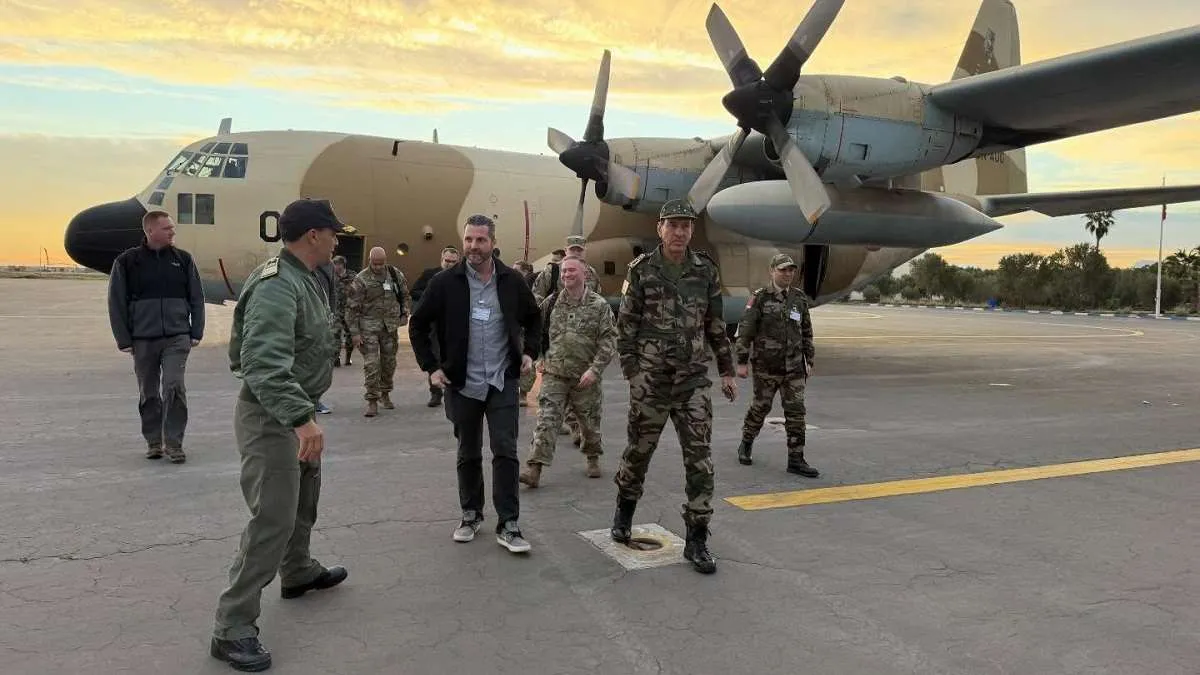

In December, the United States and Morocco are set to hold a crucial summit aimed at bolstering their defense cooperation. This meeting comes at a time of increasing alignment between the two nations, contrasted with rising military tensions between Washington and Spain. The summit will take place in the US capital, as part of the bilateral Defense Consultative Committee, a high-level forum where civilian and military leaders discuss the evolution of strategic cooperation and set priorities for the coming years.
This gathering is part of a defense cooperation roadmap that both countries have established for 2020-2030, focusing on the modernization of Morocco’s Armed Forces, enhancing interoperability between their military forces, and addressing regional security concerns, particularly in North Africa and the Sahel region. The committee convenes biannually, alternating between Rabat and Washington, with the last meeting held in May 2024 in Morocco. The upcoming session in December is expected to further solidify a relationship that is currently experiencing one of its most favorable phases.
In addition to strategic planning, these meetings typically address joint military exercises such as African Lion, which is one of the largest military deployments on the African continent. In anticipation of the summit, Bryan J. Ellis, the US Deputy Assistant Secretary of Defense for African Affairs, visited Morocco earlier this year. During his stay, he held discussions with military leaders and toured several strategic facilities, including the Ben Guerir Air Base, which is considered one of the most significant bases in the country.
These contacts underscore Washington's commitment to establishing Morocco as a key ally in the region, especially as the geopolitical landscape in Africa becomes increasingly important due to the presence of jihadist groups and the rising influence of powers like Russia. The strengthening of ties between the United States and Morocco stands in stark contrast to the existing tensions between Washington and the Spanish government, which have arisen from disagreements over defense spending, Spain's refusal to allow the use of its bases for specific operations, and the government's growing ties with China.
In this context, circles within the US political environment have suggested reconsidering military presence at bases such as Rota and Morón de la Frontera. According to reports from international media, the White House is evaluating the potential relocation of troops to countries deemed more aligned with its strategic interests. However, experts caution that such a relocation faces significant hurdles. The Rota base is equipped with advanced facilities, strategically located in the Strait of Gibraltar, and has benefited from decades of investment, making it a critical point for complex military operations. Furthermore, its integration into NATO’s framework, particularly in systems like the missile defense shield, complicates the prospect of replacing it with installations in non-NATO countries.
Despite Morocco's progress in modernizing its military capabilities, notably with bases like Ben Guerir being adapted to US standards, there are still limitations in assuming roles equivalent to those of Spanish bases. Nevertheless, the December summit highlights the strategic commitment of the United States to Morocco as a priority partner in North Africa. This meeting will be instrumental in defining the future steps of expanding military cooperation in an increasingly competitive international landscape marked by geopolitical rivalries and the urgent need for solid alliances.
As reported by teleceuta.com.