Recent research conducted by the Hassan II Agronomic and Veterinary Institute has revealed alarming statistics regarding urban sprawl in the Casablanca region from 2015 to 2025. This study, which utilized satellite imagery and data from the High Commission for Planning, highlights the extensive encroachment of urban development into fertile agricultural areas, raising significant concerns for local farming communities and food security.
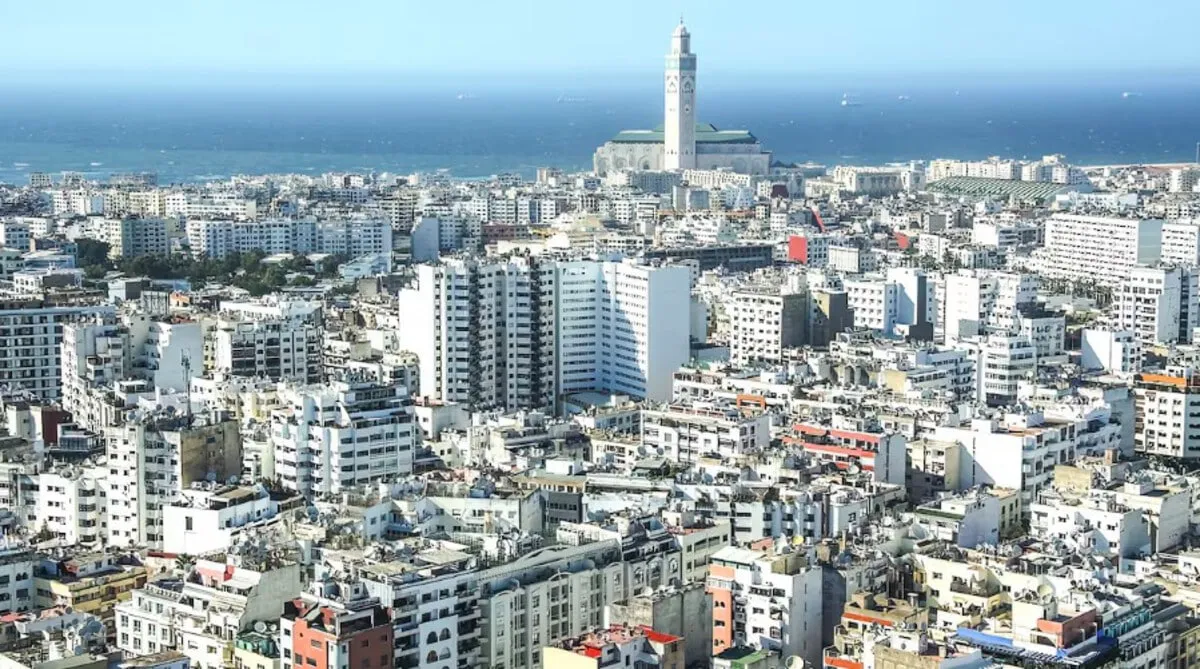
One of the key findings indicates that Casablanca, as the leading urban center, has experienced a drastic increase in built-up land, expanding from approximately 12,688 hectares in 2015 to 19,503 hectares in 2025. This represents an increase of around 6,800 hectares over the span of a decade. The urbanization is not restricted to the city center; rather, it has extended into surrounding rural and agricultural zones, forming a nearly continuous urban belt. The impact on agricultural land is profound, with Casablanca losing 69% of its green and cultivated spaces, while Dar Bouazza has seen a 54% reduction in these areas.
Unprecedented Urban Growth and Its Consequences
The study meticulously charts the evolution of land use within a 40-kilometer radius of Casablanca, revealing that urban development is occurring in all directions. As urban areas expand, they are consuming historically agricultural regions, including municipalities like Ouled Salah and Sidi Rahal Chatai. This growth is characterized by scattered and multipolar construction patterns, which further disrupt the agricultural fabric of the region.
The research emphasizes that the rate of land consumption for urban development has reached staggering levels. In peripheral areas, such as Sahel Ouled H'Riz, built-up land surged from 400 hectares to over 4,500 hectares, marking a significant transformation. Other areas, including Bouskoura and Oulad Azzouz, have similarly experienced substantial increases in urbanized land. In contrast, established urban centers like Casablanca show slower growth rates, primarily due to limited available land.
Urgent Need for Sustainable Urban Planning
As urban sprawl continues, it poses a direct threat to peri-urban agriculture, which plays a crucial role in supplying the metropolitan area with food. The loss of arable land has reached critical levels, with some municipalities witnessing a decline in cultivated areas by more than 50%. The correlation between rapid urbanization and the loss of productive agricultural land is concerning, with the most fertile soils being replaced by low-density housing developments, which do not utilize these valuable spaces efficiently.
To address these challenges, experts advocate for a more integrated approach to land management that prioritizes agricultural sustainability in the planning policies of Greater Casablanca. Without immediate action, the transformation of this region into a predominantly urban landscape may become irreversible, jeopardizing food security and the livelihoods of those dependent on agriculture. It is imperative to strike a balance between urban growth and the preservation of agricultural resources.
As reported by medias24.com.