
Understanding Urban Mosquito Populations in Morocco
Small, discreet, and often difficult to spot, mosquitoes can carry viruses that pose risks to both human and animal health. Certain species are known to transmit diseases such as dengue, chikungunya, Zika, and West Nile virus, making their presence in urban environments a crucial subject for researchers and health authorities. In Morocco, a dedicated team of researchers has been studying the mosquito populations in the cities of Rabat and Casablanca since January 2026. This initiative is part of the international project BiodiveCITY, which aims to understand the influence of urban green spaces on the presence and evolution of mosquito species. To achieve this, researchers are deploying traps in various locations to capture mosquitoes, identify the species present, and monitor their seasonal changes, with the goal of determining whether certain green areas provide more favorable conditions for their development.
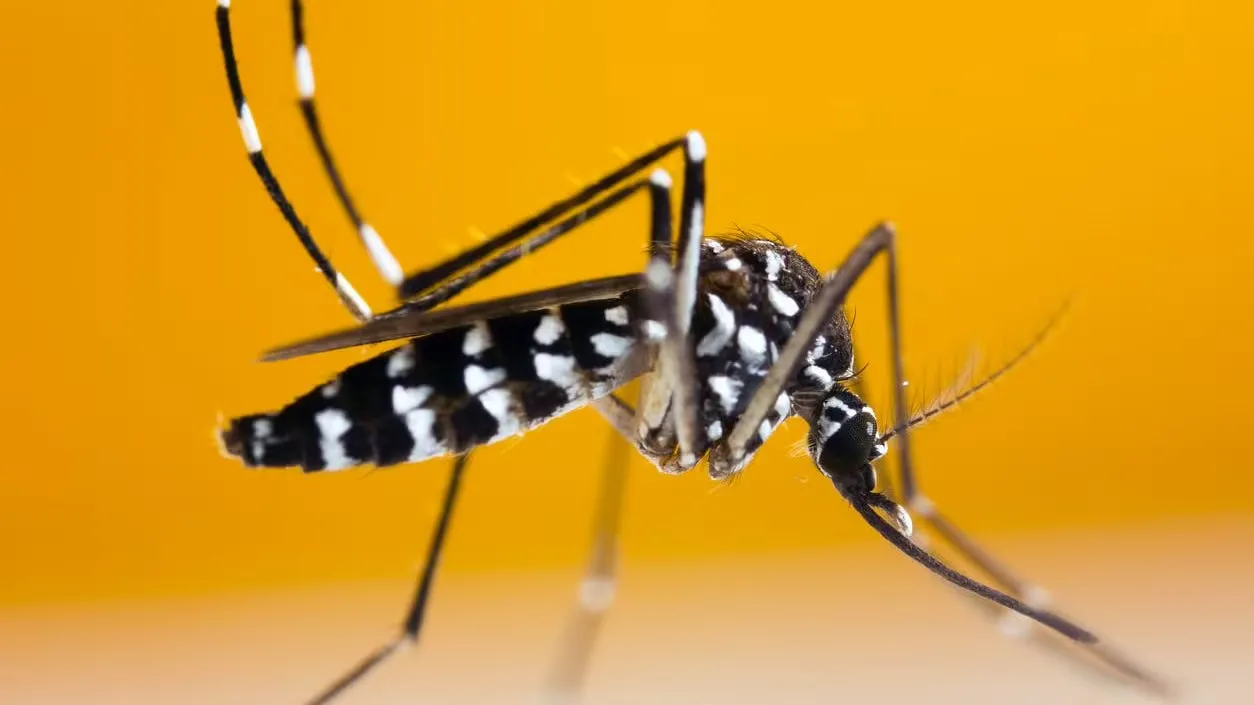
The initial observations have already revealed some differences between the two study sites. For instance, the tiger mosquito, Aedes albopictus, has been found in Rabat but not in the studied sites in Casablanca. This finding is part of a broader monitoring effort aimed at understanding which species are present in Moroccan cities, their concentration, and the environmental conditions that facilitate their growth. "We have formed a unique and multidisciplinary consortium that brings together various partners from different countries," explains Maria Bourquia, a parasitology professor and project leader in Morocco. The consortium includes teams from the Netherlands, France, Spain, and Morocco, working across six cities: Amsterdam, Nijmegen, Barcelona, Montpellier, Rabat, and Casablanca.
Methodology and Observations
The comparison between these cities is based on a common protocol. "Within this consortium, we have a harmonized protocol. Therefore, we all work simultaneously, using the same methodology," adds Maria Bourquia. For the study, Rabat and Casablanca have been selected due to their proximity and distinct urban configurations. Rabat was chosen primarily because the research team is based there, while Casablanca was selected as a second site due to its close proximity, allowing for efficient data collection without excessive travel.
Since the beginning of the monitoring process, researchers have been utilizing BG traps to capture mosquitoes at various locations. Initial months yielded few captures, with populations being very low in January and February. However, Bourquia notes, "The situation began to evolve from spring, with a noticeable increase starting in March and April." By October, observed mosquito populations had surged significantly, indicating a peak in their numbers. The team anticipates a gradual decrease as temperatures drop, and the monitoring will continue until January 2027, with discussions ongoing about potential extensions.
This longitudinal study aims to understand how mosquito populations evolve over time and across different environments, particularly focusing on urban green spaces that may provide favorable conditions for mosquito breeding, especially in areas with standing water. "We are investigating the impact of these urban green spaces on mosquito populations," explains Bourquia, who hypothesizes that these areas may encourage mosquito proliferation, a theory that will be confirmed or debunked by the end of the project.
To validate this hypothesis, researchers are not only examining the number of captured mosquitoes but are also identifying the species present and the conditions that support their growth. The tiger mosquito, in particular, is one of the key species being monitored due to its history in Rabat since 2015 and its potential to transmit various pathogens affecting both humans and animals. "This mosquito is of significant interest because it serves as a vector for multiple pathogens," Bourquia emphasizes. Currently, the tiger mosquito has been detected in Rabat but not in Casablanca, although this observation remains preliminary as the research is ongoing. This finding pertains solely to the sampled sites and does not necessarily indicate the absence of this species throughout Casablanca.
In Morocco, several entities are involved in monitoring mosquito populations, including the Direction of Epidemiology and Disease Control, municipal health offices, and the National Institute of Hygiene for human health, as well as ONSSA for animal health. The tiger mosquito is particularly noteworthy for its behavior; unlike common mosquitoes, it is primarily active during the day and can cause significant skin reactions in individuals unaccustomed to its bites, as Bourquia explains, referring to the noticeable marks and itching that can result from such encounters.
Researchers are also closely monitoring Culex pipiens, a much more common species found in residential areas. This species is primarily active at night and plays a role in the transmission cycle of the West Nile virus, which affects both humans and equids, with birds serving as reservoirs. It may also contribute to the spread of Rift Valley fever virus. However, the monitoring efforts are not limited to the mosquitoes captured in traps. In Rabat and Casablanca, residents can also contribute to the study through the Mosquito Alert application, launched on September 21 as part of BiodiveCITY. This citizen science initiative allows individuals to report sightings of mosquitoes, bites, or potential breeding sites. Initially set to conclude on October 2, the campaign has been extended until the end of the month.
Citizens can photograph mosquitoes and submit the images through the app, where an artificial intelligence performs preliminary identification. This step allows for the sorting of observations, but it does not always guarantee accurate species identification. "Sometimes, it’s not always reliable," Bourquia acknowledges. Submitted photos are reviewed by volunteers and researchers who confirm whether the insect is indeed a mosquito, as other flying insects may be mistaken for them. When possible, identification is refined to the genus or species level.
Additionally, residents can report mosquito bites by indicating the affected body part and the number of bites experienced. The application also allows for the reporting of mosquito larvae, with users specifying the location where they were observed, particularly in aquatic environments that may serve as breeding grounds. "The larval habitats of mosquitoes are simply aquatic environments," Bourquia explains, noting that these reports enable researchers to identify sites that might be conducive to mosquito development, integrating this information with data collected through the project.
The Mosquito Alert campaign is still ongoing and will conclude at the end of October. Researchers currently do not possess a comprehensive summary of the reports yet, as Bourquia states, "We have not yet collected the data because our initiative extends until the end of October." Once the campaign concludes, the team will gather the observations made by citizens from the application managers. "After the action is finished, we will contact those responsible for the application to provide us with a report of citizen observations," she indicates. These data will then be compared to the field captures, allowing researchers to examine whether the same species appear in both datasets, if they are detected in similar areas, and if the reports from residents align with the study sites.
Ultimately, the aim is to enrich the scientific data rather than replace existing information. "This will significantly help us to enhance our database, which is already based on field observations, with data from citizens," Bourquia stresses. In the long run, all this information is expected to enable researchers to move beyond merely noting the presence or absence of a species in a neighborhood. By cross-referencing trap captures, population dynamics over seasons, characteristics of green spaces, potential larval habitats, and citizen observations, the team hopes to create a clearer picture of mosquito distribution in both cities. "The ultimate goal of this project is to study the relationship between urban green spaces and the presence of these blood-feeding arthropods, namely mosquitoes," Bourquia reiterates.
Following this work, the objective is to develop risk maps for the transmission of certain pathogens. "Ultimately, we aim to create transmission risk maps," the researcher clarifies. These maps could serve human and animal health stakeholders in better targeting their monitoring and mosquito control efforts. "This could eventually assist decision-makers, including those in animal and human health at ONSSA and the Ministry of Health, in undertaking effective control actions," concludes Bourquia.
As reported by fr.le360.ma.