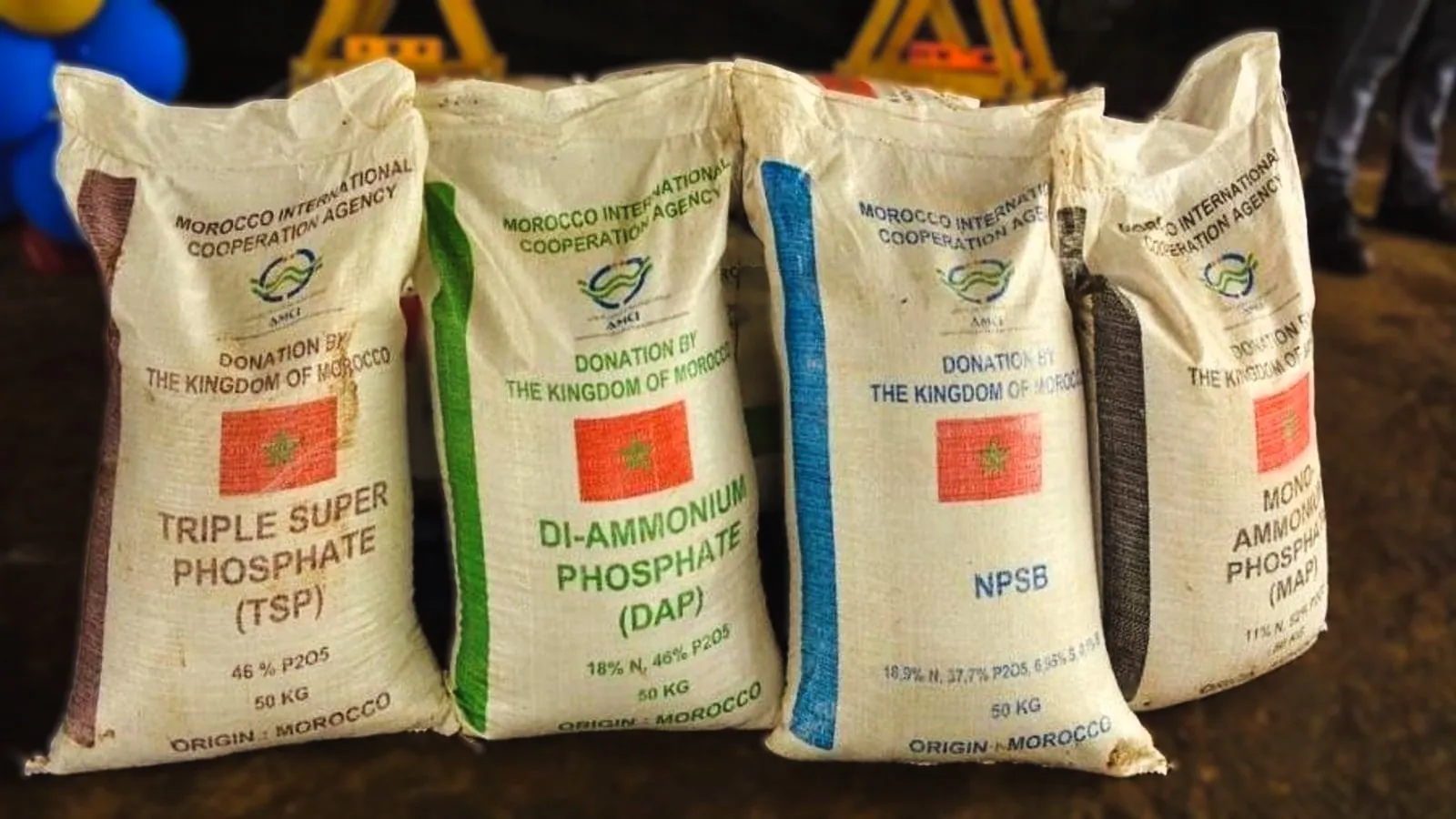
Leading agricultural organizations in the United States are advocating for the elimination of countervailing duties placed on phosphate fertilizer imports from Morocco, cautioning that the continuation of these tariffs could exacerbate production costs for American farmers during a time when global fertilizer markets are already strained due to geopolitical uncertainties.
Reports from specialized agricultural media indicate that the American Soybean Association (ASA) and the National Corn Growers Association (NCGA), which collectively represent a broad coalition of 26 organizations across 30 states, have penned a joint letter urging domestic fertilizer producers Mosaic and Simplot to retract their support for the tariffs that have been levied against phosphate fertilizer imports from both Morocco and Russia.
These agricultural bodies assert that the tariffs, which were initially implemented following a petition in 2021, have perpetuated high fertilizer prices, consequently intensifying the economic pressures faced by farmers across the United States. Scott Metzger, the president of the American Soybean Association and an Ohio soybean farmer, emphasized in comments reported by Farms.com that American farmers are grappling with substantial economic challenges, where soaring fertilizer prices are making it increasingly difficult to sustain profitable agricultural practices.
Metzger further articulated that the countervailing duties on phosphate fertilizers from Morocco and Russia have significantly contributed to the rising input costs, especially for soybean and corn producers who are heavily reliant on fertilizers to maintain their crop yields. He noted that access to stable and affordable fertilizer supplies is crucial for American farmers to remain competitive in the global market, highlighting that imported phosphate fertilizers play a key role in ensuring supply stability in the US.
The current discourse arises at a time when global fertilizer markets are under additional strain due to international tensions, particularly disruptions in the Gulf region, which serves as a vital transit corridor for fertilizer trade through the Strait of Hormuz—an area crucial for the export of nitrogen fertilizers. Agricultural organizations are sounding alarms that if trade restrictions on fertilizers persist, compounded by global supply chain disruptions, prices could soar even higher, leading to increased food costs for consumers in the United States.
In various years, the United States typically imports about half of its urea fertilizer requirements, with American farmers heavily depending on these imports to ensure a stable supply during the planting season, especially in light of the lack of significant strategic reserves in many nations, including within the US fertilizer distribution system. As the spring planting season approaches, agricultural organizations are stressing the urgency of reducing input costs to guarantee continued agricultural production without placing further financial strain on farmers. They are calling on policymakers in Washington to prioritize measures that secure farmers’ access to fertilizers at competitive prices.
These appeals come as the tariffs on phosphate fertilizer imports are currently undergoing a periodic review by the US Department of Commerce and the US International Trade Commission through a process known as the “sunset review,” which will decide whether these duties should be extended or lifted in the upcoming phase.
As reported by assahifa.com.