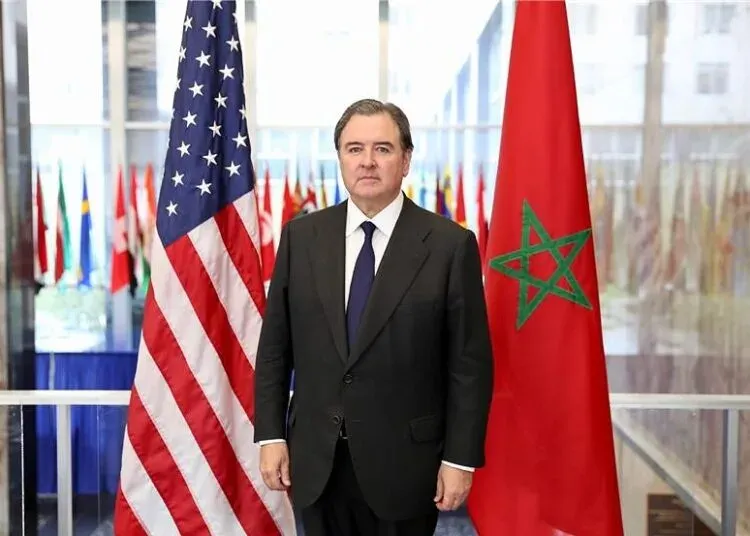

In a significant diplomatic engagement, Duke Buchan III, the US Ambassador to Morocco, recently conducted discussions in Western Sahara with Alexander Ivanko, the head of the United Nations peacekeeping mission, MINURSO. This meeting underscored the growing concerns of the United States regarding the recent violent actions of the Polisario Front, particularly their attacks targeting the Moroccan city of Es-Semara. The US embassy in Morocco highlighted the ambassador's remarks through a social media post, wherein he condemned the Polisario's projectile attacks on the region, which have elicited widespread international condemnation.
Ambassador Buchan emphasized the importance of the US support for Morocco’s Autonomy Plan, reiterating that a sustainable peace necessitates cooperation from all parties willing to negotiate towards a brighter future. The recent projectile attacks launched by the Polisario on May 5 have been described as heinous acts of terrorism, provoking frustration and concern from various countries, including the United States, Belgium, and the United Kingdom. The US mission to the United Nations has consistently denounced these violent actions, characterizing them as detrimental to the ongoing dialogue facilitated by the US aimed at achieving a mutually acceptable resolution to the long-standing Sahara dispute.
Moreover, the US mission issued a clarion call, stating, "The time to end this 50-year-old dispute is now," thereby sending a clear message to Algeria, which has been accused of financially supporting and militarily training the Polisario Front in its challenge against Morocco's territorial integrity. Despite Algeria's claims of being merely an observer in the conflict, UN Security Council Resolution 2797 has significantly undermined these assertions by identifying Algeria as a key party that must engage in the UN-led political process to help forge a political solution within the framework of Morocco’s Autonomy Plan.
In addition to the violence perpetrated against Es-Semara, the Polisario Front's alleged collaboration with Iranian proxy groups, such as Hezbollah, has raised alarms. Several US Congress members are now advocating for the designation of the Polisario as a terrorist organization. During an open hearing in April, Monica Ager Jacobsen, the Senior Bureau Official for the Bureau of Counterterrorism, publicly acknowledged the US administration's concerns regarding the threats posed by the Polisario Front. She noted the proximity of the Polisario’s operational area to trafficking and militant activities in the Sahel, emphasizing the vulnerabilities this creates, which external actors, including Iran, may seek to exploit.
Jacobsen reaffirmed the US commitment to closely monitor the evolving situation, asserting that the country remains vigilant against these threats. She disclosed that investigations into the Polisario's connections with Iranian proxy forces, including Hezbollah and the Islamic Revolutionary Guard Corps (IRGC), are actively underway. The collaboration between the State Department and the intelligence community in tracking these allegations suggests that a future classified briefing may be convened to address these pressing concerns.
As reported by moroccoworldnews.com.