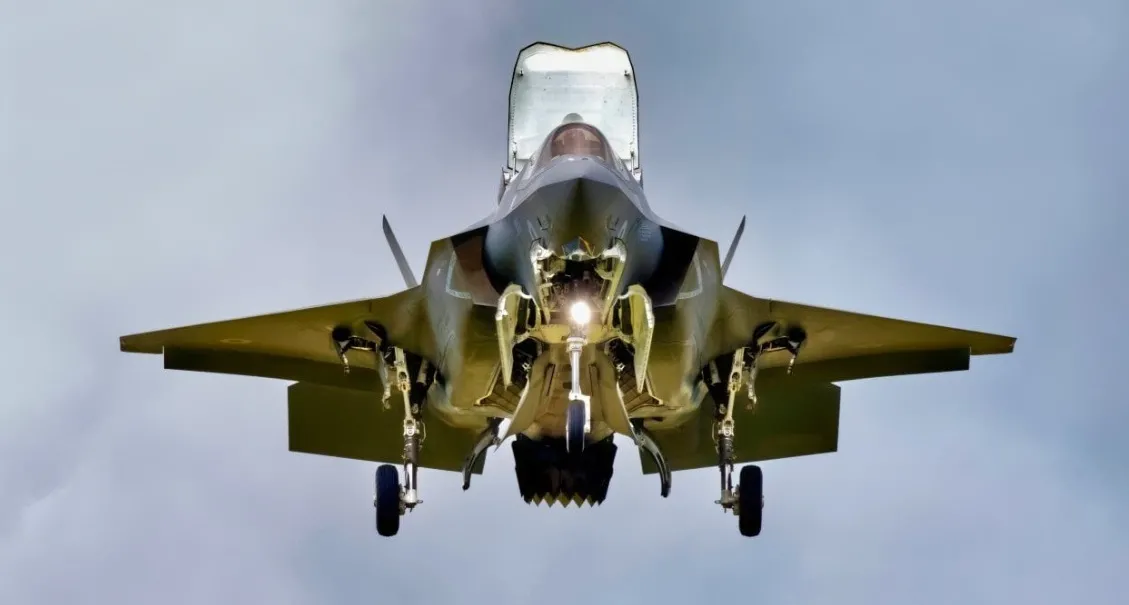

The U.S. Reinforces Airpower Near China with F-35B Stealth Fighter Jets
The United States has recently bolstered its military presence in the Western Pacific by deploying a squadron of advanced F-35B stealth fighter jets to Japan. This strategic move aims to enhance airpower capabilities in close proximity to China, demonstrating the U.S.'s commitment to maintaining a robust military posture in a region marked by rising tensions. The squadron, consisting of between 12 to 24 aircraft, replaces an older fleet of F-18C/D Hornet jets stationed at Marine Corps Air Station Iwakuni. While the F-35B boasts advanced technology and combat capabilities, it does come with limitations, including a relatively short combat range of just 700 kilometers, significantly less than China's J-20 fighter, which has a range exceeding 2,000 kilometers.
Despite these challenges, the U.S. military is leveraging the F-35B's unique short takeoff and vertical landing capabilities to operate from smaller, less predictable locations, which is crucial in a high-stakes environment where fixed bases may be vulnerable to long-range missile attacks. Furthermore, the maintenance demands and high operational costs of these advanced jets, estimated at about $140 million per aircraft, present additional hurdles for the U.S. military.
Morocco's Historic Push for F-35A Jets
In a parallel development, Morocco is actively engaged in negotiations with the U.S. to acquire up to 32 F-35A jets, marking a significant shift in the balance of military power within North Africa. This potential deal, valued at up to $18 billion, would make Morocco the first African nation to operate fifth-generation stealth fighters, thereby enhancing its air combat capabilities against regional adversaries, particularly Algeria, which relies on Russian-supplied aircraft. Morocco's move towards acquiring advanced military technology aligns with its growing defense budget, which reached $13.3 billion in 2025, underscoring the nation's commitment to modernizing its military forces.
This acquisition effort is rooted in a decade-long partnership between Morocco and the U.S., further solidified by Morocco's normalization of relations with Israel as part of the 2020 Abraham Accords. Such geopolitical dynamics have made the sale of advanced military hardware to Morocco a feasible and favorable endeavor for U.S. defense strategies in the region, as Morocco is seen as a stable ally that poses no threat to Israeli interests. The implications of this military shift are profound, as Morocco aims to establish a dominant position in North African security dynamics while moving towards a model of information-dominant warfare.
As reported by africa.businessinsider.com.