Escalating Threats and Military Actions
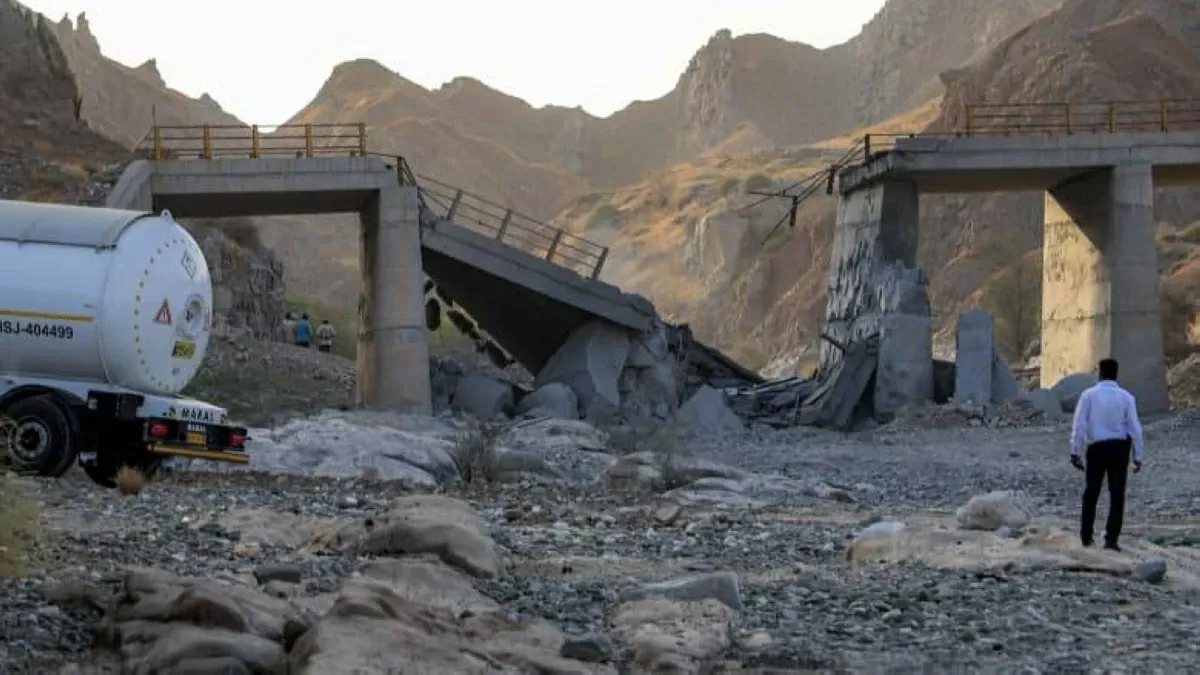
On July 29, 2026, a series of American military strikes on Iran resulted in the destruction of twelve bridges and two tunnels, exacerbating the already tense situation in the region. President Donald Trump has once again issued stern warnings, stating that he is prepared to target crucial sites, including the controversial Mount Faz, if diplomatic negotiations with Iran do not yield satisfactory results. Despite expressing optimism about the ongoing discussions, he emphasized that military options remain on the table should the talks fail. In an interview with Fox News, Trump remarked that while the U.S. has engaged in "good discussions" with Iran, they must reach an agreement to avoid further destruction in the country, highlighting his administration's readiness to act decisively if necessary.
Trump's comments came prior to a meeting at the White House with Israeli Prime Minister Benjamin Netanyahu, who has expressed a desire for Israel to take military action against Iran. However, U.S. officials have reportedly prevented such initiatives. During the interview, Trump stated, "I am fully aware of what is happening at Mount Faz. It's not a significant issue. We have destroyed their nuclear sites, and we will have to destroy Mount Faz if we cannot reach an agreement. If we do not come to terms, it will be very easy for us to obliterate it." This declaration underscores the delicate balance the U.S. seeks to maintain between military readiness and the pursuit of diplomatic solutions.
Regional Reactions and Ongoing Conflicts
In a parallel development, Israeli Defense Minister Israel Katz confirmed that American warplanes launched attacks on Iran from Israeli bases. He indicated that while Israel is eager to engage militarily with Iran, the U.S. is currently restraining these efforts. Katz noted on Israeli Channel 14 that the Iranian military is actively targeting various entities in the region but has refrained from attacking Israel, implying a fear of U.S. retaliation. As tensions escalate, Saudi Arabia has reported successful interceptions of drones aimed at its oil facilities, attributing these attacks to Iranian-backed militias operating from Iraqi territory. The spokesperson for the Saudi Ministry of Defense asserted the kingdom's right to defend itself and retaliate at a time of its choosing.
In Jordan, the Royal Jordanian Air Force downed a drone that had breached its airspace, while the Israeli military reported intercepting a drone near the Jordanian border, verifying its launch origin. Meanwhile, Kurdish opposition parties in northern Iraq have faced multiple drone attacks, which they attribute to Iranian forces, although no casualties have been reported. The Iranian government, on its part, announced significant losses in its natural gas production capabilities due to the ongoing conflict, with a daily output loss estimated at 230 million cubic meters. Moreover, Iranian officials revealed damage to infrastructure, including the near-total shutdown of Bushehr Airport and the destruction of critical transit routes.
As reported by alkhaleej.ae.