
The United States has officially reinstated its naval blockade on Iran, a significant development announced on Tuesday evening. This move follows President Donald Trump's declaration on Monday, indicating a renewed focus on controlling maritime activities in the region.
According to reports from a correspondent in Washington, the Central Command of the U.S. military confirmed that the blockade commenced at 4 PM Eastern Time, which corresponds to 11 PM Cairo time. The U.S. Navy is now actively preventing any vessels from entering or leaving Iranian ports, with some limited exceptions for ships carrying food and humanitarian supplies, which will undergo thorough inspections.
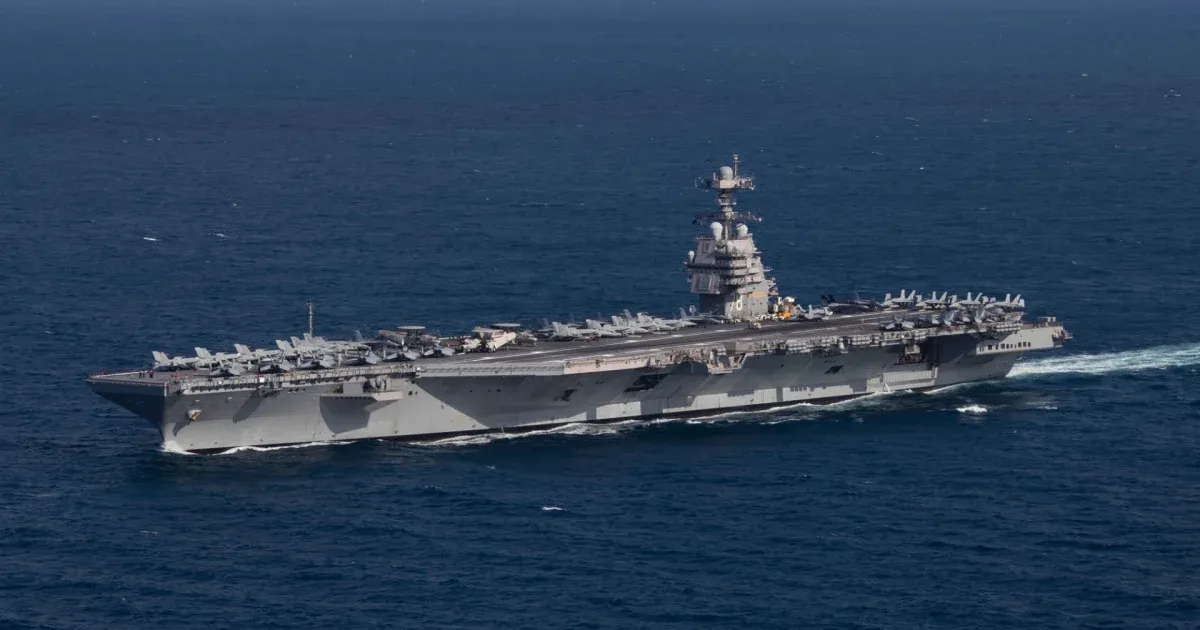
Furthermore, any ship attempting to navigate through these waters will be either sent back to its point of origin or confiscated, depending on the judgment of U.S. naval forces. This announcement comes alongside the deployment of 20 ships and hundreds of military aircraft in the Middle East region, underscoring the U.S. commitment to increasing its military presence in response to perceived threats.
Earlier that day, U.S. Central Command reported that it had intensified its strikes against Iranian positions, aiming to undermine Iran's ability to target commercial shipping in the strategically critical Strait of Hormuz. The military is preparing to enforce the blockade on Iranian ports and coastal areas, marking a crucial escalation in U.S.-Iran relations.
In conjunction with these military actions, the U.S. Treasury Department announced new sanctions and a general license related to Iran, which includes sanctions on various individuals, entities, and vessels. These sanctions are designed to restrict Iran's activities while allowing for certain transactions that pertain to safety and environmental concerns.
Trump, in a post on Truth Social, asserted, "The Strait of Hormuz is open and will remain open, with or without Iran." He emphasized that the reinstated blockade is aimed explicitly at preventing Iranian vessels or their affiliates from accessing these waters, while ensuring that other nations retain the right to freely navigate the strait.
Moreover, Trump stated that the U.S. will be referred to as the "Guardian of the Strait of Hormuz" moving forward, announcing that the U.S. would receive compensation of 20% from the value of all shipments transported, covering the costs necessary for maintaining safety and security in this volatile region.
These comments from Trump regarding the re-imposition of the blockade were made shortly after he declared that the U.S. would take control of the Strait of Hormuz. In an interview with Fox News, he labeled the Iranian government as "bad people," referencing the breakdown of prior agreements between Washington and Tehran.
In response, Iran's military leadership has declared that it will not permit U.S. intervention in the management of the Strait. They firmly stated that any attempt by the U.S. to cross the strait without Iranian permission will be met with strong resistance. The Iranian military leadership has warned regional leaders that any collaboration with the U.S. would be seen as an act of war against Iran, and they cautioned that an escalation of conflict could engulf the entire region, placing the responsibility on the U.S. and its allies.
Additionally, the spokesperson for the Iranian Revolutionary Guard conveyed concerns that U.S. actions have jeopardized global oil and gas supply security through their involvement in the Strait of Hormuz. They reiterated their authority and control over the strait, threatening to halt oil and gas exports from the area while asserting that U.S. airstrikes would not deter the reopening of the strait.
As tensions continue to escalate, the U.S. military has announced further strikes against Iranian targets, aimed at degrading Iran's capability to threaten commercial shipping in the Strait of Hormuz. The Kuwaiti Defense Ministry has reported detecting one ballistic missile, five cruise missiles, and 33 hostile drones, confirming that they were intercepted and dealt with effectively. These new U.S. strikes targeting military sites within Iran signify a potential expansion of operations following the establishment of the naval blockade.
As reported by alghad.tv.