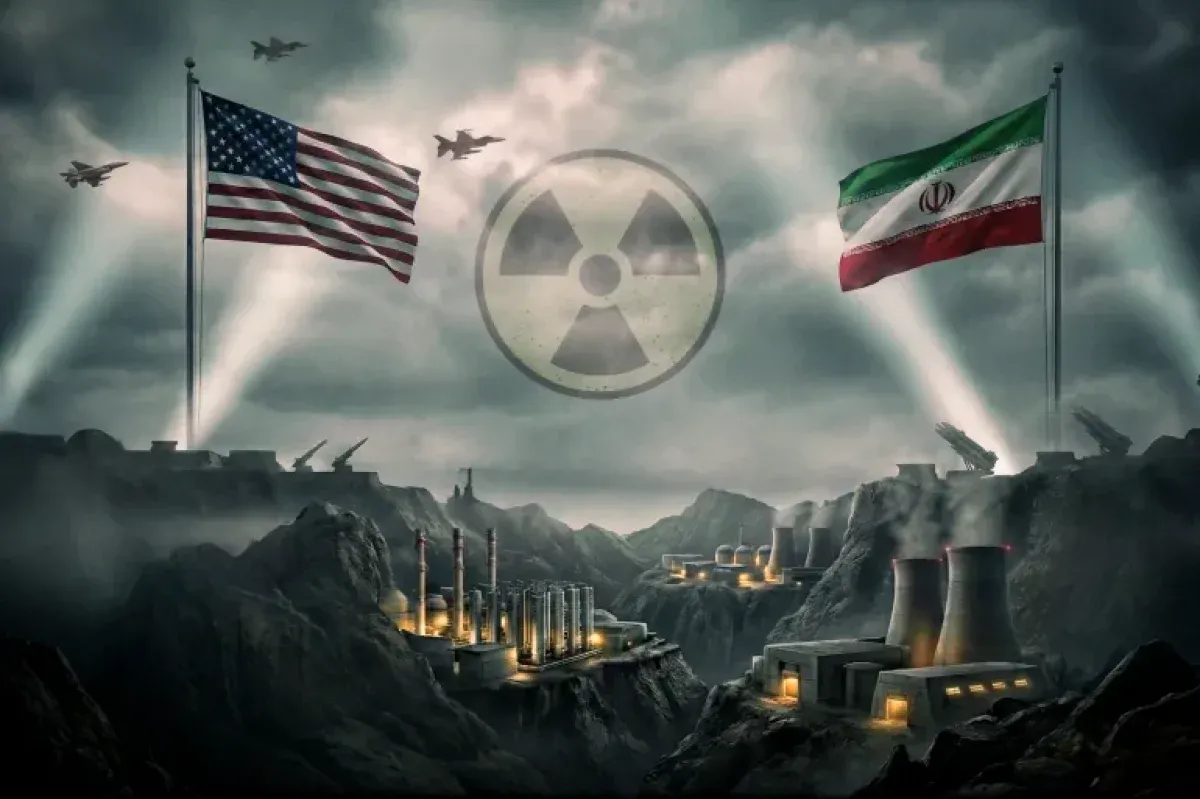

A recent report by the New York Post reveals that U.S. special operations forces are contemplating a strategic scenario aimed at seizing Iranian nuclear materials, rather than merely destroying them through airstrikes. This consideration arises from a belief among experts that current negotiations are not progressing sufficiently to resolve the nuclear issue at hand. Joseph Rodgers, the Deputy Director of the Center for Strategic and International Studies (CSIS), has indicated that military action could potentially be the "most realistic means of eliminating the currently existing Iranian nuclear materials," adding that if such an operation were to take place, it would likely rank among the most complex military operations ever undertaken.
The report outlines that this hypothetical scenario would not solely rely on special units; it would necessitate a large-scale ground operation involving thousands of soldiers to secure nuclear facilities, remove explosives and traps, and open access points to bombed sites. Furthermore, a defensive perimeter would need to be established to thwart any counterattacks during the execution of the mission.
Once the sites are secured, elite teams would be tasked with accessing, handling, and transporting the enriched uranium, a phase described in the report as the most perilous of the entire operation. Rodgers emphasizes that the logistical and military complexities involved make this operation unprecedented, noting that, despite suffering significant losses, the Iranian military retains combat capabilities and organizational structures that surpass those faced by U.S. forces in previous conflicts.
Elite Units on the Frontline
The report cites information from The High Side, noting that the operational force could include members from SEAL Team 6, the 2nd Ranger Battalion, as well as the U.S. Army's 21st Ordnance Battalion, which specializes in handling hazardous materials. This unit would be responsible for transporting any quantities of enriched uranium from facilities such as Fordow and Isfahan to secure locations outside Iran.
According to data from the International Atomic Energy Agency, Iran possessed over 20,000 pounds of enriched uranium by the year 2025. The report warns that the success of the operation hinges not only on reaching the facilities but also on achieving complete control over their surroundings and securing evacuation routes to military airports. Rodgers stated that U.S. forces would need to establish safe corridors around the nuclear sites and secure protected transport routes, all while engineering teams would be tasked with clearing debris and opening access points to partially destroyed facilities.
Richard Goldberg, the former director of the Iranian Weapons of Mass Destruction Countering Program at the National Security Council during President Donald Trump’s first term, highlighted that the biggest challenge lies in the ability of U.S. forces to remain within Iranian territory for the duration of the operation while maintaining safe withdrawal routes.
Iran Prepares for Confrontation
Intelligence reports indicate that Iran has fortified its defensive measures around the Isfahan facility, which includes placing explosives within tunnels, constructing additional fortifications, and deploying troops to protect the facility's perimeter in anticipation of any attacks. Goldberg added that the element of surprise is no longer in play, as Iran is aware of the targeted sites and is preparing for potential special operations against them. CNN reported last month that Iran has laid mines and explosives within the tunnels of the Isfahan facility in preparation for any land incursion attempts.
The report also points to "Mount Axe," which has emerged in recent weeks as a potential target following reports of the transfer of hundreds of centrifuges from the Natanz facility to this location. Goldberg believes that any operation against this site would differ from those targeting Isfahan and Fordow, as it may involve infiltrating the facility, planting explosives to destroy it from within, and then executing a rapid withdrawal if aerial bombardment proves unfeasible. He further noted that the success of airstrikes against Iranian facilities relies heavily on possessing precise intelligence regarding vulnerabilities in the engineering structure of the nuclear sites, akin to previous strikes that targeted ventilation shafts at the Fordow facility.
While the report presents this scenario as one of the options being discussed among American security and military circles, it does not indicate that an official decision has been made by Washington to carry out such an operation, which experts describe as potentially one of the most complex and dangerous military undertakings should it transition from planning to execution.
As reported by addiyar.com.