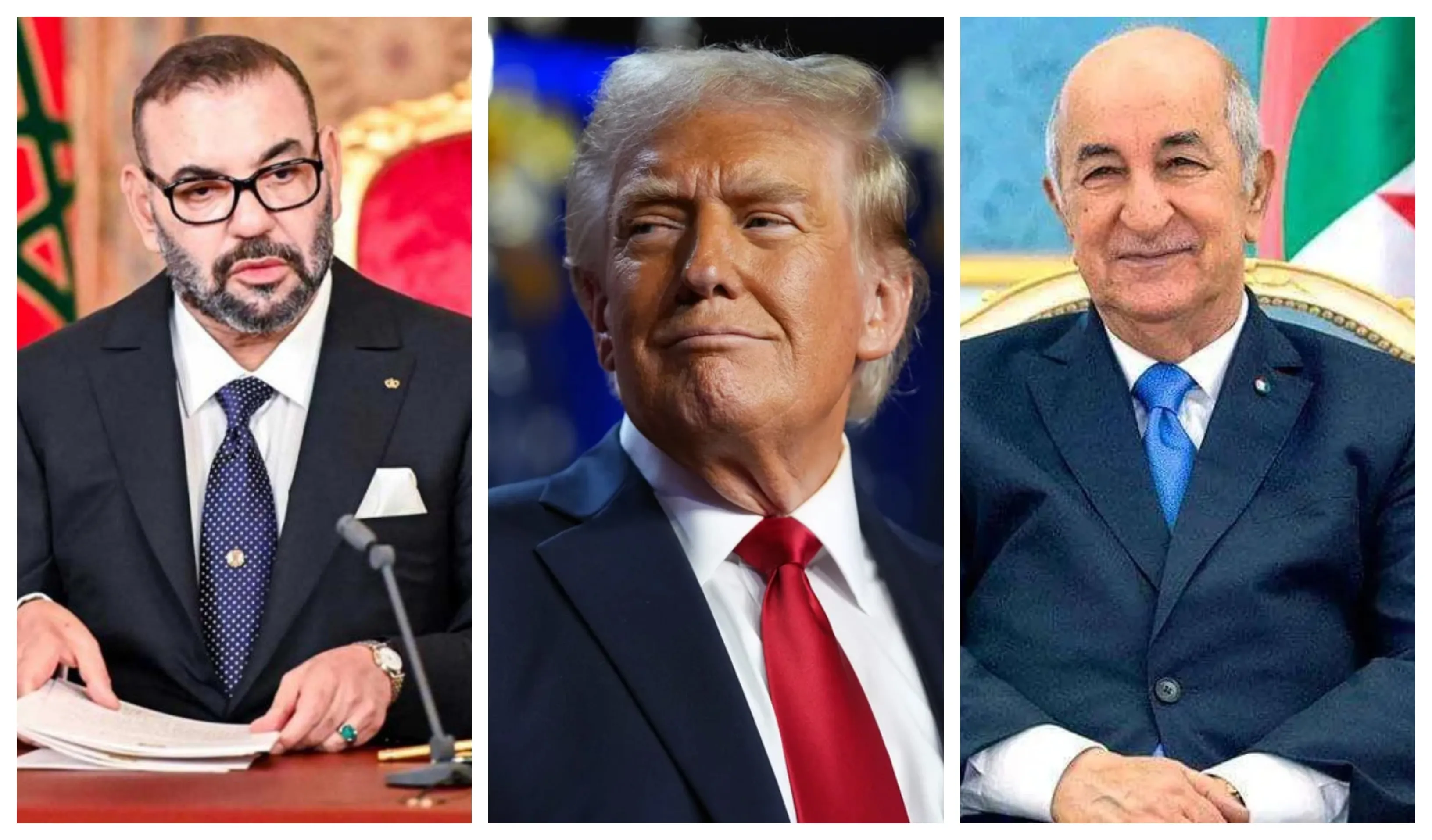

The United States has intensified its call for Algeria to actively engage in resolving the protracted Western Sahara conflict, as military tensions escalate between Morocco and Algeria alongside their affiliations with differing global powers. This renewed diplomatic push comes amid a changing geopolitical landscape in North Africa, where Russia's influence appears to be diminishing.
In a significant meeting, Massad Boulos, the U.S. Presidential Advisor for Arab and African Affairs, convened with Sabri Boukadoum, Algeria's Ambassador to Washington. During this discussion, Boulos emphasized the necessity for Algeria to take a more prominent role in the United Nations-backed peace process, highlighting the urgency for resolution in light of UN Security Council Resolution 2797. This resolution endorses Morocco's autonomy plan as a viable pathway to peace.
Algeria seems to be reassessing its position in the Western Sahara dispute, particularly following a decline in support from strategic allies, notably Russia. The historical backdrop of this conflict is characterized by a division over Western Sahara, with Morocco controlling the majority of the territory while Algeria backs the Polisario Front, which champions the cause of Sahrawi independence through the establishment of camps in Tindouf.
The Complexity of the Western Sahara Conflict
The political landscape of Western Sahara remains fraught with tension; the self-proclaimed Sahrawi Arab Democratic Republic (SADR) is recognized by approximately 46 UN member states and is a member of the African Union. However, only the United States and Israel formally acknowledge Morocco's sovereignty over the region. The territory is rich in natural resources, particularly phosphate deposits that are crucial for fertilizer production, notably at the Bou Craa mine.
Since 2007, Morocco has proposed a plan that offers limited autonomy under its sovereignty, contrasting sharply with the full independence sought by the SADR and supported by Algeria and several other African nations. This issue gained global attention when, in 2020, then-President Donald Trump recognized Morocco's claim over Western Sahara as part of a broader agreement that normalized relations between Morocco and Israel through the Abraham Accords. Spain’s recent endorsement of Morocco's stance in 2022 and France's support, with President Emmanuel Macron asserting that the autonomy plan is the “only basis” for a settlement, have further complicated the dynamics.
In response to France's backing of Morocco, Algeria took diplomatic measures such as recalling its ambassador from Paris and halting the repatriation of Algerian citizens deported from France. The relationship between Morocco and Algeria has been strained for years, with Algeria severing diplomatic ties in 2021. In 2023, President Abdelmadjid Tebboune remarked that bilateral relations had reached a point of irreparability.
Escalation and International Reactions
Recent events have exacerbated tensions, notably a rocket attack on Morocco's southern city of Es‑Smara on May 5, 2026, attributed to the Polisario Front. The Moroccan government reported that the attack, which struck near civilian areas and a prison, resulted in injuries to a civilian, prompting widespread condemnation from the United Nations, the European Union, and Western nations, including the United States.
Staffan de Mistura, the UN Personal Envoy for Western Sahara, has urged the resumption of negotiations and warned that ongoing hostilities could jeopardize efforts to resolve this long-standing conflict. In a recent statement, Algerian President Tebboune acknowledged the progress of UN Security Council Resolution 2797, which advocates for a negotiated settlement and references Morocco's autonomy plan, signaling a possible shift in Algeria's position regarding the ongoing dispute.
As reported by africa.businessinsider.com.