
Exploring the Growing Trade Relations Between Vietnam and Morocco
The commercial exchanges between Vietnam and Morocco have shown remarkable growth, with a notable 26% increase reported in the first half of 2026. This surge is indicative of the diverse offerings from Vietnam, coupled with Morocco's strategic position in North Africa, which together create a robust platform for expanding bilateral trade and enhancing the access of Vietnamese products to African markets.
In 2025, the trade between the two nations reached approximately $380 million, reflecting a 25% increase from the previous year. The positive trend continued into 2026, with the first half of the year witnessing a 26% rise in bilateral trade. Tran Lê Dung, the head of the Vietnam Trade Office in Morocco, highlighted that Vietnamese exports to Morocco are varied and include a wide range of products such as mobile phones and components, computers, textiles, footwear, seafood, rice products, and processed food.
Conversely, Vietnam primarily imports fertilizers, raw materials for production, chemicals, and various industrial inputs from Morocco. Notably, there exists a significant trade surplus in favor of Vietnam, as the country’s exports to Morocco surpass its imports. This dynamic not only positions Morocco as an interesting consumer market but also as a gateway for Vietnamese products into North Africa and parts of West Africa.
Challenges and Opportunities in the Moroccan Market
Through direct interactions with Moroccan importers, distributors, and businesses, the Vietnam Trade Office has found that Vietnamese products are generally well-received due to their quality, competitive pricing, and adaptability to customer demands. However, it is essential to understand the specific characteristics of the Moroccan market. Price sensitivity is high, and consumers place significant importance on packaging, labeling in French or Arabic, product origin, and compliance with Islamic cultural practices.
For food products and other items that require Halal certification, food safety, and traceability, Vietnamese companies must be diligent in adhering to these standards to ensure successful market penetration. Additionally, there is a challenge regarding brand visibility; many high-quality Vietnamese products go unrecognized by Moroccan consumers, often due to being imported through intermediaries or marketed under distributor brands.
To improve their market presence, Vietnamese businesses are encouraged to focus not only on selling their products but also on developing their brands, adapting packaging for local preferences, providing information in French and Arabic, and collaborating with well-established distributors. Morocco's relatively open economy has a strong demand for imports, particularly in raw materials, machinery, equipment, food products, and consumer goods. The country's ongoing infrastructure investment efforts, particularly in anticipation of the 2030 FIFA World Cup, are expected to create additional demand for various products.
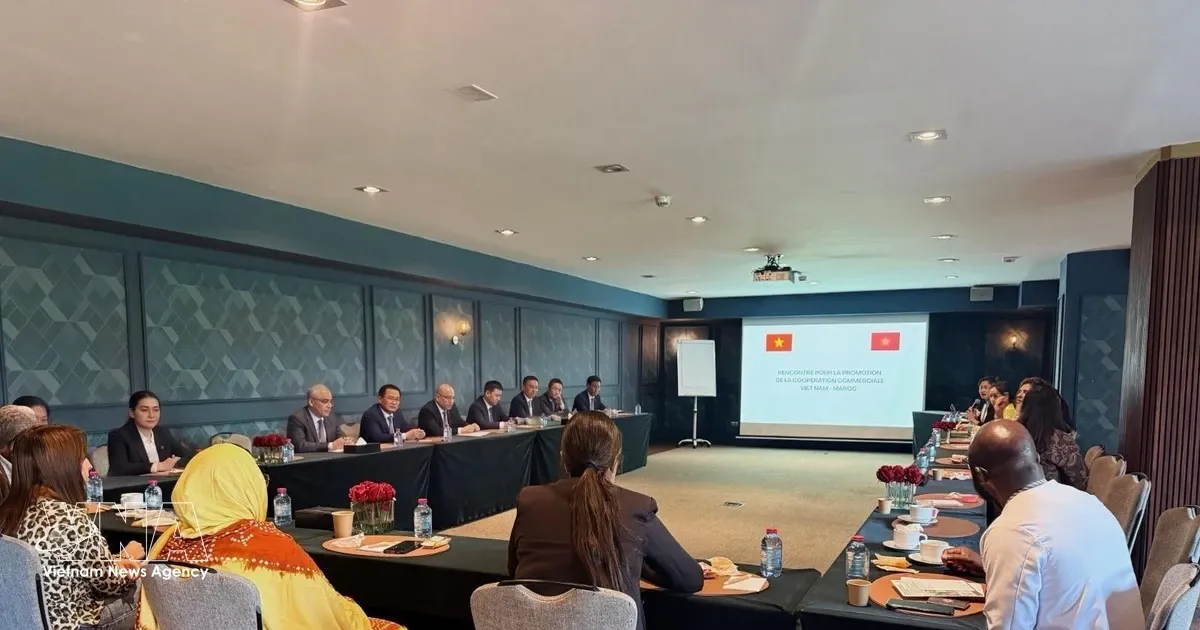
The Vietnam Trade Office has been proactive in promoting Vietnamese products, participating in significant events like the International Agricultural Fair in Morocco (SIAM 2026) to showcase Vietnamese exports and establish connections with Moroccan businesses. Moreover, several Moroccan importers are being encouraged to attend the Vietnam International Sourcing Expo 2026, providing them with direct access to Vietnamese manufacturers and fostering the establishment of direct import relationships.
Given Morocco's strategic location, open economy, and extensive network of trade agreements, the potential for expanding trade between Vietnam and Morocco remains substantial. Morocco serves not only as a market of over 37 million consumers but also as a crucial entry point for Vietnamese products into North African and other African markets.
As reported by fr.vietnamplus.vn.