
Understanding Voter Engagement in Morocco's Regions
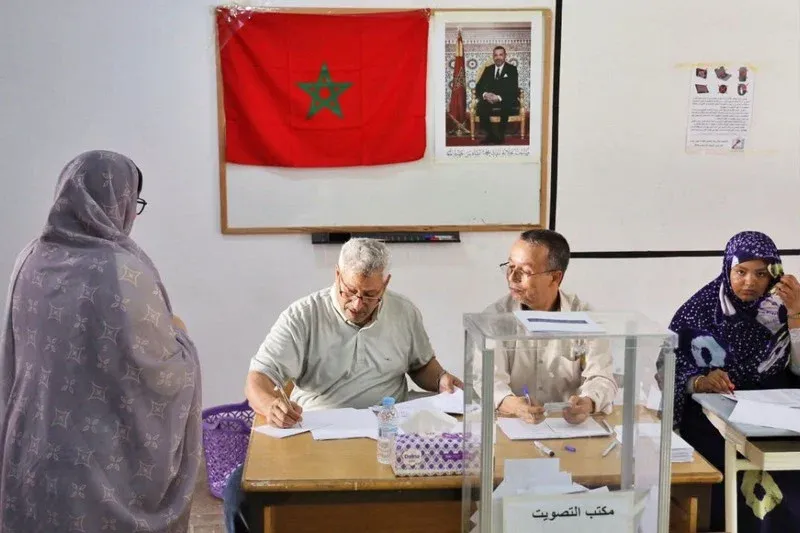
In an insightful revelation from the recent legislative elections held on September 23, 2026, the southern regions of Morocco exhibited a remarkable engagement in the electoral process, demonstrating their commitment to political participation and governance. According to official data from the Ministry of Interior, the Laayoune-Sakia El Hamra region saw a staggering voter turnout of approximately 77.49%, leading the nation in electoral participation. Following closely, the Dakhla-Oued Ed Dahab region recorded a participation rate of 60.98%, while the Guelmim-Oued Noun region achieved a respectable 54.2%. These figures not only highlight the active involvement of these communities in the legislative framework but also underscore their desire to influence public affairs through democratic means.
In contrast, the northern and eastern regions showed significantly lower participation rates, raising concerns about political engagement disparities across the country. The Drâa-Tafilalet region recorded a turnout of 44.86%, which, while better than some, still reflects a gap in civic engagement compared to their southern counterparts. The Beni Mellal-Khenifra region registered a participation rate of 40.2%, and the Marrakech-Safi region followed closely at 39.37%. Meanwhile, the Fès-Meknès region’s participation was nearly identical at 39.35%, showcasing a trend of diminishing voter involvement in these areas.
The Alarming Trend in Voter Participation
Among the regions with the lowest voter turnout, Souss-Massa reported a participation rate of 37.61%, while the Rabat-Salé-Kénitra region stood at 36.53%. The Casablanca-Settat region experienced a particularly concerning turnout of just 34.68%, closely followed by Tangier-Tetouan-Al Hoceima at approximately 34.5%. The starkest contrast was observed in the Eastern region, where voter participation plummeted to a mere 31.37%. These statistics starkly contrast with the higher participation rates recorded during the 2021 elections, where regions such as Tangier-Tetouan-Al Hoceima and the Eastern region saw rates of 50.86% and 46.78%, respectively, indicating a troubling decline in civic engagement over the years.
The fluctuations in voter turnout between these elections prompt critical reflection on the factors influencing voter behavior and engagement across different regions. The evident disparities in participation highlight the need for targeted initiatives aimed at enhancing civic education and encouraging political involvement, especially in regions displaying lower turnout rates. As Morocco continues to navigate its democratic journey, fostering greater inclusivity and participation in the electoral process remains paramount for the country’s political health and the empowerment of its citizens.
As reported by hespress.com.